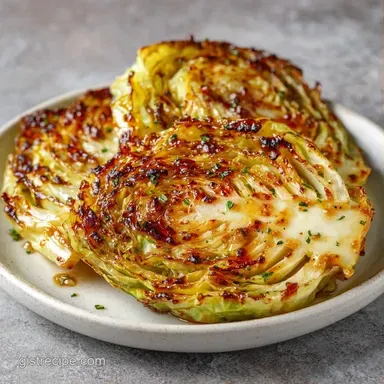
Crispy Roasted Cabbage Steaks: Golden & Tender
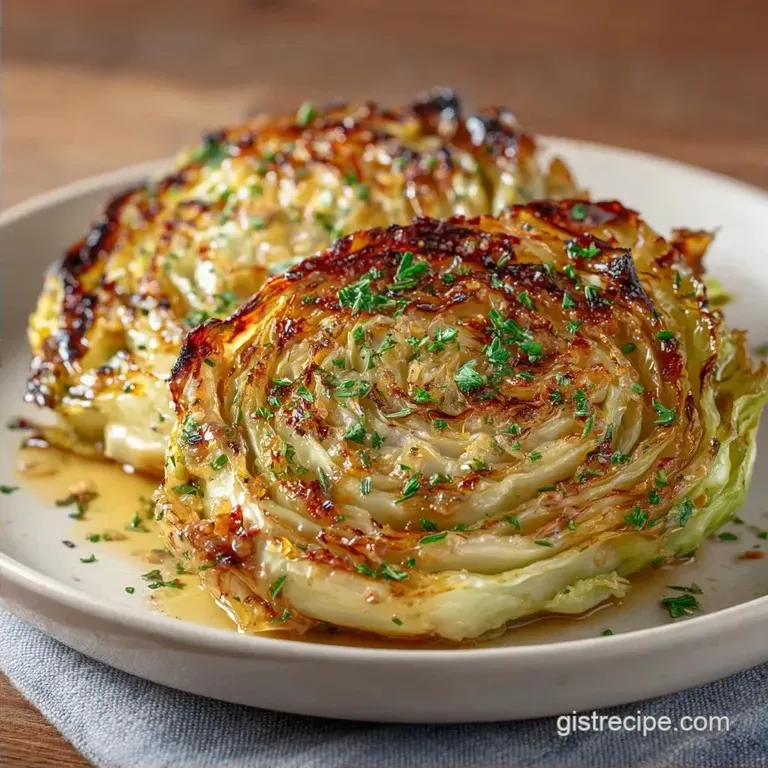
- Time: 10 min active + 30 min roasting
- Flavor/Texture Hook: Mahogany edges with a velvety, tender center
- Perfect for: Easy weeknight sides or a low carb dinner
Easy Roasted Cabbage Steaks
That first sizzle when the cabbage hits the hot oil is the best part. I remember the first time I tried this, I was skeptical. Cabbage always felt like something that belonged in a bland slaw or a watery soup.
But once I saw those edges turn a deep, dark brown and smelled the garlic butter bubbling in the oven, I was sold. It changes the whole vibe of the vegetable.
The contrast is what makes this work. You get these crisp, almost burnt bits on the outside that taste like toasted nuts, while the inside stays soft and juicy. It's a total shift from the mushy cabbage we all grew up with.
Honestly, it's one of those dishes that looks way more fancy than it actually is, making it a great win for when you're exhausted but want something that tastes a bit special.
You can expect a dish that's savory, salty, and has a hit of smokiness from the paprika. We're not just roasting it, we're basically searing it in the oven. This recipe takes about 40 minutes from start to finish, and most of that is just waiting for the oven to do the hard work. Let's get into it.
The Secret to the Sear
If you've ever wondered why your oven veggies come out steamed instead of charred, it usually comes down to moisture and heat. According to the roasting guides at Serious Eats, the key is getting the surface dry and the temperature high enough to trigger browning.
High Heat: 425°F evaporates surface water quickly, allowing the natural sugars to brown instead of boiling in their own juice.
Fat Distribution: Coating every millimeter in oil creates a heat conductor, ensuring the edges shatter when you bite into them.
Core Stability: Cutting through the core keeps the leaves attached, preventing the "steak" from falling apart into a pile of loose shreds.
The Butter Finish: Adding fat and cheese at the very end prevents the milk solids from burning while adding a rich, velvety layer.
| Method | Time | Texture | Best For |
|---|---|---|---|
| Classic Oven | 30 mins | Evenly tender, charred edges | Large batches, deep flavor |
| Air Fryer | 18 mins | Extra crispy, faster cook | 1-2 servings, quick meal |
| Stovetop Sear | 20 mins | Heavily charred, softer center | Maximum "burnt" flavor |
Core Component Breakdown
I've found that the type of cabbage you pick really changes the final result. Green cabbage is the gold standard here because it holds its shape and has a sweetness that really pops when roasted.
| Ingredient | Science Role | Pro Secret |
|---|---|---|
| Green Cabbage | Base structure | Pick a heavy, dense head for thicker steaks |
| Olive Oil | Heat conductor | Brush it on thick; don't just drizzle |
| Parmesan | Salt & Umami | Use finely grated for a more even crust |
| Smoked Paprika | Aroma & Color | Adds a "grilled" taste without a grill |
Pantry List and Swaps
Right then, here is what you'll need. I've used exact measurements from my tested version, but feel free to tweak the seasoning.
- 1 head (approx 2 lbs / 900g) Green Cabbage Why this? Dense structure holds the steak shape
- 3 tbsp (45ml) Olive Oil Why this? High smoke point for 425°F oven
- 1 tsp (5g) Kosher Salt
- 1/2 tsp (3g) Black Pepper
- 2 tbsp (30g) Unsalted Butter, melted Why this? Adds the richness that oil lacks
- 3 cloves (15g) Garlic, minced
- 1/4 cup (25g) Parmesan Cheese, finely grated Why this? Creates a salty, golden crust
- 1/2 tsp (2g) Smoked Paprika
| Original Ingredient | Substitute | Why It Works |
|---|---|---|
| Green Cabbage | Red Cabbage | Similar texture. Note: Color turns deep purple; slightly earthier taste |
| Parmesan Cheese | Pecorino Romano | Similar salty profile. Note: More pungent and sheepy flavor |
| Unsalted Butter | Vegan Butter | Same fat content. Note: Works well for dairy-free versions |
| Olive Oil | Avocado Oil | Higher smoke point. Note: Very neutral taste, won't affect flavor |
Step-by-step Cooking Process
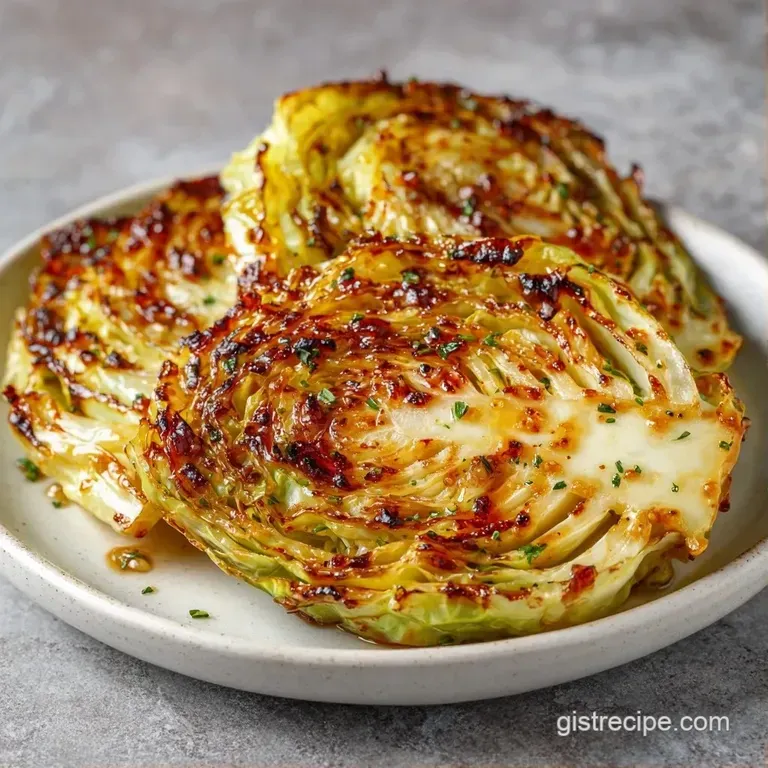
Let's crack on. Make sure your oven is fully preheated to 425°F (220°C) before you start. If the oven isn't hot, the cabbage will just steam and get soggy.
- Remove the outer wilted leaves from the cabbage. Slice the cabbage into 1 inch (2.5cm) thick rounds, ensuring you cut through the core to keep the steaks stable. Note: If you cut them too thin, they'll flop over.
- Place the cabbage steaks on a parchment lined baking sheet. Brush both sides generously with olive oil and season with salt and pepper, focusing on the edges.
- Roast in a preheated 425°F (220°C) oven for 15 minutes. until the edges start to look translucent and slightly gold.
- Carefully flip the steaks using a wide spatula and roast for another 10–15 minutes until edges are deeply browned and center is tender.
- Melt your butter and mix in the minced garlic.
- During the final 5 minutes of roasting, brush the melted garlic butter mixture over the top.
- Sprinkle the Parmesan cheese and smoked paprika evenly over the buttered surface.
- Return to the oven for 2–3 minutes until the cheese is bubbly and golden.
Chef's Note: If you have a broiler, you can pop it on for the last 60 seconds to get the cheese really brown, but watch it like a hawk. It goes from "golden" to "burnt" in about ten seconds.
Fixing Common Texture Issues
The most common complaint I hear with Roasted Cabbage Steaks is that they end up too soft or don't brown. This usually happens because the pan is too crowded. If the steaks are touching, they trap steam between them, which is the enemy of a crisp edge.
Why Your Cabbage Is Mushy
This usually happens if the oven temperature is too low or the cabbage is sliced too thin. If you don't hit that 425°F mark, you're essentially steaming the vegetable in its own juice. Give the steaks plenty of room on the tray.
Why Your Cheese Burnt
The garlic butter and Parmesan are added at the end for a reason. If you put them on at the start, the butter solids will burn and the cheese will turn bitter long before the cabbage is cooked through.
Avoiding the "Soggy Center"
Ensure you flip the steaks. The side touching the pan gets the most direct heat, but the top needs that flip to drive the moisture out and create a sear on both sides.
| Problem | Root Cause | Solution |
|---|---|---|
| Cabbage is pale | Temp too low | Increase to 425°F; check oven calibration |
| Steaks fall apart | Cut too thin | Keep slices at a full 1 inch thickness |
| Bland flavor | Under salted | Salt the edges heavily before the first roast |
Common Mistakes Checklist
- ✓ Used parchment paper (prevents sticking and makes cleanup easy)
- ✓ Preheated the oven fully (don't put them in while it's still warming)
- ✓ Left space between steaks (prevents steaming)
- ✓ Flipped the steaks (ensures double sided browning)
- ✓ Added cheese at the end (prevents burnt dairy)
Adjusting for Different Crowds
When you're making this for a crowd, the temptation is to jam as many steaks as possible onto one tray. Trust me, don't do it. I once tried to fit two heads of cabbage on one sheet for a party, and the result was a pale, soggy mess.
Scaling Down (½ recipe) If you're just cooking for one or two, use a smaller baking sheet. Since there's less moisture releasing into the oven, you might find they brown a bit faster. Reduce the roasting time by about 20% and check them at the 12 minute mark.
Scaling Up (2x-4x recipe) Work in batches. Use two or three separate trays and rotate them between the top and bottom racks halfway through the cook. I suggest increasing the salt and paprika to only 1.5x rather than 2x, as the concentrated flavors can become too intense when scaled linearly.
If you're doing a massive batch for a meal prep, you can roast them all, but let them cool completely on a wire rack before stacking them in a container. This keeps the edges from softening.
Debunking Cabbage Lore
There's a common belief that cabbage always smells "sulfury" or like old socks when cooked. This is actually a result of overcooking it in water. When you roast it at high heat, those sulfur compounds break down differently, and the natural sugars caramelize. It smells more like roasted nuts and toasted garlic.
Another myth is that you need to blanch cabbage before roasting it to make it tender. Honestly, don't bother. At 425°F, the interior steams perfectly in its own moisture while the outside sears. Adding a boiling step just introduces more water, which makes it harder to get that mahogany crust we're after.
Storage and Scrap Use
These keep surprisingly well. You can store them in an airtight container in the fridge for up to 4 days. To reheat, avoid the microwave if you can. A quick 5 minutes in a toaster oven or air fryer at 350°F brings back that shatter crisp edge.
They don't freeze well, as the cell structure of the cabbage breaks down, leaving them watery upon thawing.
As for zero waste, don't throw away those outer wilted leaves. I usually toss them into a freezer bag with some onion scraps and carrot peels. When the bag is full, I simmer it all with water for a basic veggie stock. Also, the core of the cabbage is edible.
If you have leftover core bits, dice them small and sauté them with some soy sauce and ginger for a quick snack.
Best Sides and Pairings
Because these Roasted Cabbage Steaks have a rich, buttery profile, they need something bright or creamy to balance them out. I love serving them alongside a grilled protein or as a standalone vegetarian main.
If you want something truly indulgent, drizzle a creamy garlic sauce over the top just before serving. The tang of the sauce cuts right through the richness of the Parmesan. For a vegan version, a dollop of vegan cashew cheese sauce adds a velvety texture that mimics the dairy version perfectly.
For a lighter contrast, try a side of quick pickled red onions or a squeeze of fresh lemon juice over the steaks. The acidity wakes up all those deep, roasted flavors. If you're serving this as part of a bigger feast, it pairs beautifully with a seared steak or a piece of roasted salmon.
The smokiness of the paprika on the cabbage complements the char of a good piece of meat.
Recipe FAQs
What temperature do you cook cabbage steaks at in the oven?
425°F (220°C). This high temperature is necessary to brown the edges and prevent the cabbage from steaming and becoming soggy.
How to cut cabbage steaks so they don't fall apart?
Slice the cabbage into 1-inch (2.5cm) thick rounds. Make sure you cut through the core to keep the steaks stable during roasting.
What seasoning is good for roast cabbage?
Salt, pepper, and smoked paprika. Adding a mixture of melted butter and minced garlic, topped with Parmesan cheese, creates a rich, savory crust.
How to cook cabbage so it's not bitter?
Roast at high heat. The caramelization process converts the cabbage's natural sugars, which neutralizes the bitterness.
What are some easy, healthy recipes using cabbage?
Try roasting or braising. For a variation with more acidity, these roasted red wedges are an excellent healthy alternative.
How to bake cabbage in the oven?
Brush 1-inch rounds with olive oil and roast at 425°F (220°C). Bake for 30 minutes, flip the steaks, and roast for another 10–15 minutes until tender and browned.
What are some uses for leftover cooked cabbage?
Reheat in a toaster oven or air fryer. Heating them at 350°F for 5 minutes restores the shatter-crisp edges better than a microwave.
Roasted Cabbage Steaks for 4 Servings