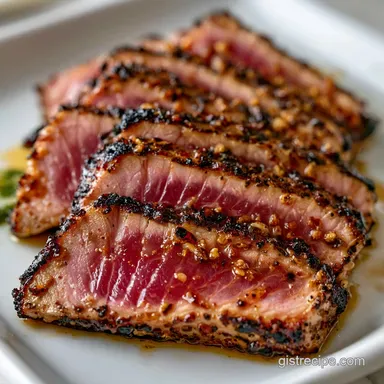
Pan Seared Tuna Steaks: Failure-Proof
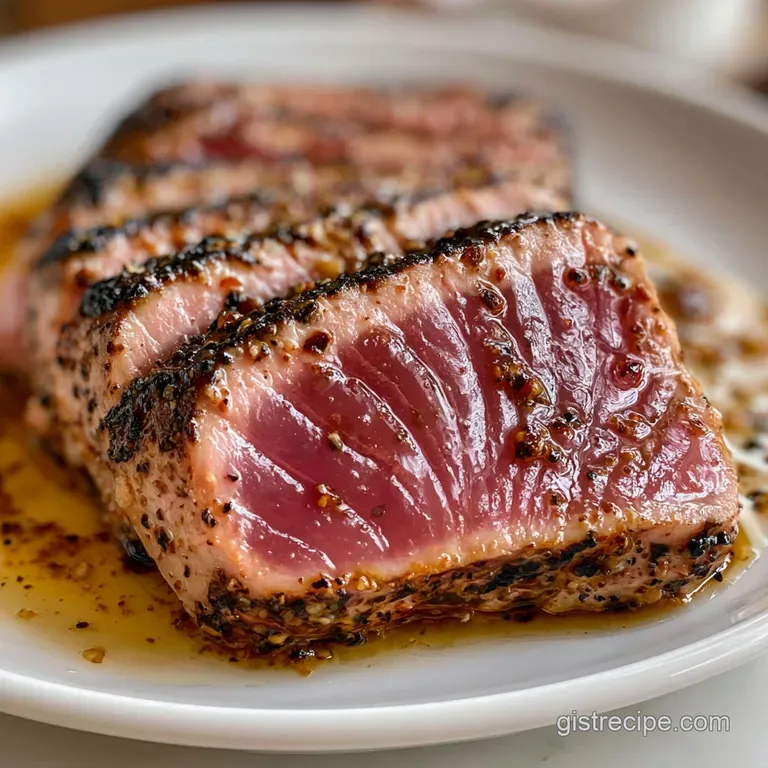
- Time: 10 min active + 26 min resting/marinating = Total 36 min
- Flavor/Texture Hook: Nutty toasted sesame seeds with a silky, butter like center
- Perfect for: Fast weeknight luxury or an impressive date night meal
That sharp, salty scent of soy sauce hitting a screaming hot pan is something I'll never forget. I remember the first time I tried a Japanese style seared tuna. I was in a tiny spot in a coastal town, and the chef didn't use a timer or a fancy thermometer.
He just listened to the sizzle and watched the color change from a deep ruby to a charred brown in seconds. It was a total shift in how I thought about fish, which I'd always overcooked into something dry and chalky.
For a long time, I was terrified of this dish because tuna is expensive. I didn't want to ruin a thirty dollar piece of fish. But I realized the secret isn't in the gear, it's in the temperature and the moisture. Once I stopped treating it like a piece of salmon and started treating it like a steak, everything clicked.
This tuna steaks recipe is the result of those "aha" moments, designed to be foolproof even if you're nervous about raw fish.
You're going to get a result that looks like it came from a high end bistro but uses basic pantry staples. We're focusing on a budget smart approach, using honey and soy to create a rich glaze that mimics more expensive ingredients.
Trust me on this, the contrast between the shatter crisp sesame crust and the cool center is where the magic happens.
The Best Tuna Steaks Recipe
The core of this approach is all about contrast. We want the outside to be heavily seasoned and charred, but the inside to stay almost raw. If you've ever tried cooking steak on a stove, you'll notice the logic is very similar. You need a heavy pan and a lot of heat to get that crust before the heat penetrates too deep into the center.
Since Ahi tuna is lean, it doesn't have the marbled fat of a ribeye. This means it can go from "velvety" to "rubber" in about thirty seconds. The goal is a thin brown ring around a bright pink center.
We use a quick marinade to add depth, but we don't soak it for hours because the acid in the soy can actually "cook" the fish and change the texture.
Right then, let's talk about the budget side. You don't need fancy truffle oils or rare salts. The combination of toasted sesame oil and honey provides all the richness you need. It creates a natural syrup that clings to the fish and caramelizes instantly under high heat, giving you a deep color without needing to overcook the protein.
Why This Method Works
Surface Dryness: Removing moisture prevents the fish from steaming, allowing it to sear immediately.
Sugar Caramelization: The honey in the marinade browns quickly, creating a mahogany crust in under two minutes.
Thermal Shock: Using a cast iron skillet holds heat better than non stick, ensuring the center stays rare while the edges char.
Sesame Insulation: The seed crust adds a layer of texture and protects the fish from direct flame contact.
| Method | Time per Side | Texture | Best For |
|---|---|---|---|
| Pan Seared | 1.5 - 2 mins | Crispy crust, raw center | Quick weeknight meals |
| Grilled | 3 - 4 mins | Smoky, firmer edges | Outdoor summer dining |
| Oven Baked | 8 - 10 mins | Uniform, softer texture | Larger batches/groups |
Component Analysis
| Ingredient | Science Role | Pro Secret |
|---|---|---|
| Honey | Sugars for browning | Prevents the soy from tasting too salty |
| Sesame Oil | High smoke point aroma | Use toasted version for a nuttier scent |
| Ahi Tuna | Dense protein structure | Pat bone dry to avoid grey edges |
| Soy Sauce | Umami and salt | Use low sodium if you're adding extra salt |
What You'll Need
For the tuna steak marinade, we keep it simple. You'll need 2 tbsp soy sauce, 1 tbsp toasted sesame oil, 1 tbsp honey, 1 tsp freshly grated ginger, and 1 clove of minced garlic. This mixture creates a salty sweet base that penetrates the outer layer of the fish.
For the tuna steaks, gather 2 Ahi tuna steaks (1 inch thick, about 340g total). You'll also need 1 tbsp neutral oil (like canola or grapeseed), 1/2 tsp kosher salt, 1/4 tsp black pepper, and 2 tbsp sesame seeds.
| Original Ingredient | Substitute | Why It Works |
|---|---|---|
| Honey (1 tbsp) | Maple Syrup (1 tbsp) | Similar sugar profile. Note: Adds a slight woody flavor |
| Soy Sauce (2 tbsp) | Tamari (2 tbsp) | Same salty umami. Note: Naturally gluten-free |
| Sesame Seeds (2 tbsp) | Black Pepper Crust | Sharp, spicy heat. Note: Loses the nutty crunch |
| Toasted Sesame Oil | Neutral Oil + Sesame Paste | Mimics the fat. Note: Less aromatic than the oil |
It's important to use a neutral oil for the pan. Don't use extra virgin olive oil here because it has a low smoke point and will burn, leaving a bitter taste on your fish. Stick to something that can handle the heat.
Gear For Searing
You really want a cast iron skillet for this. It's the most reliable tool because it doesn't drop in temperature the moment the cold fish hits the surface. If you don't have one, a heavy stainless steel pan works, but avoid non stick if possible as they can't always handle the high heat required for a proper sear.
You'll also need a pair of sturdy tongs to press the fish down, a meat thermometer (digital is best), and a sharp knife for slicing. Using a dull knife will tear the fish and ruin the beautiful pink center we've worked so hard to maintain.
Step-by-step Guide
Phase 1: The Prep
- Pat the tuna steaks thoroughly with paper towels until the surface is bone dry. Note: Moisture is the enemy of a good sear.
- Whisk soy sauce, toasted sesame oil, honey, grated ginger, and minced garlic in a shallow dish.
- Coat the tuna steaks and marinate for 10-15 minutes. Note: Don't go over 20 minutes or the fish will start to cure.
- Remove tuna from marinade and pat lightly again.
- Season with salt and pepper, then press sesame seeds firmly onto all sides of the steak.
Phase 2: The Sear
- Heat a cast iron skillet over high heat until the pan is shimmering.
- Add 1 tbsp neutral oil and wait until it barely begins to smoke.
- Place tuna steaks in the pan, pressing down lightly with tongs to ensure full contact.
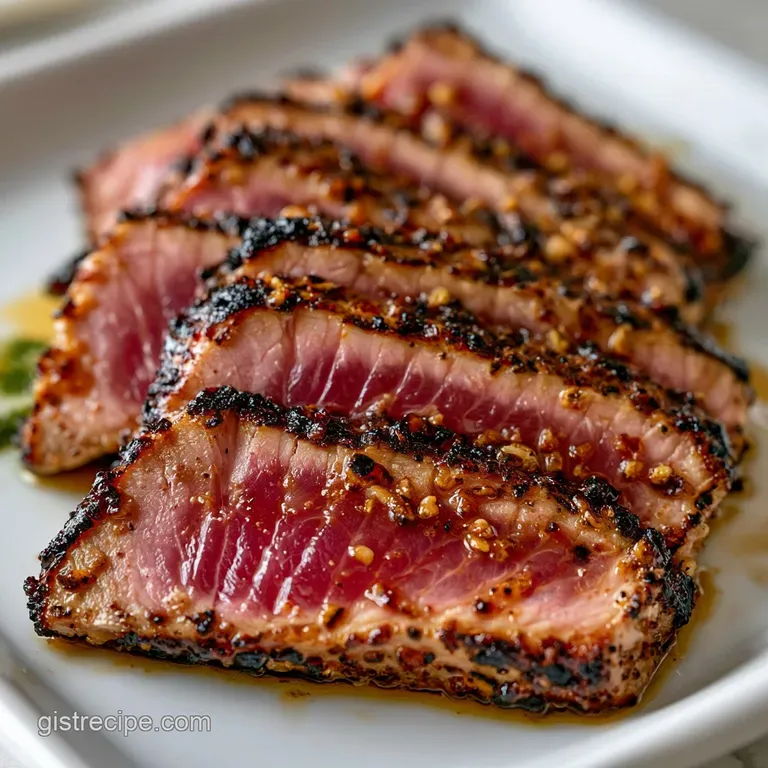
- Sear for 1.5 to 2 minutes per side until a deep mahogany crust forms.
Phase 3: Finishing & Resting
- Use a meat thermometer to verify an internal temperature of 115°F (46°C) for rare/medium rare.
- Transfer steaks to a cutting board and let them rest for 3-5 minutes. Note: This allows juices to redistribute.
- Slice the steak into 1/2 inch thick strips.
Chef's Tip: To get the seeds to stick perfectly, press the tuna into the seeds on a flat plate rather than sprinkling them on top. It creates a solid, professional looking crust.
Fix Common Issues
Dealing with over high heat searing can be nerve wracking. The most common problem is the fish sticking to the pan. This usually happens because the pan wasn't hot enough or the fish was put in too early. If it sticks, leave it alone for 30 seconds; it will naturally release once the crust has formed.
Another issue is the "grey band" effect, where the fish is overcooked around the edges. This happens when the heat is too low, and the fish spends too much time in the pan. High heat for a short time is the only way to keep this tuna steaks recipe looking like a professional dish.
The tuna is sticking to the pan
If the fish won't budge, you likely didn't wait for the oil to shimmer. Force it with a spatula if necessary, but usually, a bit more time allows the sear to release.
The center is grey/overcooked
This is caused by searing for too long or using steaks that are too thin. Stick to the 2 minute rule and use a thermometer.
The sesame seeds are burning
If the seeds turn black instead of brown, your pan is too hot or you're using a low smoke point oil. Adjust the heat slightly down.
| Problem | Root Cause | Solution |
|---|---|---|
| Grey edges | Heat too low / Cooked too long | Increase heat, reduce time |
| Seeds falling off | Not pressed firmly enough | Press into seeds on a plate |
| Bland taste | Under seasoning before sear | Use more salt and pepper |
Common Mistakes Checklist
- ✓ Did you pat the fish completely dry?
- ✓ Is the pan barely smoking before the fish goes in?
- ✓ Did you resist the urge to flip the fish every 30 seconds?
- ✓ Did you let the meat rest for at least 3 minutes?
- ✓ Did you use a neutral oil instead of butter or olive oil?
Adjusting the Portions
When scaling this tuna steaks recipe down for one person, just halve the marinade. However, be careful with the pan size. Using a massive skillet for one small steak can cause the oil to spread too thin and burn. Use a smaller pan to keep the oil concentrated.
If you're cooking for a crowd (4-6 people), do not crowd the pan. If you put four steaks in at once, the temperature will plummet, and you'll end up steaming the fish instead of searing it. Work in batches, searing two at a time, and keep the finished steaks on a warm plate.
For the seasoning, I've found that salt and pepper don't need to be scaled linearly. If you're doubling the recipe, only increase the salt to about 1.5x. Too much salt can draw out moisture during the marinating phase, which ruins the crust.
Kitchen Myths
Some people believe that searing "seals in the juices." This is actually a myth. According to Serious Eats, searing doesn't create a waterproof barrier; moisture loss happens throughout the cooking process. The sear is actually about flavor and texture through the browning of sugars and proteins.
Another misconception is that you need to "warm up" the fish to room temperature before cooking. While this works for a thick ribeye, it's actually dangerous for tuna. Keeping the center cold helps ensure that the inside stays rare while the outside gets that heavy char.
Storage Guidelines
Tuna is best eaten immediately, but if you have leftovers, store them in an airtight container in the fridge for up to 2 days. I don't recommend freezing seared tuna, as the texture of the rare center becomes mealy and unpleasant once thawed.
To reheat, avoid the microwave at all costs. It will overcook the center in seconds, turning your beautiful pink fish into a grey rubbery block. Instead, flash sear it in a hot pan for 30 seconds per side just to warm the crust.
For zero waste, take any leftover marinade and simmer it in a small saucepan for 3-5 minutes until it thickens into a glaze. You can drizzle this over steamed vegetables or use it as a dip for dipping the tuna slices.
Serving Suggestions
Since this dish is rich and salty, you need something bright to cut through the fat. A simple cucumber salad with rice vinegar and a pinch of sugar is the classic choice. If you want something heartier, a side of steamed jasmine rice or sautéed bok choy works wonders.
If you're looking for a complete meal, this pairs beautifully with a Broccoli Casserole recipe if you want something creamy and comforting on the side. The nuttiness of the sesame seeds in the tuna complements the earthiness of the broccoli.
For a little extra pop, garnish your plated tuna with sliced scallions, a squeeze of fresh lime juice, and some toasted sesame seeds. The lime juice is key the acidity wakes up the soy and honey, making the whole tuna steaks recipe feel balanced and fresh.
High in Sodium
950 mg 950 mg of sodium per serving (41% 41% of daily value)
The American Heart Association recommends a daily sodium limit of 2,300mg for most adults to maintain heart health.
Tips to Reduce Sodium
-
Omit Added Salt-25%
Completely remove the kosher salt used for seasoning the tuna; the marinade provides ample saltiness.
-
Switch Soy Sauce-20%
Replace regular soy sauce with low-sodium soy sauce or coconut aminos for a similar savory flavor with less salt.
-
Add Citrus Zest-10%
Squeeze fresh lime or lemon juice over the cooked tuna to brighten the flavor and reduce the reliance on salt.
-
Enhance Aromatics
Double the amount of freshly grated ginger and minced garlic to create a bolder taste without adding sodium.
Recipe FAQs
How to cook tuna steaks?
Sear for 1.5 to 2 minutes per side in a high heat cast iron skillet. Use a meat thermometer to verify an internal temperature of 115°F for a perfect rare or medium rare finish.
What is the best seasoning for tuna steaks?
A combination of soy sauce, sesame oil, honey, ginger, and garlic. After marinating, press sesame seeds onto all sides for a professional crust and nutty flavor.
Is it better to sear tuna in butter or oil?
Use neutral oil. High heat searing requires a high smoke point to create a mahogany crust, which butter cannot sustain without burning.
Should you marinate tuna steak before searing?
Yes, for 10 15 minutes. This short window allows the flavors to penetrate the surface without compromising the firm texture of the fish.
Is it true that tuna steaks don't need to be dried before searing?
No, this is a common misconception. You must pat the steaks bone dry with paper towels to prevent steaming and ensure a proper sear.
Can I reheat seared tuna in the microwave?
No, avoid the microwave entirely. It overcooks the rare center into a rubbery block; instead, flash sear in a pan for 30 seconds per side.
What should I serve with seared tuna?
Pair it with something bright and acidic. This recipe tastes excellent served alongside a fresh corn salsa to balance the richness of the sesame oil.
Pan Seared Tuna Steaks