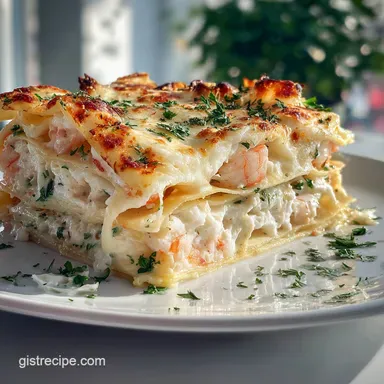
Creamy Seafood Lasagna with Shrimp and Crab

- Time: 20 min active + 50 min baking
- Flavor & Texture: Rich, buttery, and cheesy with tender seafood
- Perfect for: Holiday dinners or a high-effort date night
Creamy Seafood Lasagna
Imagine a rainy Sunday or a fancy holiday where you want something that feels luxurious but still hits like comfort food. This dish is that exact vibe. It swaps the usual red sauce for a thick, garlic infused white sauce and piles in shrimp, scallops, and crab.
It's a heavy hitter. You get the brine of the ocean balanced by the richness of ricotta and mozzarella. Since it's a bake, you can get the prep done and then just let the oven do the work while you hang out with your guests.
The goal here is a golden, bubbling top and layers that actually hold their shape when you slice into them. It's a reliable way to bring seafood to the table without the stress of timing individual fillets.
Recipe Specs
This bake serves 8 people. You'll spend about 20 minutes getting everything prepped and another 50 minutes in the oven. The final result is a dense, satisfying meal with a center temperature of 160°F (71°C).
Gathering Your Essentials
The quality of the seafood makes or breaks this. Use lump crab meat for better texture, and make sure your shrimp are fully deveined.
- Shrimp (1 lb, peeled/deveined): Adds a snap to every bite.
- Lump Crab Meat (1 lb, drained): Provides the sweet, delicate flavor.
- Bay Scallops (½ lb): These stay tender and soak up the sauce.
- Unsalted Butter (2 tbsp for searing, ½ cup for sauce): The primary fat for richness.
- Olive Oil (1 tbsp): Prevents the butter from burning during the high heat sear.
- Kosher Salt & Black Pepper: Basic seasoning for the seafood.
- All-Purpose Flour (½ cup): Thickens the sauce.
- Whole Milk (4 cups, warmed): The base of the white sauce. Why this? Warmed milk prevents clumps when whisking into the roux.
- Garlic (3 cloves, minced): Adds a sharp, savory contrast to the cream.
- Ground Nutmeg (¼ tsp): A tiny pinch that makes the white sauce taste professional.
- Salt & White Pepper: Seasoning for the sauce.
- Ricotta Cheese (15 oz): The structural heart of the layers.
- Large Egg (1, beaten): Binds the ricotta so it doesn't run.
- Fresh Parsley (¼ cup, chopped): Cuts through the richness with a fresh hit.
- Grated Parmesan (½ cup): Adds a salty, nutty depth.
- Lasagna Noodles (12 to 15): The foundation.
- Shredded Mozzarella (3 cups): For that classic cheese pull.
- Fresh Basil (¼ cup, torn): Added at the end for aroma.
For a similar sauce base, you can check out this classic mornay sauce recipe if you want an even cheesier white sauce.
Equipment Needed
You don't need anything fancy here. A large non-stick skillet for the seafood and a heavy bottomed saucepan for the sauce are the most important tools. You'll also need a 9x13-inch baking dish and a whisk to keep that sauce smooth.
From Prep to Plate
Sautéing the Proteins
Cook the lasagna noodles in salted boiling water until al dente, then drain and set aside. Bring your oven temperature up to 375°F (190°C).
Heat the milk in a microwave or a small pot. In a large non-stick skillet, combine olive oil and 2 tbsp of butter over medium-high heat. Add shrimp and scallops in a single layer, searing for 1-2 minutes per side until they just turn opaque.
Stir in the crab meat to warm it through, remove the skillet from the heat, and drain any excess liquid.
Building the White Sauce
Melt ½ cup of butter in a heavy saucepan over medium heat. Whisk in the flour and cook for 2 minutes; it should have a nutty scent but remain pale. Slowly whisk in the warm milk. Simmer the sauce until it thickens and looks glossy, then stir in the garlic, salt, white pepper, and nutmeg.
Remove from the heat.
Preparing the Cheese Base
In a mixing bowl, blend the ricotta, beaten egg, Parmesan, and parsley. Stir until the mixture is smooth and the herbs are evenly mixed in.
Assembling the Layers
Coat the bottom of a 9x13-inch dish with a thin layer of white sauce. Lay down a layer of noodles, then spread over a third of the ricotta mixture. Top with a third of the cooked seafood and a drizzle of white sauce.
Repeat these layers twice more. Finish with a final layer of noodles, the remaining white sauce, and a generous layer of mozzarella.
Achieving the Golden Bake
Cover the dish with foil, tenting it slightly to keep the cheese from sticking. Bake for 25 minutes. Remove the foil and bake for an additional 25 minutes until the top is golden and bubbling. Use a meat thermometer to check that the center reaches 160°F (71°C).
Top with torn basil before serving.
Troubleshooting Guide

One of the biggest issues with seafood bakes is the liquid. If the seafood isn't seared or drained, you'll end up with a soupy mess at the bottom of the pan. Patting your shrimp and scallops dry with paper towels before they hit the pan is the best way to prevent this.
Another common slip is the sauce texture. If the milk is added too fast, the roux can clump. If this happens, you can whisk it vigorously or use a handheld immersion blender to smooth it out before adding the seasonings.
Fixing a Watery Base
Liquid usually comes from frozen seafood that didn't drain well. Ensure all seafood is fully thawed and patted dry.
Stopping Lumpy Sauce
Lumps happen when the milk is cold or added too quickly. Always warm the milk and stream it in slowly.
Managing Burnt Cheese
If the mozzarella browns too fast, you might have the oven rack too high. Move the dish to the center rack or tent it with foil for the last 10 minutes.
| Problem | Root Cause | Solution |
|---|---|---|
| Liquid pooling | Undrained seafood | Pat proteins dry before searing |
| Grainy sauce | Milk added too fast | Stream milk slowly while whisking |
| Hard noodles | Not enough sauce | Add an extra drizzle of béchamel between layers |
| Burnt top | Oven heat too direct | Lower rack or tent with foil |
Dietary Adaptations
This recipe is highly adaptable. For a gluten-free version, use gluten-free lasagna sheets and replace the all-purpose flour with a gluten-free flour mix; the sauce's thickness will stay the same.
If you'd prefer a different protein, substitute the scallops with lobster chunks, making sure not to overcook the lobster while searing. For a more vegetable-forward dish, add a layer of sautéed spinach between the seafood and the ricotta.
For a dairy-free alternative, try a cashew-based ricotta and a béchamel made with coconut milk. Just keep in mind that the strong flavor of coconut milk may clash with the delicate taste of the crab.
Freezing and Reheating Guide
This lasagna freezes surprisingly well. Allow the dish to cool entirely before wrapping it tightly with plastic wrap and aluminum foil. It remains good for 3 months when frozen.
For reheating, thaw it in the refrigerator overnight. Bake at 350°F (175°C) covered with foil for 20 minutes, then remove the foil and bake for an additional 10-15 minutes until the center is hot.
Store any leftovers in an airtight tub; they'll remain fresh for 3 days in the refrigerator. Warm up individual slices in the oven or microwave. I prefer the oven as it prevents the cheese from getting rubbery.
Serving Suggestions
Because this meal is so indulgent, I recommend pairing it with something bright to balance the richness of the cream. A peppery arugula salad tossed in lemon vinaigrette is my favorite companion.
Alternatively, try some roasted broccolini or steamed asparagus. For those craving extra carbohydrates, a slice of crusty garlic bread is perfect for soaking up every bit of the white sauce.
Presentation Tip
Allow the lasagna to sit for 10-15 minutes once removed from the oven. This gives the layers time to firm up, ensuring you serve neat squares rather than a heap of cheese and seafood.
Why This Works
The success of this dish lies in the precise management of moisture and richness.
- The Sear: Searing the shrimp and scallops does more than just boost flavor; it eliminates extra water. This keeps the noodles from becoming soggy and ensures the sauce remains thick.
- Double Cheese Logic: Using a combination of ricotta and mozzarella serves two distinct purposes. Ricotta offers a light, stable structure, whereas mozzarella creates the melted, stretchy effect.
- The Béchamel Bridge: The nutmeg within the white sauce acts as a flavor link between the sweet crab and creamy dairy, creating a cohesive taste profile.
High in Sodium
1080 mg(47% )
To support cardiovascular wellness, the American Heart Association suggests that the average adult limit their daily sodium intake to 2,300mg.
Tips to Reduce Sodium
-
Eliminate Added Salt
Since the recipe utilizes kosher salt and table salt, omitting these is the most effective method for lowering the sodium.
-
Reduce Cheese Quantities
Cut back on the Parmesan and Mozzarella, or swap them for cheese alternatives with less sodium.
-
Rinse Crab Meat
Briefly rinse the lump crab meat under cold water to wash away excess brine or processing salts.
-
Swap Ricotta Cheese
Use a low-sodium version of ricotta or a cashew-based homemade substitute to reduce the filling's salt content.
-
Boost Fresh Aromatics
Add more fresh parsley, basil, and garlic, or use a squeeze of lemon juice to enhance the flavor without adding salt.
Recipe FAQs
How to make shrimp lasagna?
Layer cooked lasagna noodles, a ricotta mixture of cheese and egg, seared shrimp and scallops, and white sauce in a baking dish. Bake covered at 375°F for 25 minutes and uncovered for another 25 minutes.
Do you put cheese on top of lasagna before cooking?
Yes, add a generous coating of mozzarella cheese as the final layer. This creates a golden, bubbling crust during the second half of the baking process.
Can I freeze seafood lasagna?
Yes, you can freeze this dish before or after baking. Store it in a freezer-safe container and keep it in the refrigerator while thawing.
Does this seafood lasagna use a white sauce?
This recipe uses a white sauce made from a roux of butter and flour whisked into warm milk. It provides the creamy base that binds the seafood and noodles together.
Creamy Seafood Lasagna for 8 Servings