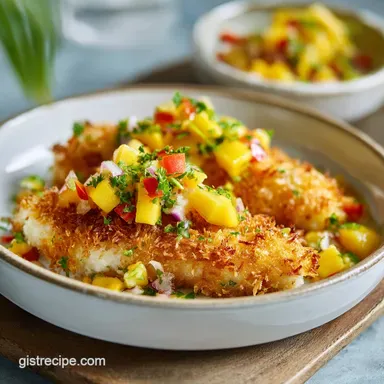
Coconut Crusted Fish with Mango Salsa
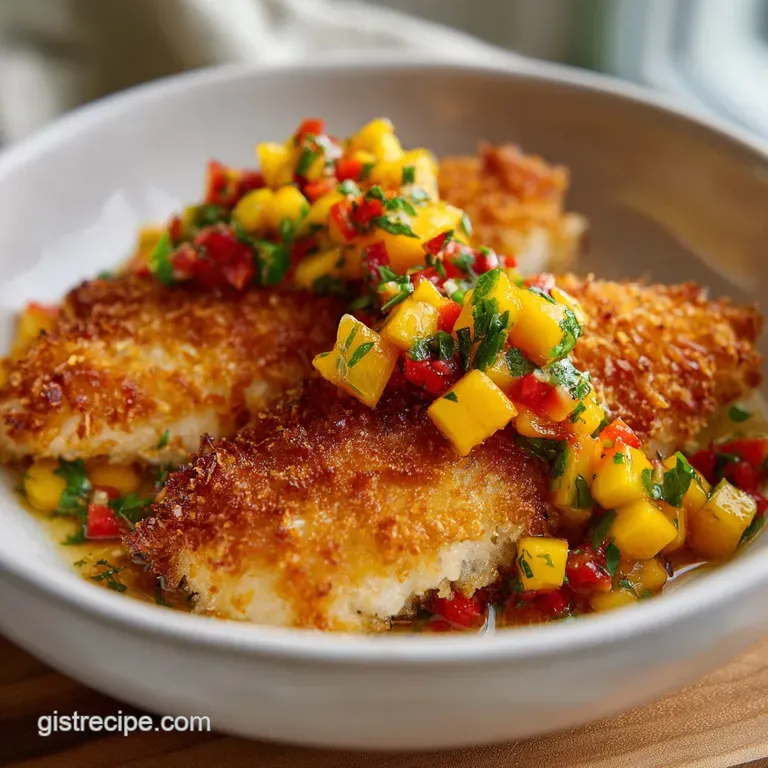
- Time:15 minutes active + 20 minutes baking = Total 35 minutes
- Flavor/Texture Hook: Shatter crisp tropical crust with a velvety, fresh mango topping
- Perfect for: Weeknight dinner, beginner friendly seafood night
- Coconut Crusted Fish
- Why You'll Love This
- Essential Recipe Specs
- The Shopping List
- Essential Kitchen Tools
- Step-by-Step Process
- Stopping Common Disasters
- Troubleshooting Common Issues
- Customizing Your Dish
- Adjusting Your Portion
- Tasting Truths
- Storage and Reheating
- Best Side Pairings
- Recipe FAQs
- 📝 Recipe Card
Coconut Crusted Fish
I'll never forget the first time I tried making this. I had all the right ingredients, but I made the classic mistake of laying the fish fillets directly on a parchment lined baking sheet. I thought I was being efficient, but when I pulled them out, the tops looked great while the bottoms were a wet, mushy disaster.
It tasted more like steamed coconut porridge than a crispy fillet. I almost gave up on the whole idea.
But then I tried using a wire rack. By lifting the fish up, the hot air could circulate underneath, and suddenly everything clicked. The crust didn't just brown, it actually shattered when I bit into it. That's the difference between a dish that feels like a soggy mess and one that actually feels like a treat.
If you've ever struggled with seafood that comes out rubbery or damp, this is the fix.
This recipe is all about that contrast. You have the warm, toasted coconut shell and the cold, zesty mango salsa hitting your tongue at the same time. It's a reliable way to get fancy without actually doing anything complicated.
We're talking about a foolproof method that makes white fish taste like something from a coastal resort, but you can pull it off in under 40 minutes.
Why You'll Love This
Right then, let's talk about why this specific method actually works. Most people just dip and fry, but we're doing something a bit smarter here.
- Panko Hybrid: Pure shredded coconut can sometimes be too oily and doesn't provide much structure. By mixing it with panko, we create a sturdy lattice that stays crispy for longer.
- Coconut Milk Wash: Instead of just using eggs, adding a splash of coconut milk creates a thicker, fattier binder. This helps the breading cling to the fish so it doesn't slide off in the oven.
- Air Circulation: Using a wire rack allows heat to hit the bottom of the fillet. This ensures the underside is just as toasted as the top.
- Acid Balance: The lime juice in the salsa cuts right through the richness of the coconut, keeping the whole plate feeling light.
| Method | Time | Texture | Best For |
|---|---|---|---|
| Oven (Wire Rack) | 20 minutes | Uniformly crisp | Large batches, easy cleanup |
| Stovetop Pan | 10 minutes | Intense sear | Single fillets, deep browning |
Essential Recipe Specs
If you're planning your night, here's the flow. I like to think of this as a three step timeline so you're not rushing while the oven is heating up.
First, the prep flow. You want to get your mango salsa diced and mixed immediately. It needs at least 15 minutes to sit, which lets the lime juice break down the fibers of the mango and draw out the juices from the red onion. While the salsa is chilling, you can set up your breading station.
Next is the cooking flow. This is where we dredge the fish and pop them in the oven. Since the oven is at 400°F, the fish cooks quickly. You aren't watching a pot boil, so you have a few minutes to tidy up your bowls.
Finally, the finish flow. Once the fish hits that mahogany color, let it rest for two minutes. This lets the juices redistribute so the fish stays velvety inside. Then, just heap that cold salsa on top and you're done.
The Shopping List
Trust me on this, don't bother with the pre shredded sweetened coconut. It burns way too fast and makes the dish taste like a dessert. Go for the unsweetened kind.
For the Fish & Breading
- 1 lb white fish fillets Why this? Cod or Tilapia are reliable and mild
- 1 cup unsweetened shredded coconut Why this? Provides the core tropical flavor
- 1/2 cup panko breadcrumbs Why this? Essential for a shatter crisp texture
- 1/2 cup all purpose flour Why this? Acts as the primer for the egg
- 2 large eggs Why this? The primary binding agent
- 1/4 cup coconut milk Why this? Adds richness and helps breading stick
- 1 tsp salt Why this? Enhances all other flavors
- 1/2 tsp black pepper Why this? Adds a subtle warmth
- 1/2 tsp paprika Why this? Gives the crust a deeper color
For the Mango Salsa
- 1 cup fresh mango, diced Why this? Adds sweetness and juiciness
- 1/4 cup red bell pepper, finely diced Why this? Adds crunch and color
- 2 tbsp red onion, finely diced Why this? Provides a sharp contrast
- 2 tbsp fresh cilantro, chopped Why this? Adds a bright, herbal note
- 1 tbsp lime juice Why this? Necessary acid for balance
- 1 tsp jalapeño, de seeded and minced Why this? Gentle heat to wake up the palate
| Original Ingredient | Substitute | Why It Works |
|---|---|---|
| White Fish (1 lb) | Salmon (1 lb) | Richer flavor. Note: Needs 2-3 mins more cooking time |
| Panko (1/2 cup) | Almond Flour (1/2 cup) | gluten-free option. Note: Slightly softer crust |
| Coconut Milk (1/4 cup) | Whole Milk (1/4 cup) | Similar fat content. Note: Lacks the coconut aroma |
| Mango (1 cup) | Pineapple (1 cup) | Similar acidity/sweetness. Note: More tart than mango |
Essential Kitchen Tools
You don't need a professional kitchen for this, but a few specific tools make it foolproof.
First, you need three shallow bowls. Don't try to use one big plate and move things around, or you'll end up with "breading fingerprints" all over your hands. Separate bowls for flour, egg, and coconut keep the process clean.
The real hero is the wire cooling rack. Place this directly on top of a rimmed baking sheet. This is the only way to ensure you don't get that soggy bottom I mentioned earlier.
Finally,, use a sharp chef's knife for the salsa. You want uniform small cubes (about 1/4 inch). If the mango chunks are too big, they'll overwhelm the fish; if they're too small, they'll turn into a jam.
Step-by-step Process
Let's crack on. Follow these steps and you'll have a dinner that looks like it took hours but only took 35 minutes.
Preparing the Tropical Salsa
- Dice the mango, pepper, and onion into uniform small cubes. Fold in the lime juice, cilantro, and jalapeño. Let the salsa sit for at least 15 minutes to meld the flavors. Note: This resting time is key for the flavors to penetrate the mango.
Establishing the Breading Station
- Set up your three bowls. In the first, mix the flour with salt, pepper, and paprika. In the second, whisk the eggs with the coconut milk. In the third, combine the shredded coconut and panko. Note: Mixing the panko and coconut thoroughly prevents clumps of just one ingredient.
Coating the Fillets
- Pat the fish fillets completely dry with paper towels. This is a huge step, as moisture is the enemy of a crispy crust.
- Press each fillet into the seasoned flour, shaking off any excess.
- Dip the floured fish into the egg and coconut milk mixture, ensuring every inch is covered.
- Firmly press the fillet into the coconut and panko blend. Use your palms to push the breading in so it's tightly packed. Note: If you just sprinkle it on, it will flake off during baking.
Achieving the Golden Finish
- Place the breaded fillets on the wire rack over your baking sheet.
- Bake at 400°F (200°C) for 12–15 minutes until the crust is mahogany colored and the fish flakes easily with a fork.
- Use a meat thermometer to check that the internal temperature has reached 145°F. Note: Pull them out exactly at 145°F to keep the inside velvety.
- Let the fish rest for 2 minutes, then top with a generous scoop of the chilled mango salsa.
Stopping Common Disasters
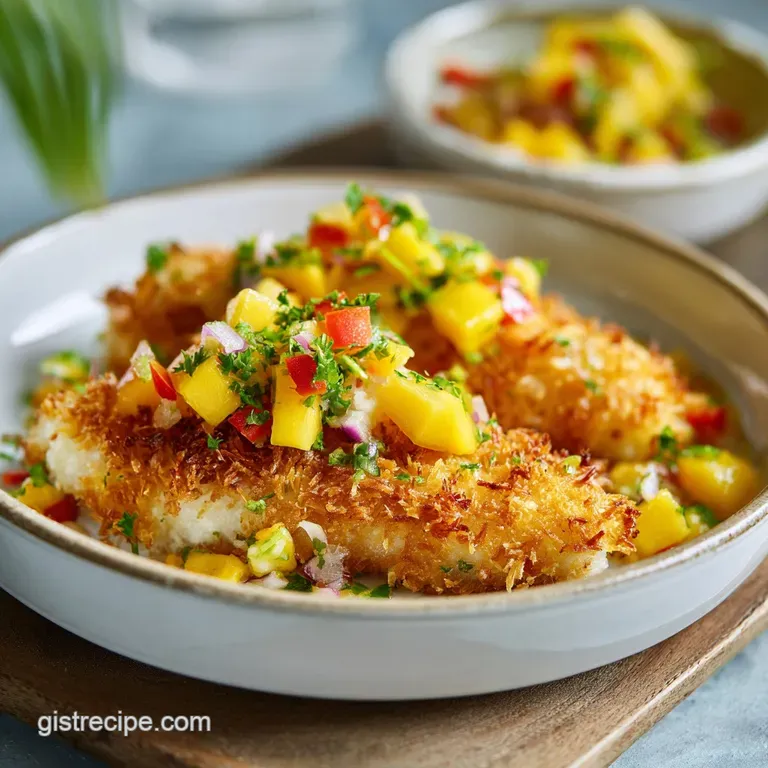
Even the best of us mess up sometimes. If your Coconut Crusted Fish isn't behaving, it's usually one of three things.
Troubleshooting Common Issues
| Issue | Solution |
|---|---|
| Why Your Crust Sloughs Off | If you find the breading sliding off the fish in one big piece, you likely skipped the drying step. Water on the surface of the fish creates a barrier that prevents the flour from sticking. Also, if y |
| Why Fish is Rubbery | Rubbery fish is the result of overcooking. Because we're using a high heat of 400°F, the window between "perfect" and "overdone" is small. The fish continues to cook for a few minutes after you take i |
| Why Your Salsa is Bland | If the salsa tastes flat, you're likely missing acid. Mango is very sweet, and it needs a punch of lime juice to balance it out. Don't be afraid to add an extra squeeze of lime right before serving. < |
Common Mistakes Checklist
- ✓ Did I pat the fish completely dry?
- ✓ Is the coconut unsweetened?
- ✓ Am I using a wire rack instead of a flat pan?
- ✓ Did I let the salsa sit for 15 minutes?
- ✓ Did I check for an internal temp of 145°F?
Customizing Your Dish
Once you've got the basic Coconut Crusted Fish down, you can start playing with the flavors. Honestly, this is where it gets fun.
If you want a bit more kick, you can add a pinch of cayenne pepper to the flour mixture. This gives the crust a subtle heat that pairs brilliantly with the sweet mango. For those who like a dipping sauce, I highly recommend making a Spicy Mayo recipe on the side. The creamy, spicy notes of the mayo complement the coconut perfectly.
You can also swap the fish depending on what's on sale. Tilapia is the most reliable for a budget, but Halibut or Mahi Mahi provide a meatier texture that holds up well to the heavy crust. If you're feeling adventurous, try using a different fruit in the salsa.
Diced pineapple or peaches work beautifully, though mango is the gold standard here.
For a totally different vibe, you can transform this into coconut fish tacos. Just flake the cooked fish into warm corn tortillas and top with the mango salsa and some sliced avocado. It's a great way to turn one dinner into two different meals.
Adjusting Your Portion
Scaling this recipe is pretty straightforward, but you can't just multiply everything by four and hope for the best.
Scaling Down (1-2 people): If you're only making two fillets, you can halve the ingredients. However, I suggest beating one full egg and just using half of it. You'll still need about 1/4 cup of coconut milk to keep the consistency right.
Use a smaller baking sheet so the fillets aren't too far apart, which helps with heat distribution.
Scaling Up (6-8 people): When doubling the recipe, be careful with the salt and paprika. I usually only increase spices to about 1.5x the original amount to avoid them becoming overpowering. Most importantly, work in batches.
If you crowd the wire rack too much, the fillets will steam each other, and you'll be right back to that soggy bottom problem.
Air Fryer Method: If you have an air fryer, this is actually a brilliant way to cook it. Set the air fryer to 375°F. Because the air circulation is so intense, you can reduce the cook time to about 8-10 minutes. Just make sure not to overlap the fillets.
Tasting Truths
Let's clear up a few things I used to believe about cooking fish.
First, there's a common idea that searing or breading fish "seals in the juices." That's not actually true. Moisture loss happens regardless of the crust. The real reason we use the coconut and panko is for the flavor and the texture.
The crust protects the fish from the direct heat, but it doesn't act as a vacuum seal.
Second, some people think coconut burns instantly in the oven. While it's true that sugar heavy ingredients burn fast, unsweetened coconut is quite resilient at 400°F for a short window. As long as you're watching for that mahogany color, you won't burn it.
Finally, don't believe that you need a "fancy" fish like Sea Bass for this to taste good. The coconut crust is a powerhouse of flavor. It makes even a simple piece of tilapia taste like a high end meal.
Storage and Reheating
If you happen to have leftovers (which is rare in my house), you have to be careful with how you store them to keep that crunch.
Fridge Storage: Store the cooked fish in an airtight container for up to 2 days. Keep the mango salsa in a separate container. If you store them together, the moisture from the salsa will soak into the crust, and it'll turn into mush.
Freezing Guidelines: I don't recommend freezing the fish after it's been cooked, as the texture becomes rubbery. However, you can freeze the raw, breaded fillets. Just place them on a tray to freeze individually first, then move them to a freezer bag.
When you're ready, bake them straight from frozen at 400°F for an extra 5 minutes.
Reheating for Crispiness: Never use a microwave to reheat Coconut Crusted Fish. It'll turn the crust into a sponge. Instead, pop the fillets back in the oven at 350°F for about 5-7 minutes or toss them in an air fryer for 3 minutes.
This brings back the shatter crisp finish.
Zero Waste Tips: Don't throw away the leftover coconut milk from the egg wash, though it's a small amount, you can add it to a smoothie. More importantly, use the remaining lime halves. Squeeze them into your water or use the zest in a batch of cookies.
If you have leftover mango, dice it up and toss it into a morning yogurt bowl.
Best Side Pairings
To make this a full meal, you need sides that don't compete with the tropical flavors of the fish.
I love pairing this with a light, zesty side. A Corn Salsa recipe is a great companion here because it mirrors the freshness of the mango without being too sweet. It adds a nice pops of corn texture to the plate.
If you want something more substantial, go for a coconut rice or a simple quinoa salad with lime and parsley. Steamed bok choy or sautéed spinach also work well, providing a bitter, earthy contrast to the sweet and toasted notes of the coconut.
For a drink, a crisp white wine like Sauvignon Blanc or a sparkling lime water is the way to go. You want something that cleanses the palate between bites of that rich, buttery crust and the sweet mango.
Right then, you've got everything you need to nail this Coconut Crusted Fish. Just remember: pat the fish dry, use the wire rack, and don't overcook it. Trust me, your taste buds will thank you. Let's get cooking!
Recipe FAQs
Why does the coconut crust fall off the fish?
You likely skipped drying the fish. Moisture on the surface creates a barrier that prevents the flour from sticking. Always pat fillets completely dry with paper towels before dredging.
How to tell when the fish is perfectly cooked?
Check for an internal temperature of 145°F. The crust should be mahogany-colored and the flesh should flake easily with a fork.
Can I use different types of white fish for this recipe?
Yes, any firm white fish works. If you enjoy the delicate flavor of a baked walleye, that would be an excellent choice here.
Is it okay to store the fish and mango salsa in the same container?
No, keep them separate. Moisture from the salsa will soak into the breading, turning your crunchy crust into mush. Store them in individual airtight containers for up to 2 days.
Is it true that this fish must be deep-fried to get a crunchy crust?
No, this is a common misconception. Baking at 400°F on a wire rack allows air to circulate, achieving a mahogany, crunchy finish without frying.
How to apply the breading to ensure it sticks?
Press the fillets firmly into each station. Start with the seasoned flour, dip into the egg and coconut milk mixture, and firmly press the coconut-panko blend into the fish until tightly coated.
Can I freeze the cooked fish for later?
No, avoid freezing once cooked. The texture becomes rubbery upon reheating. You can, however, freeze raw, breaded fillets on a tray before transferring them to a freezer bag.
Coconut Crusted Fish in 35 Minutes