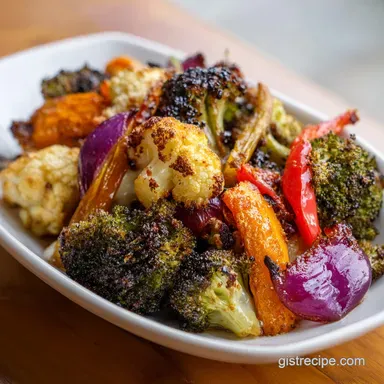
Garlic Roasted Vegetables: Bold and Caramelized
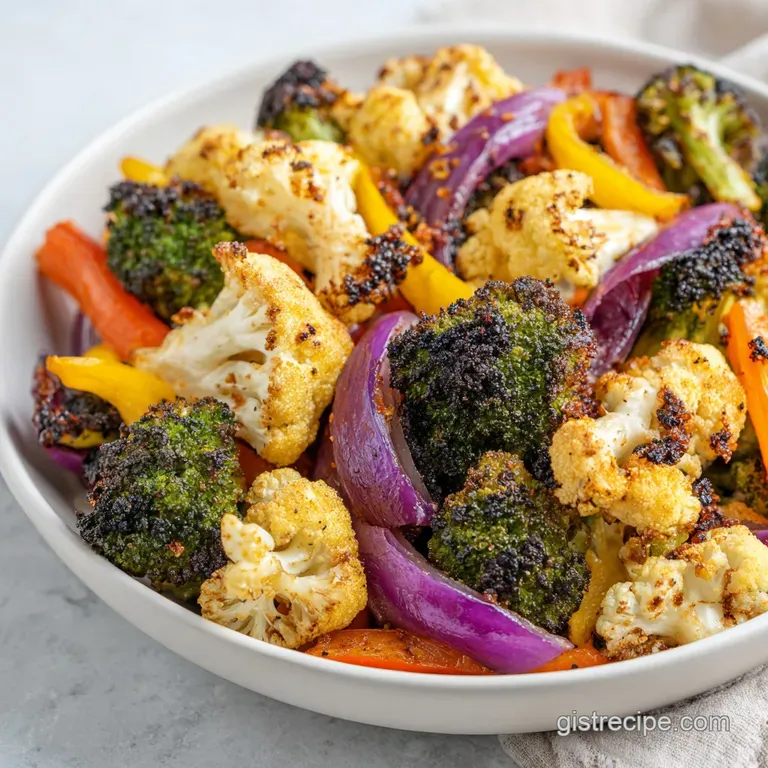
- Time:10 minutes active + 25 minutes roasting = Total 35 minutes
- Flavor/Texture Hook: Mahogany charred edges with velvety roasted garlic
- Perfect for: Effortless weeknight sides or healthy meal prep
- The Secret to Garlic Roasted Vegetables
- Essential Roast Timings and Stats
- The Secret to That Golden Char
- Component Analysis
- Selecting Produce and Flavor Enhancers
- Essential Tools for Golden Roasting
- Guide to Roasting for Flavor
- Solving Roasting Blunders and Texture
- Creative Twists and Flavor Variations
- Dispelling Kitchen Misconceptions
- Storage and Zero Waste Habits
- Plating for Vibrant Visual Appeal
- Recipe FAQs
- 📝 Recipe Card
The Secret to Garlic Roasted Vegetables
That first smell when you open the oven is everything. It's not just "vegetables"; it's the scent of butter browning, the sharp punch of garlic mellowing into something sweet, and the earthy aroma of oregano hitting high heat.
It’s the kind of smell that makes everyone in the house wander into the kitchen asking, "What is that?"
I remember the first time I tried making these for a dinner party. I was ambitious and tossed way too many carrots and broccoli onto one single sheet pan. I thought "more is better," but I ended up with a soggy, pale mess that tasted like steamed vegetables. It was a total letdown.
I realized then that the oven isn't just a heating box; it's about managing moisture.
Since then, I've learned that the real magic happens in the gaps between the veggies. When you give them room to breathe, the water evaporates quickly, letting the sugars caramelize into those gorgeous, dark brown edges.
This recipe is all about that contrast - the crunch of a charred broccoli floret against the silky, squeeze out goodness of a whole roasted garlic head.
Essential Roast Timings and Stats
Getting the timing right is the difference between a vibrant side and a burnt disaster. Because we're using a mix of "hard" vegetables like carrots and "soft" ones like peppers, the cut size is your only real lever for control.
Keeping everything around one inch ensures they all hit that peak caramelization at the exact same time.
The heat is set to 400°F (200°C) because it's the "sweet spot" for vegetables. Any lower and they just soften; any higher and the minced garlic burns before the carrots are tender. It's a tight window, but that's where the flavor lives.
The Secret to That Golden Char
I used to think roasting was just "baking for veggies," but it's actually more about moisture management. Here is what's actually happening in your oven:
- Surface Evaporation: High heat quickly dries the outer layer of the vegetable, which allows the temperature to rise above the boiling point of water.
- Fat Conduction: Butter doesn't just add flavor; it acts as a heat conductor, transferring energy from the pan to the vegetable's surface more efficiently than air.
- Garlic Transformation: The minced garlic provides an immediate punch, while the whole head undergoes a slow breakdown of sulfur compounds, turning pungent cloves into a velvety paste.
| Method | Time | Texture | Best For |
|---|---|---|---|
| Oven Roast | 25 min | Charred edges, tender centers | Large batches, depth of flavor |
| Stovetop | 15 min | Sautéed, softer bite | Quick portions, vibrant color |
| Air Fryer | 12 min | Extra crispy, concentrated | Small batches, maximum crunch |
Component Analysis
Not every ingredient is doing the same job here. Some are for structure, while others are purely for the flavor build.
| Ingredient | Science Role | Pro Secret |
|---|---|---|
| Unsalted Butter | Heat Medium | Use melted butter for a more even coat than oil |
| Minced Garlic | Top Note | Add at the very end of tossing to prevent early burning |
| Carrots | Sugar Base | Cut into rounds to maximize the surface area for browning |
| Whole Garlic Head | Base Note | Wrap in foil to steam the cloves in their own oils |
Selecting Produce and Flavor Enhancers
For this to work, you need vegetables that can handle 400°F without disintegrating. I always go for a mix of colors because the visual appeal is half the battle. If you're looking to boost your nutrient intake while enjoying a side, try these USDA FoodData Central guidelines for selecting the freshest produce.
- Broccoli florets (2 cups / 300g): Why this? Provides the best "char" surfaces. Substitute: Cauliflower or Romanesco.
- Cauliflower florets (2 cups / 300g): Why this? Absorbs garlic butter beautifully. Substitute: Parsnips.
- Carrots (2 large / 150g): Why this? Adds natural sweetness. Substitute: Sweet potato (cut smaller).
- Red onion (1 medium / 110g): Why this? Caramelizes into savory jam. Substitute: Shallots.
- Red bell pepper (1 large / 150g): Why this? Adds vibrant color and acidity. Substitute: Yellow pepper.
- Unsalted butter (3 tbsp / 42g), melted: Why this? Richer flavor than oil. Substitute: Olive oil (coconut oil for a nutty twist).
- Garlic (4 cloves / 12g, minced): Why this? Immediate savory punch. Substitute: Garlic powder (though less punchy).
- Dried oregano (1 tsp / 2g): Why this? Classic Mediterranean earthiness. Substitute: Dried thyme.
- Kosher salt (½ tsp / 3g): Why this? Draws out moisture for better browning. Substitute: Sea salt.
- Black pepper (¼ tsp / 1g): Why this? Adds subtle heat. Substitute: White pepper.
- Whole garlic head (1 head / 50g): Why this? Creates a creamy finishing sauce. Substitute: None (this is the star!).
| Original Ingredient | Substitute | Why It Works |
|---|---|---|
| Unsalted Butter | Extra Virgin Olive Oil | Healthy fat. Note: Less "creamy" flavor, more fruity |
| Dried Oregano | Dried Basil | Similar herbal profile. Note: Sweeter, less earthy |
| Red Bell Pepper | Zucchini | Similar texture. Note: Releases more water, might steam |
Wait, don't forget that if you're trying to keep things strictly Whole30, just swap the butter for avocado oil or ghee. The results are almost identical in terms of the char.
Essential Tools for Golden Roasting
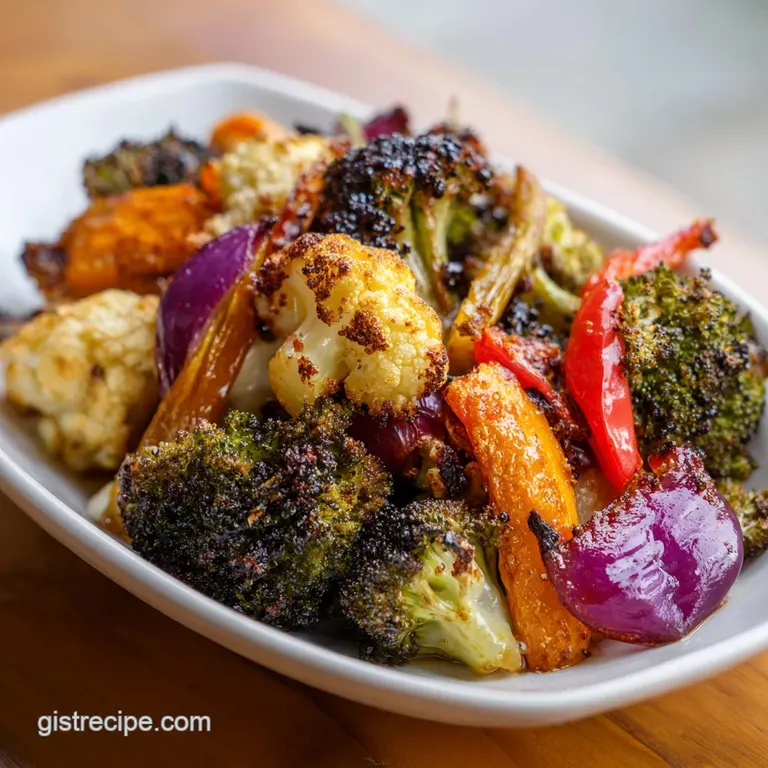
You don't need a professional kitchen, but a few specific tools make a huge difference. I've found that using a rimmed baking sheet is non negotiable; otherwise, the melted butter will run off the edge and create a smoke bomb in your oven.
Parchment paper is my best friend here. Not only does it stop the vegetables from sticking, but it also creates a slight barrier that prevents the bottom from burning before the top is browned. If you have a large enough pan, use it. If not, use two pans. Overcrowding is the enemy of crispiness.
Guide to Roasting for Flavor
Right then, let's get into the actual cooking. Trust me on this: the drying step is the most important part of the whole process.
- Prepare the produce. Wash and dry all vegetables thoroughly. Note: Water on the surface creates steam, which prevents browning. Cut the carrots, onions, and peppers into uniform 1 inch chunks to ensure even caramelization.
- Season the mix. In a large mixing bowl, toss the broccoli, cauliflower, carrots, onions, and peppers with melted butter, minced garlic, dried oregano, salt, and black pepper until every surface is glistening.
- Arrange the pan. Spread the vegetable mixture in a single layer on a parchment lined rimmed baking sheet, leaving at least 1 inch of space between pieces to prevent steaming.
- Prep the garlic head. Wrap the whole head of garlic in foil with a drizzle of oil and place it on the corner of the baking sheet.
- The first roast. Place the pan in the center rack of the oven.
- Monitor the heat. Roast at 400°F (200°C) for 20–25 minutes.
- Check for doneness. Look for the broccoli edges to be charred dark brown and carrots to appear glazed.
- The final touch. Remove the roasted garlic head from the pan and carefully squeeze the velvety cloves over the vegetables.
Chef's Tip: Try freezing your butter for 10 minutes before melting it if you want a slightly different fat distribution, or add a pinch of smoked paprika to the mix to give it a "fire roasted" depth without a grill.
Solving Roasting Blunders and Texture
The most common complaint I hear is that vegetables come out "mushy." Usually, this is because the pan was too crowded. When vegetables are touching, they release steam, and that steam gets trapped, effectively boiling the veggies in their own juices.
Another issue is the garlic. Minced garlic has a very low burn point. If you see it turning black too quickly, it's usually because the oven temperature was too high or the garlic wasn't well coated in butter.
Preventing Mushy Textures
If your veggies are soft but not brown, you likely have too much moisture. Try roasting them on a wire rack over the baking sheet next time to let air circulate under the produce.
| Problem | Root Cause | Solution |
|---|---|---|
| Soggy Veggies | Pan overcrowded | Use two baking sheets instead of one |
| Burnt Garlic | High heat/low fat | Ensure garlic is fully coated in butter |
| Hard Carrots | Uneven cutting | Slice carrots into thinner, uniform rounds |
Common Mistakes Checklist
- ✓ Pat broccoli and cauliflower completely dry after washing
- ✓ Use parchment paper to prevent sticking and uneven searing
- ✓ Avoid using "spray" oils; toss in a bowl for full coverage
- ✓ Leave visible gaps between vegetables on the pan
- ✓ Rotate the pan halfway through if your oven has hot spots
Creative Twists and Flavor Variations
This recipe is a fantastic base. If you're feeling bold, you can easily pivot this into a mediterranean style by adding kalamata olives and feta cheese during the last 5 minutes of roasting.
For those who love a bit of a kick, a drizzle of Sriracha or a sprinkle of red pepper flakes right before serving adds a great contrast to the sweet carrots.
If you want to turn this into a full feast, pair it with my Crispy Garlic Parmesan Potatoes recipe for a complete carb and veggie spread. Or, if you're looking for something a bit lighter on the side, Sauteed Green Beans with Garlic provides a fresh, snappy contrast to the roasted depth of these vegetables.
Adapting for Air Fryer
To use an air fryer, keep the temp at 400°F (200°C) but reduce the time to 12-15 minutes. Shake the basket every 5 minutes. Note that you can't roast the whole garlic head as effectively in an air fryer; I recommend roasting the head in the oven separately.
Adding a Parmesan Crust
Toss the vegetables with 2 tablespoons of grated Parmesan cheese during the last 5 minutes of roasting. The cheese will shatter when you bite into it, adding a salty, umami layer to the dish.
Dispelling Kitchen Misconceptions
There's a lot of noise about roasting. One big myth is that you need to "sear" vegetables in a pan first to lock in flavor. Honestly, don't even bother. A high temperature oven does the same work with 90% less effort. The caramelization happens just as well on a parchment lined sheet.
Another one is that olive oil is always better than butter for roasting. While olive oil has a higher smoke point, butter provides a flavor depth that oil just can't touch. As long as you stay around 400°F, butter is perfectly stable and makes the vegetables taste far more indulgent.
Storage and Zero Waste Habits
If you have leftovers, store them in an airtight glass container in the fridge for up to 4 days. I don't recommend freezing these, as the broccoli and peppers lose their structural integrity and become mushy upon thawing.
To reheat, avoid the microwave if you can. Pop them back in the oven or a skillet for 5 minutes at 350°F (180°C). This brings back that "shatter" to the charred edges.
For zero waste, don't throw away the carrot tops! If they're fresh, you can blend them with garlic, lemon, and oil to make a vibrant pesto. Also, the skins from the red onion can be tossed into a scrap bag in the freezer to make a rich vegetable stock later.
Plating for Vibrant Visual Appeal
Don't just dump these on a plate. The colors are too beautiful for that. I like to use a wide, shallow platter so the vegetables don't pile up and lose their crispness.
Spread the vegetables out and place the squeezed, roasted garlic cloves in small mounds around the edges. Garnish with a sprinkle of fresh parsley or a squeeze of fresh lemon juice. The acidity of the lemon cuts through the richness of the butter and makes the colors pop.
It transforms a simple side into something that looks like it came from a professional kitchen.
Recipe FAQs
Are roasted vegetables ok for diabetics?
Yes, they are generally a great option. Most of the ingredients here, like broccoli and cauliflower, are low-glycemic and rich in fiber.
What vegetables are good with garlic?
Broccoli, cauliflower, carrots, onions, and red bell peppers work best. These specific vegetables stand up well to high heat and complement the savory profile of both minced and roasted garlic.
Is it better to roast veggies at 400 or 425?
Stick with 400°F (200°C). This temperature ensures the carrots glaze and the broccoli chars without burning the minced garlic too quickly.
What is the secret to crispy roast vegetables?
Spread them in a single layer with space between pieces. Crowding the pan causes the vegetables to steam rather than roast, which prevents those charred, crispy edges.
How to store and reheat leftover roasted vegetables?
Place them in an airtight glass container in the fridge for up to 4 days. Reheat in an oven or skillet at 350°F (180°C) for 5 minutes to restore the texture.
Do I need to cut the vegetables into different sizes?
No, keep them uniform. Cut your carrots, onions, and peppers into consistent 1 inch chunks so they all finish cooking at the same time.
What can I serve with these garlic roasted vegetables?
Pair them with a protein or a crusty side. They go perfectly with a side of garlic bread for a complete meal.
Garlic Roasted Vegetables in 35 Minutes: Caramelized and Bold