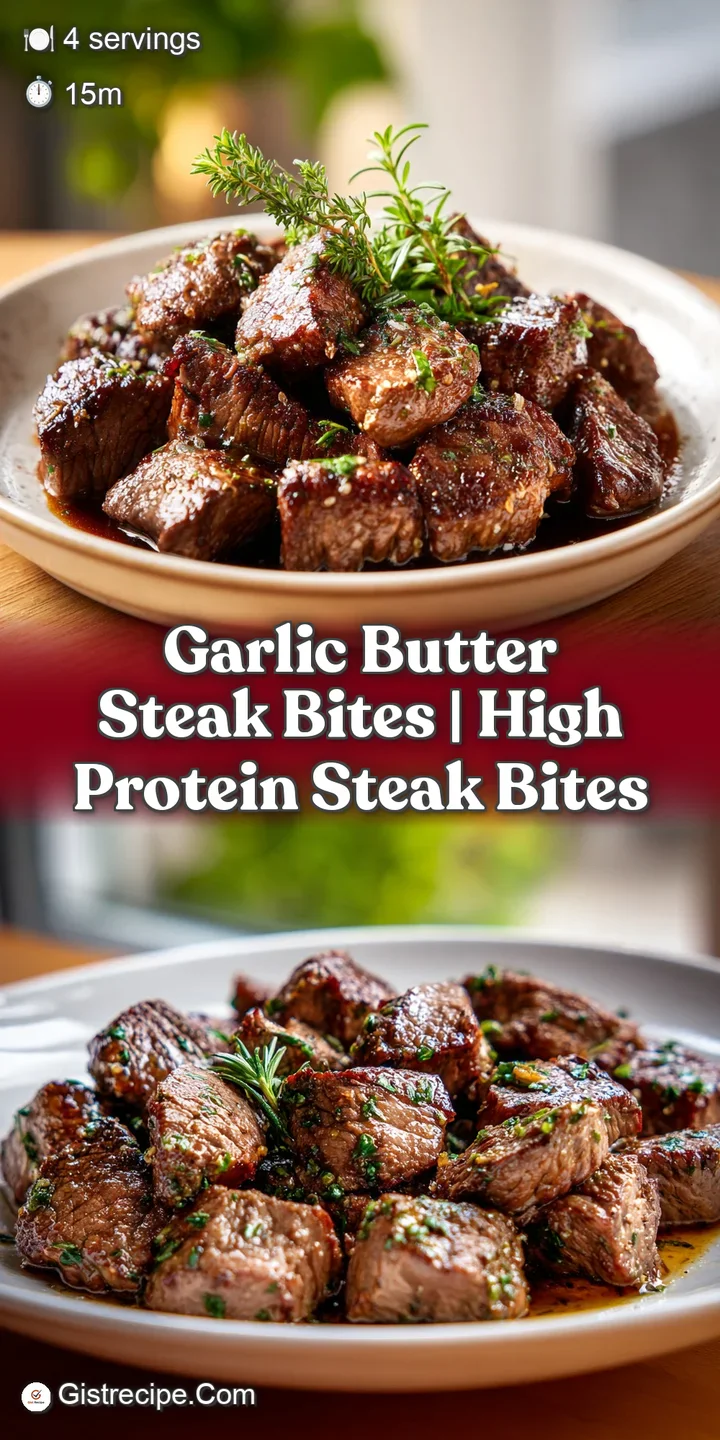
Garlic Butter Steak Bites: Savory and Tender
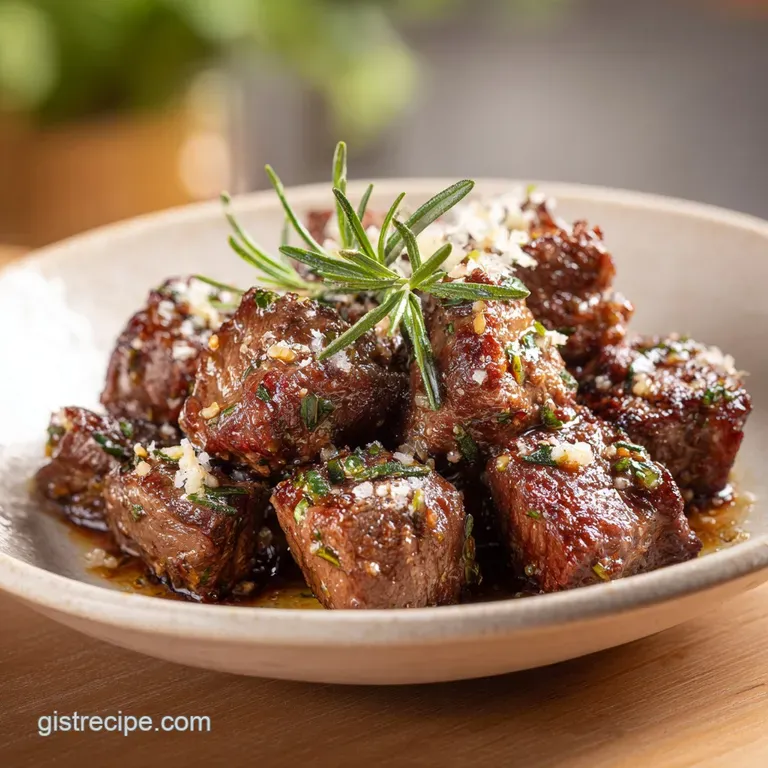
- Time: Active 10 mins, Passive 5 mins, Total 15 mins
- Flavor/Texture Hook: Savory garlic herb crust with a velvety, melt in-the mouth center
- Perfect for: High protein weeknight dinners or a quick impressive appetizer
- Master the Ultimate Seared Steak Tips
- Why This Recipe Works
- The Essential Component List
- Reliable Skillet Cooking Tools
- Eight Steps for Success
- Fixing Common Searing Issues
- Adjusting for Different Groups
- Debunking Searing Misconceptions
- Handling Leftovers and Scraps
- Ideal Pairing Options
- Very High in Sodium
- Recipe FAQs
- 📝 Recipe Card
Master the Ultimate Seared Steak Tips
We’ve all been there: you’re craving a high protein, savory dinner, you toss some cubed beef into a pan, and instead of a beautiful brown sear, the meat starts releasing water. Suddenly, you aren't searing; you’re boiling your dinner in its own juices.
The result is a rubbery, gray, and frankly depressing pile of beef that tastes more like a gym prep meal than a steakhouse classic. I used to make this mistake constantly until I realized that heat management and surface moisture are the only things that actually matter for steak tips.
The secret isn't a fancy marinade or an expensive grill. It’s about creating a violent contrast between a cold, dry piece of meat and a ripping hot cast iron surface. This recipe is my reliable, no fuss fix for anyone who has ever struggled with tough or bland beef bites.
We're going to use simple tools just a heavy skillet and a spoon to get a restaurant quality finish in exactly 15 minutes.
Right then, let's talk about what we're actually doing here. We are aiming for a mahogany crust that shatters slightly when you bite into it, followed by a center that stays lush and pink. By the time the garlic butter hits the pan at the very end, you’ll have a kitchen that smells like a professional kitchen.
Trust me on this: once you nail the timing, you’ll never go back to the "toss and pray" method of cooking beef.
Why This Recipe Works
Achieving that specific steakhouse texture at home comes down to a few non negotiable rules of physics that most home cooks accidentally ignore. It’s not about how long you cook the meat, but how much heat the meat can absorb in the first sixty seconds.
- Thermal Mass Efficiency: Using a heavy cast iron skillet allows the pan to hold onto its heat even when 680 grams of cold meat are dropped onto it. This prevents the temperature drop that leads to "steaming" rather than searing.
- Surface Desiccation: By patting the meat dry, we ensure the energy from the pan goes directly into browning the proteins instead of wasting time evaporating surface water.
- Carryover Heat Control: Adding the butter and aromatics at the very end prevents the garlic from burning while allowing the residual heat of the pan to gently finish the interior of the meat.
| Thickness | Internal Temp | Rest Time | Visual Cue |
|---|---|---|---|
| 2.5 cm cubes | 54°C (Med Rare) | 2 minutes | Resilient but bouncy to the touch |
| 2.5 cm cubes | 60°C (Medium) | 3 minutes | Firm with clear juices on top |
| 2.5 cm cubes | 68°C (Medium Well) | 3 minutes | Very stiff with no give |
Finding the right balance of heat is essential because a pan that is too cold will result in that dreaded gray texture, while a pan that is far too hot might burn the oil before the meat even hits the surface. We are looking for that sweet spot where the oil just begins to shimmer and produce a tiny wisp of smoke.
| Component | Scientific Role | Pro Secret |
|---|---|---|
| Sirloin/Strip | Muscle Fiber Density | These cuts have the right lean to fat ratio for over high heat, short duration cooking. |
| Kosher Salt | Protein Denaturation | Coarse grains help create more surface area for the crust to grip onto. |
| High Smoke Oil | Heat Conductivity | Avocado oil stays stable at 260°C, ensuring the meat browns without a bitter, burnt oil taste. |
| Grass fed Butter | Flavor Emulsification | The milk solids brown and stick to the meat, acting as a "velvety" flavor glue for the herbs. |
One mistake I once made was using extra virgin olive oil for this. Honestly, don't even bother; it will smoke out your kitchen and leave a funky, acrid taste on your beautiful steak tips. Stick to a neutral oil with a high smoke point like grapeseed or avocado oil to let the beefy flavor shine through.
The Essential Component List
- 680g (1.5 lbs) sirloin or New York strip: Cut these into 2.5 cm (1 inch) cubes. Why this? Sirloin provides the best balance of tenderness and affordability for quick searing.
- Substitute: Ribeye (richer but more expensive) or Beef Tenderloin.
- 1 tbsp neutral high smoke point oil: Avocado or Grapeseed oil. Why this? Prevents the oil from breaking down and tasting bitter at high temperatures.
- Substitute: Ghee or clarified butter.
- 1.5 tsp Kosher salt: Why this? The larger grains distribute more evenly and help create a better crust.
- Substitute: 1 tsp fine sea salt (use less as it's saltier by volume).
- 1 tsp coarsely cracked black pepper: Why this? Adds a punchy, textural element that doesn't just disappear into the meat.
- Substitute: White pepper for a more floral, sharp heat.
- 42g (3 tbsp) unsalted grass fed butter: Why this? Adds richness and creates the base for the garlic herb basting sauce.
- Substitute: Salted butter (just reduce the added salt by half).
- 4 cloves garlic: Smashed and minced. Why this? Smashed garlic releases all its oils into the butter more effectively than pre minced jars.
- Substitute: 1 tsp garlic powder (added at the very end to prevent burning).
- 1 tbsp fresh parsley: Finely chopped. Why this? Provides a bright, grassy contrast to the heavy, rich beef and butter.
- Substitute: Fresh cilantro for a different flavor profile.
- 1 tsp fresh rosemary: Minced. Why this? The piney aroma pairs perfectly with seared beef.
- Substitute: Fresh thyme or dried rosemary (use half the amount).
Reliable Skillet Cooking Tools
To get this right, the gear matters more than the skill level. You need a 12 inch cast iron skillet (like a Lodge). Cast iron is king here because it acts as a heat battery. Once it gets hot, it stays hot.
If you use a thin stainless steel or non stick pan, the temperature will plummet as soon as you add the meat, and you’ll end up with that soggy, gray texture we are trying to avoid.
You also need a heavy duty spoon for basting. This is a step most people skip, but it’s how you get that silky finish. As the butter foams, you’ll tilt the pan and shower the steak tips in that liquid gold. Finally, grab a set of stainless steel tongs.
You need to be able to flip the pieces individually if necessary to ensure every side hits the metal. A spatula is okay, but tongs give you the precision to move pieces that are crowding each other.
Eight Steps for Success
- Dry the beef: Pat the 680g of steak cubes extremely dry with paper towels. Note: Any surface moisture will turn into steam and prevent a crispy crust from forming.
- Season well: Generously toss the cubes with 1.5 tsp Kosher salt and 1 tsp black pepper immediately before you are ready to cook.
- Prepare the pan: Heat your cast iron skillet over high heat. Add the 1 tbsp of oil and wait until it is shimmering and just starting to release a tiny wisp of smoke.
- The First Sear: Add the steak in a single layer. Note: Do not touch them for 2 full minutes. You need this time to develop that mahogany, "shatter" texture crust.
- The Flip: Use your tongs to flip the steak bites. Sear for another 2 minutes until browned on the other side. The total sear time should be approximately 4 minutes.
- Lower the temp: Reduce the heat to medium. This prevents the butter from burning the moment it hits the hot metal.
- Add aromatics: Toss in the 42g of butter, minced garlic, and the rosemary.
- The Baste: Tilt the pan so the butter pools at the bottom. Use a large spoon to baste the steak bites with the foaming garlic butter for 60 seconds. Remove from the heat and toss in the parsley before serving.
Fixing Common Searing Issues
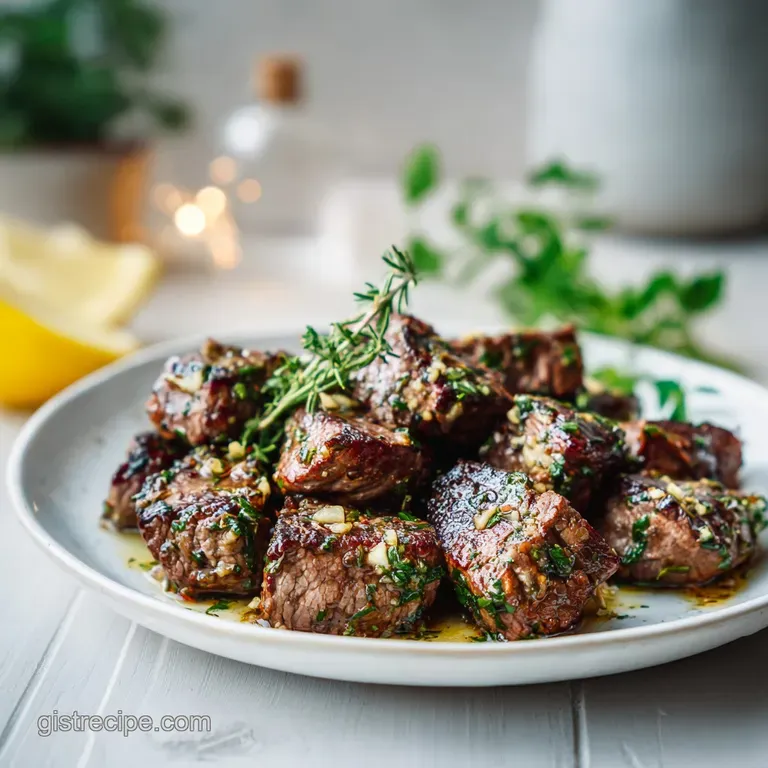
If you find that your meat isn't browning, it’s almost always a temperature issue. Most home cooks are afraid of "high heat," but for a 5 minute cook time, you need that aggressive sizzle. If you see liquid pooling in the pan, stop immediately, pour it out, and let the pan regain heat before continuing.
Why Your Meat Stays Gray
This usually happens because the pan was overcrowded. When you put too much meat in at once, the temperature drops and the moisture released has nowhere to go but up into the meat. If you’re doubling the recipe, work in batches. It's better to have two sets of perfectly seared steak tips than one big pile of rubbery beef. If you're looking for a slower approach to beef, you might enjoy my Beef Tenderloin Roast recipe, which focuses on a more gradual heat.
| Problem | Root Cause | Solution |
|---|---|---|
| Bitter aftertaste | Garlic burned in the butter | Add garlic only after reducing heat to medium. |
| Tough, chewy centers | Overcooked (past 70°C) | Use a meat thermometer and pull the meat at 54°C. |
| No crust/sear | Pan wasn't hot enough | Wait for the oil to smoke slightly before adding meat. |
Common Mistakes Checklist
- ✓ Pat the meat completely dry with at least three paper towels.
- ✓ Ensure the pan preheats for at least 3 to 5 minutes before adding oil.
- ✓ Do not "stir" the meat; let it sit undisturbed to form the crust.
- ✓ Use a high smoke point oil like avocado; never use unrefined coconut or extra virgin olive oil.
- ✓ Let the meat rest for at least 2 minutes after cooking to redistribute the juices.
Adjusting for Different Groups
Scaling Down
If you're cooking for one, keep the pan size the same. A smaller pan will crowd the meat more easily. Use about 340g of beef but keep the butter and garlic amounts almost the same you need that volume of liquid to properly baste the meat.
Decrease the cook time by about 30 seconds since there is less cold mass in the pan.
Scaling Up
If you're feeding a crowd (8 or more), do not try to fit 1.5 kg of meat in one skillet. You must work in batches. Sear the first half, move it to a plate, wipe the pan, and repeat. Only add the butter and garlic at the very end when all the meat is back in the pan to warm through. If you prefer a more set it and forget it approach for a crowd, checking out a Beef Stroganoff recipe might be a better use of your time.
| Fresh Version | Shortcut Version | Impact on Quality |
|---|---|---|
| Hand cut sirloin | Pre cut "stew meat" | Stew meat is often tougher and poorly trimmed. |
| Fresh garlic cloves | Jarred minced garlic | Jarred garlic has a metallic, acidic aftertaste. |
| Fresh rosemary/parsley | Dried herb blend | Dried herbs lack the "pop" of color and fresh aroma. |
Debunking Searing Misconceptions
One of the oldest myths in the kitchen is that searing meat "seals in the juices." This is scientifically incorrect. Moisture loss happens regardless of the crust. The real reason we sear is for the flavor development of the exterior.
The crust is actually a collection of new flavor compounds created when proteins and sugars react under high heat.
Another myth is that you should only flip steak once. In reality, flipping more often can lead to more even internal cooking. However, for steak tips, we want that heavy crust on at least two sides, so the "2 minutes per side" rule works best for these small 2.5 cm cubes.
Finally, don't worry about bringing the meat to room temperature for an hour. Because the pieces are so small, they will cook through quickly regardless of their starting temp.
Handling Leftovers and Scraps
Storage: These steak tips will stay good in the fridge for up to 3 days. Store them in an airtight container with all that leftover garlic butter. To reheat, don't use the microwave unless you want rubber.
Instead, toss them in a hot skillet for 60 seconds just to wake up the fat and take the chill off.
Freezing: You can freeze these for up to 2 months. Thaw them in the fridge overnight before reheating. The texture will be slightly softer after freezing, but the flavor remains excellent.
Zero Waste: If you have leftover steak tips, they make an incredible breakfast hash. Chop them up even smaller and fry them with some leftover potatoes. Any leftover garlic butter in the pan should be saved!
Scrape it into a small jar and use it to spread on toast or to sauté mushrooms the next day. Even the herb stems can be saved in a freezer bag for your next batch of beef stock.
Ideal Pairing Options
These buttery steak tips are incredibly rich, so you want something to cut through that fat. A simple arugula salad with a lemon vinaigrette is my go to. If you want something more comforting, garlic mashed potatoes or a crusty piece of sourdough to soak up that extra butter is unbeatable.
If you’re in the mood for something with a bit more of a kick, you can try tossing the finished bites in a little balsamic glaze. I actually have an Easy Steak Marinade that features a balsamic glaze which works perfectly as a finishing sauce for these bites if you want to skip the herb butter and go for something tangy.
- If you want a Low Carb meal, serve these over cauliflower rice or with roasted asparagus.
- If you want a Bistro Style feel, serve with thin cut salty fries (Steak Frites style).
- If you want a Hearty Bowl, serve over buttered noodles or jasmine rice.
This recipe is all about the fundamentals. Once you realize that a hot pan and dry meat are your best friends, you’ll be making these steak tips on a weekly basis. They are fast, reliable, and honestly, one of the most comforting things you can make with a single skillet. Happy cooking!
Very High in Sodium
865 mg of sodium (38% of daily value)
The American Heart Association recommends limiting sodium intake to less than 2,300 mg per day, with an ideal limit of less than 1,500 mg per day for most adults.
Tips to Reduce Sodium
-
Reduce Added Salt-25%
The recipe calls for 1.5 tsp of Kosher salt. Significantly reduce or eliminate added salt. You can start by using only 1/4 tsp or omitting it entirely and relying on other seasonings. This is the primary source of sodium in this recipe.
-
Opt for Unsalted Butter-5%
The recipe uses 3 tbsp of unsalted grass fed butter. If your butter is salted, switch to an unsalted version. Ensure you are using unsalted butter, as this can contribute a small but noticeable amount of sodium.
-
Boost Fresh Herbs and Garlic
Utilize the fresh parsley, rosemary, and garlic. Increase the amounts of these aromatic ingredients to add depth of flavor without sodium. Minced garlic and chopped herbs are excellent flavor enhancers.
-
Add Black Pepper and Other Spices
The recipe includes black pepper. Consider adding other sodium free spices like paprika, cumin, or chili powder to enhance the flavor profile of the steak.
Recipe FAQs
What kind of steak to use for steak tips?
Use sirloin or New York strip. These cuts offer the best balance of tenderness and intramuscular fat for quick, high heat searing.
What steaks are good for high cholesterol?
Choose sirloin. It is a leaner cut that provides high-quality protein while keeping saturated fat lower compared to prime rib or ribeye.
What is the best steak for diabetics?
Opt for sirloin or New York strip. These are protein dense cuts with zero carbohydrates, making them ideal for blood sugar management.
Is it true I must follow a 3-3-3-3 rule for steak tips?
No, this is a common misconception. You only need to sear the steak for 2 minutes undisturbed to build a crust, flip for another 2 minutes, and then baste for 60 seconds.
How to ensure the steak gets a deep mahogany crust?
Pat the cubes extremely dry with paper towels before seasoning, and let the skillet preheat for at least 5 minutes. If you enjoy the sear achieved here, you can apply the same high heat browning principle to other quick cook recipes.
How to avoid steaming the meat in the pan?
Place the steak cubes in a single layer without crowding the skillet. If the pieces touch, they will release moisture and boil in their own juices instead of searing.
How to achieve the best flavor during the final minute?
Add butter, garlic, and herbs only after the steak is seared, then tilt the pan to baste the bites continuously with the foaming butter for exactly 60 seconds.
Garlic Butter Steak Bites
Ingredients:
Instructions:
Nutrition Facts:
| Calories | 468 kcal |
|---|---|
| Protein | 35.8 g |
| Fat | 35.8 g |
| Carbs | 1.2 g |
| Fiber | 0.1 g |
| Sugar | 0.1 g |
| Sodium | 865 mg |
