Herb Crusted Prime Rib Roast
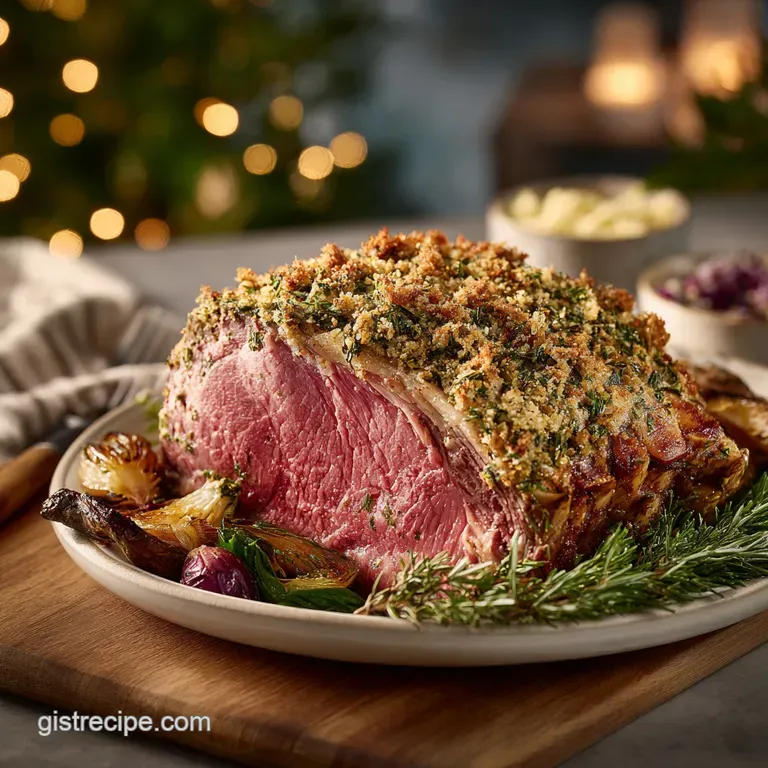
- Time: Active 15 minutes, Passive 3 hours 20 mins, Total 3 hours 35 minutes
- Flavor/Texture Hook: Velvety, melt in-your mouth center with a salty, crackling crust
- Perfect for: High stakes holiday dinners and special family celebrations
- Master the Ultimate Prime Rib Roast
- Why This Technique Works
- Essential Roast Success Data
- Component Analysis
- Selecting the Best Ingredients
- Tools for Holiday Success
- Step by Step Instructions
- Troubleshooting Your Roast
- Variations and Flavor Swaps
- Scaling Guidelines
- Searing and Resting Myths
- Storage and Reheating Tips
- Carving and Serving Style
- High in Sodium
- Recipe FAQs
- 📝 Recipe Card
Master the Ultimate Prime Rib Roast
The house smells like Christmas morning, but it's the rosemary and sizzling beef fat that really wake everyone up. I remember my first time making this roast; I was terrified I'd turn a expensive piece of meat into a giant hockey puck.
I stood by the oven window like a hawk, sweating more than the roast was, clutching my thermometer like a lifeline.
But we've all been there, right? That moment of truth when you finally slice into the center, praying for that velvety pink edge to edge finish rather than a dry, brown mess. This isn't just a recipe; it's the method I've honed after a few "medium well" tragedies.
It's reliable, simple, and honestly, the only way I'll ever cook a big roast again.
We're going to use the 500 degree method, which sounds scary but is actually the most relaxing way to cook. You blast it, you turn the oven off, and then you just... wait. It gives you plenty of time to focus on your sides, like a Crispy Roasted Potatoes recipe, without worrying about the meat. Trust me, once you see that crust shatter under your knife, you'll never go back to the old way.
Why This Technique Works
- Thermal Momentum: The initial over high heat blast creates a Maillard reaction on the surface, while the residual heat gently penetrates the center without toughening the proteins.
- Enzymatic Tenderization: Allowing the meat to sit at a warm (but not hot) temperature for an extended period lets natural enzymes break down tough connective tissues.
- Fat Renderization: The 260°C (500°F) start liquefies the outer fat cap, which then bastes the meat as it cools down, ensuring every bite is rich.
- Surface Dehydration: Salting the meat early draws out moisture, which then reabsorbs as a concentrated brine, seasoning the roast deep inside the muscle fibers.
The Physics of Carryover Heat
When you pull a large roast from the oven, the exterior is much hotter than the core. That heat doesn't just vanish; it continues to move inward even while the meat sits on the counter. This is why we pull the roast early, because the temperature will climb another 5 to 10 degrees during the rest.
| Cooking Method | Time Investment | Finished Texture | Best For |
|---|---|---|---|
| 500 Degree Method | 3.5 hours | Crackling crust, rare center | Minimal effort holiday hosting |
| Reverse Sear | 5-6 hours | Uniform pink, softer crust | Absolute precision seekers |
| Low and Slow | 4 hours | Traditional, juicy, mild crust | Beginner cooks using older ovens |
Choosing the right method depends on your oven's reliability. The 500 degree method is brilliant because it uses the natural insulation of your oven to do the work. If you prefer a more hands off approach for smaller cuts, you might enjoy a Slow Cooker Pot recipe for weeknight comfort instead.
Essential Roast Success Data
Before you even touch the meat, you need to know the numbers. An 8.5 lb (approx. 3.8 kg) roast is a serious investment, and timing is everything. This recipe is designed for a bone in roast, where the ribs act as a natural roasting rack, protecting the bottom of the meat from direct pan heat.
Chef Tip: Freeze your butter for 10 minutes before grating it into your herb mixture. This creates tiny pockets of fat that melt slowly, creating a more textured, crusted surface rather than just running off into the pan.
| Specification | Value | Note |
|---|---|---|
| Prep Time | 1 hour 20 mins | Includes tempering time |
| Cook Time | 2 hours 15 mins | Varies by oven insulation |
| Target Pull Temp | 120°F (49°C) | For a perfect medium rare finish |
| Rest Duration | 30 minutes | Do not skip this step |
Giving the meat at least an hour to come to room temperature is the most important "passive" step you'll take. If you put a cold roast into a hot oven, the outside will overcook long before the center even wakes up. We want a uniform cook, not a temperature gradient that looks like a sunset.
Component Analysis
| Ingredient | Science Role | Pro Secret |
|---|---|---|
| Kosher Salt | Protein Denaturation | Use coarse salt to create a "dry brine" that locks in juices. |
| Unsalted Butter | Heat Conduction | Acts as a glue for herbs and helps the crust brown evenly. |
| Bone Broth | Deglazing Agent | Provides the collagen base needed for a silky, rich au jus. |
| Dry Red Wine | Acid Balance | Cuts through the heavy fat of the ribeye for a balanced palate. |
The choice of salt matters more than you think. Table salt is too fine and will make the roast unpalatably salty. Coarse kosher salt (like Diamond Crystal) has larger grains that distribute more evenly and help create that signature "crunch" we're after.
Selecting the Best Ingredients
- Bone in Standing Rib Roast (8.5 lbs / 3.8 kg): Why this? Bones provide insulation and flavor; look for "Choice" or "Prime" grading for marbling.
- Substitute: Boneless rib roast (reduce cook time by 20%).
- Coarse Kosher Salt (2 tbsp): Why this? Essential for the dry brining process to ensure a seasoned, tender interior.
- Substitute: Sea salt (use slightly less as it's saltier by volume).
- Unsalted Butter (0.5 cup): Why this? Provides the fat needed to toast the herbs without burning too quickly.
- Substitute: Ghee or clarified butter for a higher smoke point.
- Fresh Rosemary & Thyme (2 tbsp each): Why this? These woody herbs stand up to the over high heat blast without turning bitter.
- Substitute: 2 tsp each of dried herbs (though fresh is significantly better here).
- Garlic (6 cloves): Why this? Mincing fresh cloves provides a pungent aroma that balances the rich beef.
- Substitute: Garlic paste or 1 tbsp garlic powder in a pinch.
- Beef Bone Broth (2 cups): Why this? High gelatin content creates a velvety sauce that coats the back of a spoon.
- Substitute: high-quality beef stock or water with bouillon base.
- Dry Red Wine (0.5 cup): Why this? Cabernet or Merlot adds tannins that brighten the savory au jus.
- Substitute: Extra beef broth with a splash of balsamic vinegar.
| Original Ingredient | Substitute | Why It Works |
|---|---|---|
| 1 bone in roast | Boneless roast | Similar flavor, but cooks faster and lacks bone insulation. |
| 0.5 cup Red Wine | Pomegranate Juice | Provides acidity and deep color without the alcohol content. |
| 2 tbsp Fresh Rosemary | Fresh Sage | Offers a different earthy, autumnal flavor profile. |
If you find yourself short on time or ingredients, remember that the quality of the beef is the real star. You can simplify the seasoning to just salt and pepper, and the roast will still be incredible as long as your timing is spot on.
Tools for Holiday Success
You don't need a kitchen full of gadgets, but a few specific items are non negotiable for a Prime Rib Roast. A heavy duty roasting pan is a must; flimsy aluminum pans can buckle under the weight of an 8.5 lb roast and won't distribute heat evenly.
The most vital tool in your arsenal is a digital leave in meat thermometer. Since we are turning the oven off and leaving the door closed, you cannot peek inside to check doneness.
A probe that stays in the meat and alerts you when it hits 120°F (49°C) is the difference between a victory and a disaster.
Finally, make sure you have a sharp carving knife. A dull blade will tear the tender muscle fibers rather than slicing cleanly through them, causing those precious juices to leak out onto the cutting board instead of staying in the meat.
step-by-step Instructions
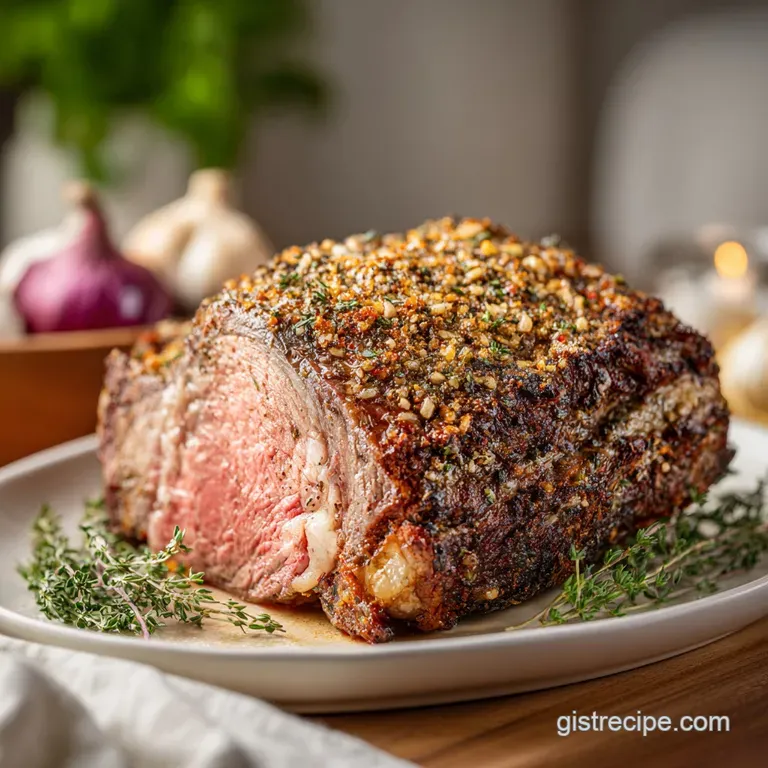
- Tempering the meat. Remove the roast from the fridge at least 1 hour before cooking. Note: This ensures the internal temperature isn't freezing when it hits the heat.
- Dry the surface. Pat the entire roast dry with paper towels until the skin feels tacky and matte. Note: Moisture is the enemy of a good crust.
- Salt the roast. Rub the kosher salt over every inch of the meat, including the ends and the bone side.
- Create the herb rub. Mix the softened butter, minced garlic, rosemary, thyme, and black pepper in a small bowl until a thick paste forms.
- Apply the crust. Slather the herb butter over the fat cap and sides of the roast.
- Initial blast. Place the roast in the oven at 500°F (260°C) for 15 minutes until the butter starts to sizzle and brown.
- The coasting phase. Turn the oven off completely. Do not open the door! Let it sit for 2 hours (or about 15 mins per pound).
- Check for doneness. Use your thermometer to ensure the center has reached 120°F (49°C) until the probe slides in with no resistance.
- Rest the meat. Transfer the roast to a cutting board and tent loosely with foil for 30 minutes. Note: This allows the juices to redistribute.
- Make the au jus. Place the roasting pan over two burners, add wine and broth, and scrape the bottom until the liquid reduces and turns dark mahogany.
Troubleshooting Your Roast
Why Your Meat is Grey
If you see a thick grey band around the edges of your pink center, it means the oven temperature was too high for too long, or the meat was too cold when it went in. This "overcook" happens when the exterior heat moves too fast for the center to keep up.
The Crust is Burnt
Garlic and fresh herbs can burn at 500°F if they aren't protected by enough fat. If your herbs look black and smell bitter, you may need to reduce that initial blast to 10 minutes next time or ensure your butter is evenly distributed to shield the aromatics.
| Problem | Root Cause | Solution |
|---|---|---|
| Tough texture | Meat didn't rest | Wait a full 30 mins before slicing to let fibers relax. |
| Cold center | Insufficient tempering | Leave meat out for at least 90 mins if it's over 8 lbs. |
| Thin au jus | Not enough reduction | Simmer the pan drippings for an extra 5-8 mins on high. |
Common Mistakes Checklist
- ✓ Never open the oven door during the "off" phase; you'll lose all the trapped heat.
- ✓ Ensure the meat thermometer probe isn't touching the bone (it will give a false high reading).
- ✓ Don't trim too much fat; it's the natural insulation that keeps the meat juicy.
- ✓ Use a pan with low sides to allow hot air to circulate around the base of the roast.
- ✓ Let the roast sit on the counter uncovered while tempering to help the skin dry out.
Variations and Flavor Swaps
If you want to move away from the traditional herb crust, try a horseradish and mustard rub. Swap half the butter for Dijon mustard and add 3 tablespoons of prepared horseradish. This provides a sharp, spicy kick that cuts through the richness of the ribeye perfectly.
It's a classic profile that many traditional steakhouses swear by.
For a more "umami" forward version, you can add 1 tablespoon of miso paste or a few drops of fish sauce to your herb butter. You won't taste "fish," but the glutamates will make the beef taste infinitely "beefier." This is a secret trick I learned from a chef friend who specialized in dry aged meats.
If you're adapting for keto or paleo diets, this recipe is already nearly perfect. Just ensure your beef bone broth doesn't contain added sugars or cornstarch thickeners. For the au jus, instead of a flour roux, simply reduce the liquid by half to achieve a naturally thick, velvety consistency.
Scaling Guidelines
Scaling a Prime Rib Roast is all about the math of the "off" time. If you are cooking a smaller 4 lb roast, your initial 500°F blast remains at 15 minutes, but your "oven off" time will drop significantly.
A good rule of thumb is 13-15 minutes of "off" time per pound of meat.
When scaling up to a massive 12 lb roast, you might need to extend the initial blast to 20 minutes to get that crust started. However, be careful with the salt; don't just double it blindly. Increase spices and salt by 1.5x rather than 2x to avoid over seasoning the large surface area.
| Roast Size | Initial Blast (500°F) | Oven Off Time | Total Time |
|---|---|---|---|
| 4-5 lbs | 15 minutes | 60-75 mins | ~1.5 hours |
| 8-9 lbs | 15 minutes | 120-135 mins | ~2.5 hours |
| 12+ lbs | 20 minutes | 180+ mins | ~3.5+ hours |
Searing and Resting Myths
A common misconception is that searing meat "seals in the juices." Science tells us this isn't true; moisture loss happens regardless of a crust. What the sear actually does is trigger the Maillard reaction, creating complex flavor compounds that make the meat taste savory and "roasty." The moisture stays inside because we don't overcook the internal fibers, not because of a "seal."
Another myth is that you can skip the rest if you're in a hurry. When meat cooks, the muscle fibers tighten and squeeze out liquid. If you cut it immediately, that liquid runs all over your board. During the rest, those fibers relax and reabsorb the moisture.
A rested roast is juicy; an unrested roast is a puddle of wasted flavor.
Storage and Reheating Tips
Leftover Prime Rib Roast is a gift. It stays fresh in the fridge for up to 4 days if wrapped tightly in plastic wrap or stored in an airtight container. To freeze, slice the meat first and freeze the slices individually on a tray before bagging them.
This prevents them from sticking together and allows you to thaw only what you need. They'll stay good for up to 3 months.
To reheat without losing that perfect medium rare, avoid the microwave at all costs. Instead, place a slice in a baking dish with a tablespoon of au jus or broth, cover with foil, and warm in a 250°F (120°C) oven for about 10 minutes.
This gently brings it back to temperature without "recooking" the center.
For a zero waste approach, save the rib bones! They make the most incredible beef stock. Throw them into a pot with some carrot scraps, onion peels, and water. Simmer for 4 hours, and you'll have a liquid gold base for your next soup or stew.
Carving and Serving Style
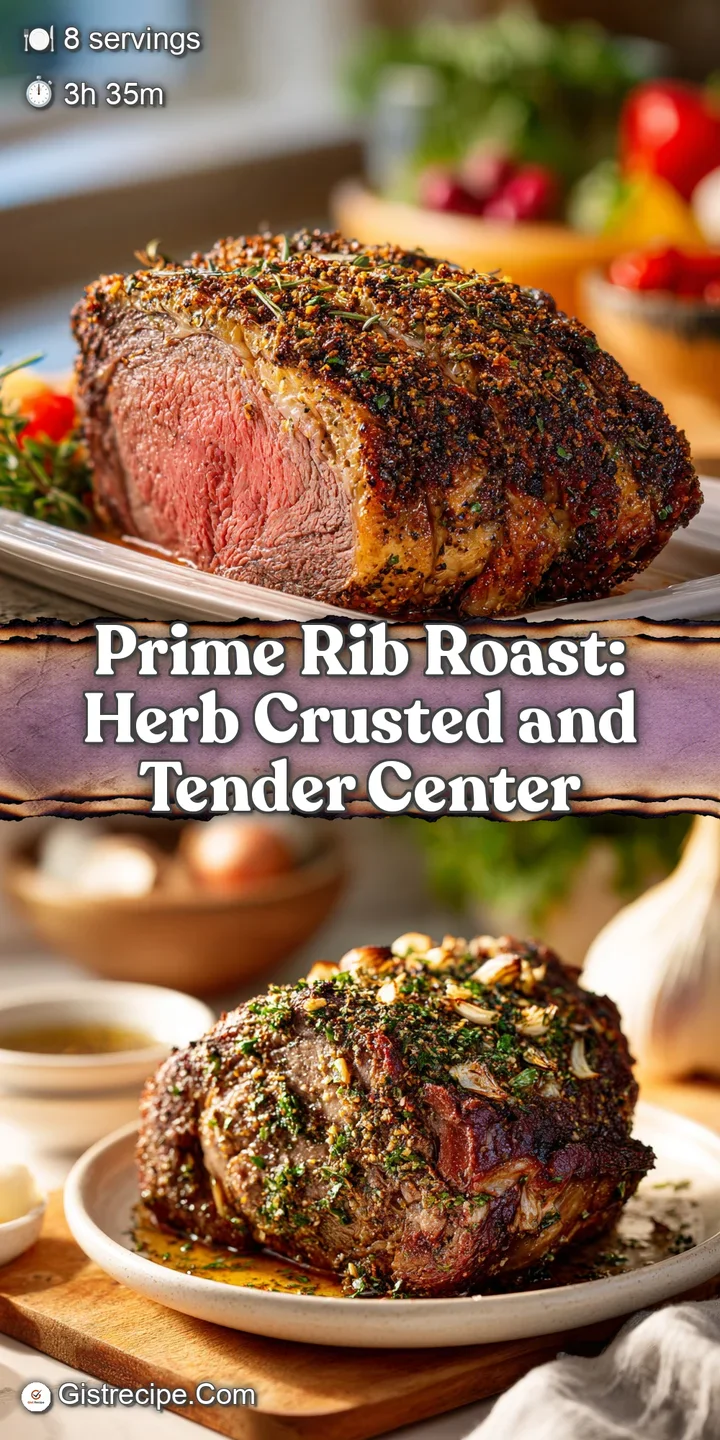
Presentation is half the battle with a centerpiece like this. To carve, first run your knife along the curve of the bones to detach the entire meat block. Once the bones are removed, you can slice the roast into uniform pieces. I like thick, "King Cut" slices for a holiday feel, usually about 1 inch thick.
Arrange the slices on a warm platter and pour a little of the au jus over the top to make it glisten. Serve the remaining sauce in a boat on the side. If you really want to wow your guests, garnish the platter with fresh sprigs of rosemary and charred lemon halves.
The contrast between the dark, craggy crust and the bright pink interior is naturally beautiful. Don't over complicate the plating; let the quality of the beef and that herb flecked crust speak for itself. It’s a meal that feels like a triumph every single time you pull it off.
High in Sodium
920 mg mg of sodium per serving (40% % of daily value)
The American Heart Association recommends limiting sodium intake to no more than 2,300mg per day for most adults.
Tips to Reduce Sodium in Your Rib Roast
-
Low-Sodium Broth-30%
Swap regular beef bone broth with low-sodium or no-salt added beef broth. This can significantly cut down on the sodium content.
-
Reduce Added Salt-25%
Decrease the amount of coarse kosher salt from 2 tbsp to 1 tbsp, or even less, and taste before adding more. Salt can always be added at the table if needed.
-
DIY Worcestershire-20%
Worcestershire sauce adds a distinct flavor but is also high in sodium. Consider making your own low-sodium version at home or reduce the amount used by half.
-
Wine Choice-5%
Ensure your dry red wine is a variety with naturally lower sodium content. While wine is not a primary sodium source, selecting a wine consciously can contribute to overall reduction.
-
Herb Power
Experiment with other fresh or dried herbs and spices like garlic powder, onion powder, paprika, or different pepper varieties to enhance flavor without adding sodium. The recipe already contains thyme, rosemary, and garlic, try adding a pinch of smoked paprika.
-
Fresh Garlic Focus
Ensure you're using fresh, high-quality garlic. Fresh garlic provides a much stronger flavor than garlic salt (which should be avoided).
Recipe FAQs
What is the prime rib 500 rule?
Blast at 500°F, then turn the oven off. This method involves searing the roast at 500°F (260°C) for 15 minutes to build a crust, then immediately turning the oven off and letting the residual heat gently cook the center.
What's the best method to cook prime rib?
The 500-degree residual heat method is best for beginners. This technique guarantees a dark, flavorful crust and a tender, edge-to-edge pink center without requiring constant temperature monitoring.
What is the best kind of prime rib to buy?
Buy a bone-in, USDA Choice or Prime grade roast. The bones provide natural insulation, protecting the bottom layer from overcooking, and higher grades offer superior marbling for tenderness.
Is Costco prime rib good quality?
Generally, yes, Costco offers good value. Their roasts are usually Choice grade and well marbled, making them reliable, though dedicated butchers might offer better USDA Prime selection.
How do I ensure my prime rib is perfectly medium rare?
Pull the roast when the internal temperature hits 120°F (49°C). Use a quality leave-in thermometer inserted into the thickest part, avoiding the bone, as carryover heat will raise the temperature another 5-10 degrees.
How long should I rest prime rib after cooking?
Rest the roast for a minimum of 30 minutes, tented loosely. This crucial resting period allows the tightened muscle fibers to relax and reabsorb the internal juices, preventing them from running out when you slice it.
Can I use a boneless roast instead of bone-in?
Yes, but reduce the cooking time significantly. Boneless roasts lack the insulating protection of the bones, meaning the residual heat cooks faster; plan to pull it about 20% sooner than the bone-in calculation.
Foolproof Prime Rib Roast
Ingredients:
Instructions:
Nutrition Facts:
| Calories | 968 kcal |
|---|---|
| Protein | 38.5 g |
| Fat | 84.2 g |
| Carbs | 3.4 g |
| Fiber | 0.6 g |
| Sugar | 0.9 g |
| Sodium | 920 mg |
