Authentic Chicken Karahi Recipe: Concentrated Flavor
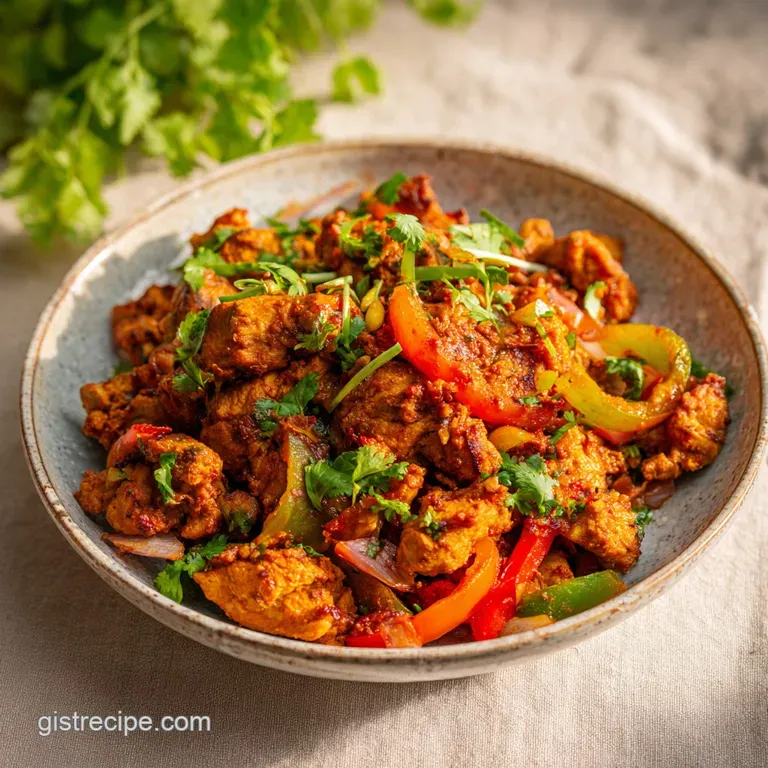
- Time: Active 15 minutes, Passive 25 mins, Total 40 minutes
- Flavor/Texture Hook: Tangy, tender, and intensely savory
- Perfect for: Busy weeknights or a traditional family feast
- Authentic Flavor: Chicken Karahi Recipe
- Science Behind High Heat Frying
- Standard Specs For Quick Success
- Ingredient Breakdown And Smart Swaps
- Essential Tools For The Job
- Master The Cooking Process Now
- Solve Common Cooking Hurdles Fast
- Easy Variations For Every Kitchen
- Storing Your Leftovers For Later
- Final Touches For Better Serving
- Debunking Kitchen Tales
- High in Sodium
- Recipe FAQs
- 📝 Recipe Card
Authentic Flavor: Chicken Karahi Recipe
The moment that cold, bone in chicken hits the shimmering pool of hot ghee, the kitchen instantly transforms. There is a specific, sharp sizzle that tells you the sear is working, followed by the pungent, earthy aroma of fresh ginger and garlic hitting the pan.
It is a scent that reminds me of late night stops at roadside dhaba stalls, where the chefs toss heavy iron woks over roaring open flames with rhythmic precision.
We are making a dish that is all about technique and heat rather than a long list of complicated steps. This chicken karahi recipe is a staple in my house because it does not hide behind heavy creams or onions.
Instead, it lets the tomatoes and spices do the heavy lifting, resulting in a vibrant, ginger forward sauce that clings to every piece of chicken. It is straightforward, reliable, and honestly, better than most takeout versions you will find.
Science Behind High Heat Frying
Thermal Emulsification: High heat forces the water released from the tomatoes to rapidly evaporate while the remaining pulp binds with the oil, creating a thick, stable sauce without needing flour or thickeners.
Maillard Reaction: Searing the chicken in a generous amount of fat at the start creates a brown crust that provides the base savory notes, which are then deglazed by the tomato juices.
Heat Control For Tender Meat
Managing the flame is critical because we want the chicken to cook through just as the tomato liquid vanishes. If the heat is too low, the chicken steams and becomes rubbery; too high without enough fat, and the spices scorch before the gravy forms.
We aim for a vigorous bubble throughout the process to ensure the sauce reduces into a concentrated lacquer rather than a thin soup.
The Physics Of Wok Cooking
The sloping sides of a traditional Karahi or a deep wok allow moisture to escape quickly while keeping the solid ingredients in the hottest part of the pan. This design is what makes the pakistani chicken karahi recipe so unique, as it encourages the rapid reduction of the tomato base into a silky, fat separated gravy.
| Chicken Cut | Internal Temp | Rest Time | Visual Cue |
|---|---|---|---|
| 2 cm pieces | 74°C | 3 mins | No pink at bone |
| 4 cm pieces | 74°C | 5 mins | Juices run clear |
| Half chicken | 74°C | 8 mins | Meat pulls from bone |
Choosing the right cut is just as important as the heat, as bone in pieces provide marrow that enriches the sauce as it simmers. If you find yourself needing a quicker weeknight option with different flavors, you might enjoy my Buffalo Chicken Sliders recipe which uses a similar over high heat approach for the shredded base.
Standard Specs For Quick Success
| Ingredient | Science Role | Pro Secret |
|---|---|---|
| Tomatoes | Acidic base | Use Roma for less water and more pulp |
| Ghee | High smoke point | Allows for a harder sear than butter |
| Ginger Paste | Enzyme tenderizer | Fresh paste breaks down protein fibers |
| Yogurt | Emulsifier | Full fat prevents curdling during the finish |
The interaction between the acidic tomatoes and the protein in the chicken helps to tenderize the meat while the sauce reduces. Using a heavy bottomed pan ensures that the heat is distributed evenly, preventing the ginger garlic paste from sticking and burning before the tomatoes are added.
Ingredient Breakdown And Smart Swaps
This lahori chicken karahi recipe relies on fresh, vibrant components that work together to build layers of spice. We start with a full 1 kg chicken, cut into small pieces to maximize the surface area for the sauce to cling to.
- 1 kg chicken: Bone in is traditional for the best flavor. Why this? Bones add gelatin and depth to the quick cooking sauce.
- 500g tomatoes: These must be ripe and red. Why this? They provide the liquid and the "masala" base.
- 0.5 cup ghee: You can use neutral oil, but ghee adds a nutty richness.
- 120g full fat yogurt: This adds a creamy tang and balances the heat.
- 1.5 tbsp ginger & garlic paste: Freshly pounded is always better than bottled.
- Spice Blend: Salt, red chili flakes, crushed coriander, cumin, turmeric, and black pepper.
| Original Ingredient | Substitute | Why It Works |
|---|---|---|
| Ghee | Avocado Oil | High smoke point and neutral flavor profile |
| Fresh Tomatoes | Canned Whole Tomatoes | Similar acidity. Note: Sauce may be slightly sweeter |
| Full fat Yogurt | Coconut Cream | Adds richness. Note: Will introduce a subtle nutty taste |
Using fresh spices makes a world of difference here, especially when you crush the coriander and cumin seeds yourself just before adding them. For a different vibe on a busy Tuesday, my Simple Turkey and recipe is another one pan winner that focuses on pantry staples and reliable results.
Essential Tools For The Job
To get the best out of this best chicken karahi recipe, you need a pan that can handle high heat and constant stirring. A traditional cast iron Karahi is the gold standard, but a large, heavy stainless steel wok or a deep 30 cm skillet works beautifully. The goal is to have plenty of surface area for evaporation.
You will also need a sharp knife for julienning the ginger and a sturdy spatula for scraping the bottom of the pan. Since we are skinning the tomatoes halfway through, a pair of kitchen tongs is incredibly helpful to avoid burning your fingers.
Master The Cooking Process Now
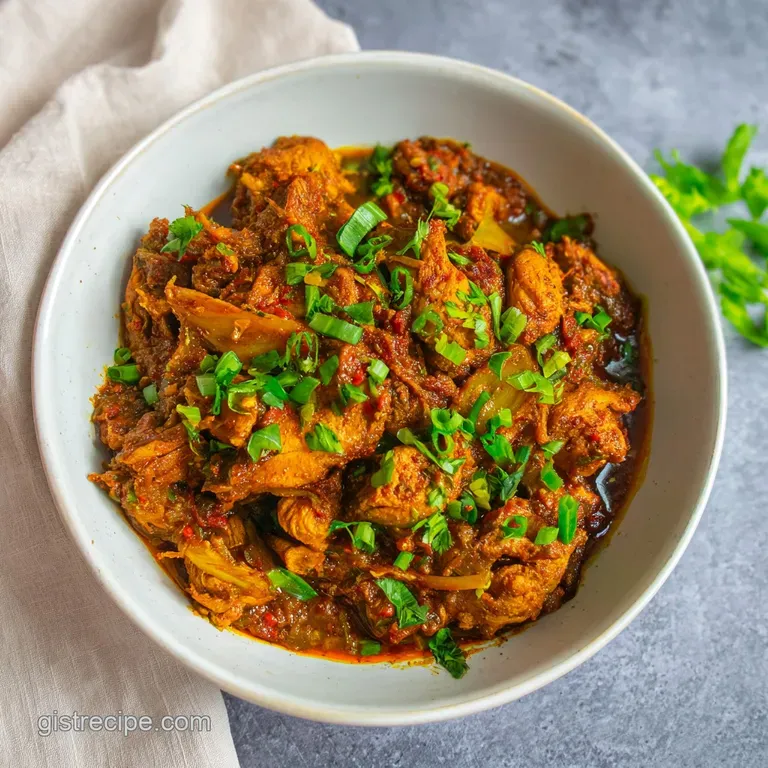
- Heat the fat. Place your Karahi over medium high heat and add the 0.5 cup of ghee or oil. Note: Wait until it shimmers.
- Sear the chicken. Add the 1 kg of chicken pieces and fry until the exterior turns white and starts to brown, which usually takes about 5 minutes.
- Add aromatics. Stir in the 1.5 tbsp each of ginger and garlic paste. Note: This prevents the paste from burning early on.
- Layer the tomatoes. Place the 500g of halved tomatoes face down on the chicken. Cook for 5 minutes until the skins wrinkle.
- Remove the skins. Use tongs to peel the skins off the tomatoes and discard them. Note: This ensures a silky, smooth gravy.
- Break down tomatoes. Use your spatula to mash the softened tomatoes into the chicken while adding the salt, chili flakes, coriander, cumin, and turmeric.
- Reduce the liquid. Increase the heat and stir frequently until the tomato water evaporates and the oil separates.
- Whisk in yogurt. Lower the heat slightly and add the 120g of whisked yogurt. Stir constantly until the sauce becomes velvety and glossy.
- Final seasoning. Toss in the slit green chilies, julienned ginger, black pepper, and garam masala.
- Garnish and rest. Turn off the heat and let the dish sit for 2 minutes until the fat rises to the surface.
Solve Common Cooking Hurdles Fast
One of the most frequent issues people face with this easy chicken karahi recipe is ending up with too much liquid. This usually happens because the tomatoes were very juicy or the heat was kept too low. The solution is always to turn up the flame; don't be afraid of the sizzle!
The Sauce Is Too Thin
If your gravy looks more like a soup than a thick masala, it means the water hasn't evaporated enough. Continue cooking on high heat while stirring. You want to see the oil separating from the tomato solids at the edges of the pan. This "bhuna" process is what creates the deep flavor.
The Chicken Is Tough
Overcooking the chicken before adding the tomatoes can lead to a dry texture. Ensure you only sear it until the outside is opaque. The acidity in the tomatoes will help keep the meat tender as it finishes cooking during the reduction phase.
| Problem | Root Cause | Solution |
|---|---|---|
| Burnt Ginger | Pan was too hot initially | Add aromatics only after chicken has released some moisture |
| Curdled Sauce | Cold yogurt added to boiling pan | Whisk yogurt and lower heat before stirring it in |
| Metallic Taste | Using unseasoned carbon steel | Ensure pan is well seasoned or use stainless steel |
Common Mistakes Checklist
- ✓ Never add water; the tomatoes provide all the moisture needed.
- ✓ Don't skip the step of removing tomato skins for a better texture.
- ✓ Always whisk your yogurt before adding it to prevent white clumps.
- ✓ Use high heat during the tomato reduction phase to concentrate flavors.
- ✓ Crushing the coriander and cumin fresh is a total game changer.
Easy Variations For Every Kitchen
If you want to scale this recipe down for two people, simply halve all the ingredients. Use a smaller 20 cm pan to ensure the chicken is still mostly covered by the tomatoes. Reduce the cooking time by about 5 mins during the reduction phase, as smaller volumes evaporate faster.
When scaling up for a crowd, it is best to work in batches of 1 kg or use a very large commercial style Karahi. If you double the recipe, only increase the salt and spices to 1.5x the original amount first, then taste and adjust. Doubling spices directly can often become overwhelming in a concentrated dish like this.
| Factor | Scaling Down (0.5x) | Scaling Up (2x) |
|---|---|---|
| Cook Time | Reduce by 5 minutes | Increase by 10 minutes |
| Pan Size | 20 cm skillet | 35 cm wide Karahi |
| Oil Ratio | Keep at 0.25 cup | Use 0.75 cup |
Storing Your Leftovers For Later
This dish actually tastes even better the next day as the spices have more time to penetrate the meat. Store it in an airtight container in the fridge for up to 3 days. When reheating, add a tiny splash of water and cover the pan to steam it back to life without drying out the chicken.
You can freeze chicken karahi for up to 2 months. To preserve the texture, let it thaw completely in the fridge before reheating on the stovetop. For a zero waste tip, any leftover gravy is incredible when tossed with boiled eggs or used as a base for a quick vegetable stir fry the next day.
Final Touches For Better Serving
The beauty of a karahi is in the garnish. Before serving, I always add a handful of fresh coriander leaves and a generous amount of julienned ginger. The raw ginger provides a sharp, fresh contrast to the deep, cooked flavors of the sauce.
- If you want a smokier flavor, do the "dhungar" method by placing a hot coal in a small foil bowl inside the pan and drizzling oil over it, then covering for 2 minutes.
- If you want more heat, leave the seeds in the green chilies when you slit them.
- If you want a richer finish, stir in a tablespoon of butter right at the end.
Debunking Kitchen Tales
Myth: You must add onions to make a thick gravy. Truth: Traditional chicken karahi recipe versions do not use onions. The thickness comes entirely from the reduction of tomatoes and the emulsification of the yogurt with the fat. Onions actually change the flavor profile toward a standard curry.
Myth: Searing "seals in" the juices of the meat. Truth: Searing creates flavor through the Maillard reaction, but it does not create a waterproof barrier. The moisture is actually retained by not overcooking the chicken and using the acidic tomato base to keep the fibers tender.
Myth: You can't use boneless chicken for Karahi. Truth: While bone in is classic for flavor, you can use boneless thighs. Just be careful not to overcook them, as they cook much faster than bone in pieces. Avoid breast meat if possible, as it tends to dry out during the over high heat reduction.
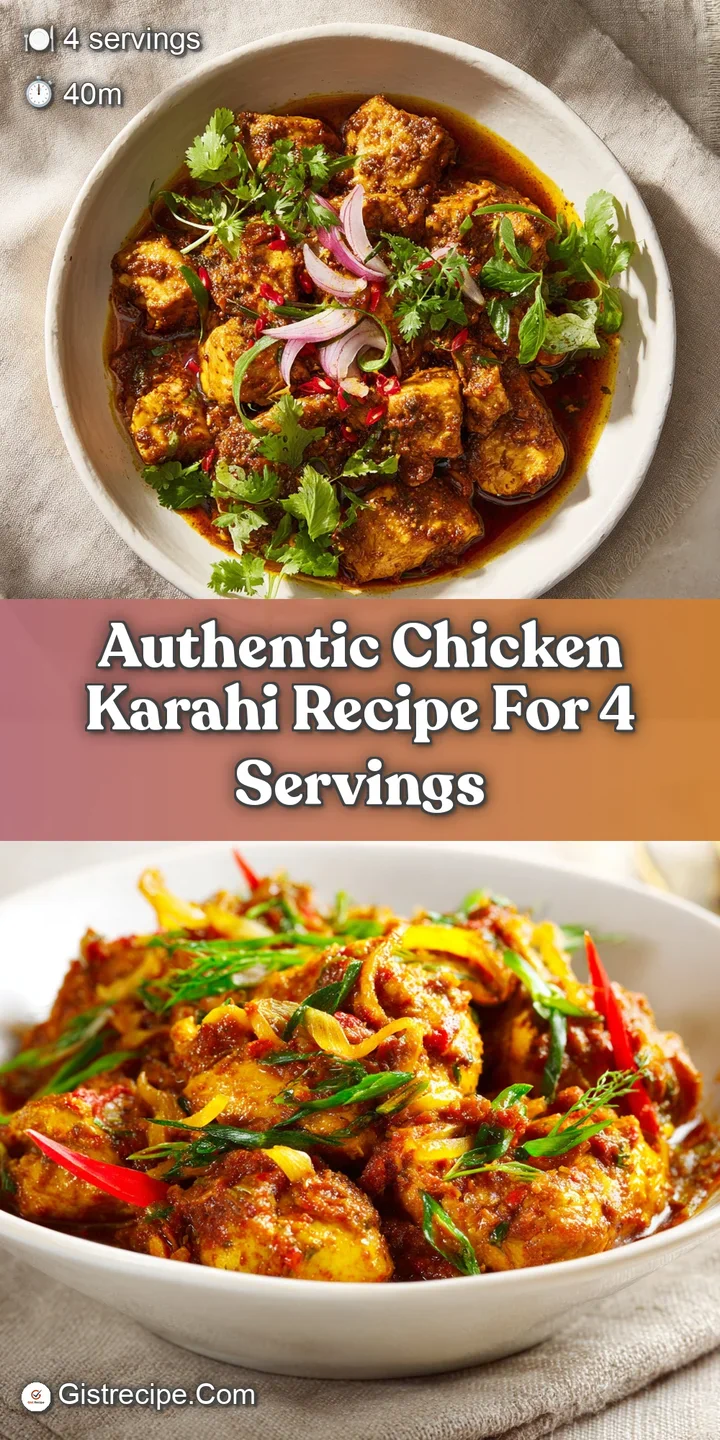
High in Sodium
915 mg mg of sodium per serving (40% % of daily value)
The American Heart Association recommends limiting sodium intake to about 2,300mg per day for overall cardiovascular health.
Tips to Reduce Sodium in Your Karahi Chicken
-
Reduce Added Salt-25%
Reduce the amount of added salt from 1.5 tsp to 0.75 tsp. This can significantly lower the sodium content without drastically changing the flavor. Taste and adjust accordingly.
-
Increase Other Spices-15%
Enhance the flavor profile by increasing the quantity of red chili flakes, crushed coriander seeds, crushed cumin seeds, turmeric powder, and freshly cracked black pepper. This helps to compensate for the reduction in salt, making the dish flavorful. Use twice the amounts called for to start.
-
Use Fresh Tomatoes-10%
Ensure you are using fresh, ripe tomatoes and not canned or processed tomato products. Canned tomatoes can often contain added salt. Check the label if using canned!
-
Low Sodium Yogurt-10%
Consider using a low-sodium or homemade yogurt. Some commercial yogurts can have surprisingly high sodium content. Review the label for sodium content and choose accordingly.
-
Fresh Herbs
Add fresh herbs like cilantro or mint after cooking to boost the flavor. These will not affect sodium levels, but will make it easier to reduce salt.
Recipe FAQs
What are the ingredients in chicken Karahi?
The core ingredients are chicken, fresh tomatoes, ghee, and a simple blend of spices. You will also need ginger, garlic, green chilies, and full fat yogurt for the authentic tang. The beauty of Karahi is its reliance on these fresh, foundational elements rather than complex spice mixtures.
What is the difference between chicken curry and chicken karahi?
Karahi typically uses significantly less liquid and skips onions entirely. Traditional Karahi relies on tomatoes breaking down to create a thick sauce that clings to the meat, whereas most curries use onions as a base and often incorporate cream or stock for a thinner gravy.
Is karahi a Pakistani dish?
Yes, Chicken Karahi is a beloved and authentic Pakistani and North Indian dish. It gets its name from the deep, heavy iron wok (karahi) it is traditionally cooked in, which retains intense heat for fast cooking.
What to eat with chicken karahi?
The best accompaniment is freshly baked naan or fluffy chapati to scoop up the rich sauce. If you prefer a starch, simple steamed Basmati rice works well, though traditionalists favor the bread. This bold dish also pairs nicely with simple, cooling sides like Kachumber salad or Creamy Mashed Potatoes recipe if you are seeking a softer texture.
How do I prevent my chicken from becoming dry while reducing the sauce?
Sear the chicken first in ghee until just white, then finish cooking submerged in the tomato and yogurt mixture. Avoid overcooking the chicken before the liquid is added; the acids in the tomatoes help keep the fibers tender during the high heat reduction phase. If you want to practice similar high temperature cooking principles in a different context, see how the technique applies when making Crispy Roasted Potatoes recipe.
Why is my Karahi sauce watery instead of thick and oily?
You must cook down the tomato water aggressively over high heat until the oil separates from the solids. If your sauce remains watery, you did not achieve sufficient evaporation, meaning the "bhuna" stage was rushed or the heat was too low.
Can I substitute ghee with butter or vegetable oil?
You can substitute, but ghee provides the superior traditional flavor and smoke point. Vegetable oil is acceptable if you need a high smoke point, but butter has a lower tolerance for the high heat required and will burn quickly.
Authentic Chicken Karahi Recipe
Ingredients:
Instructions:
Nutrition Facts:
| Calories | 638 kcal |
|---|---|
| Protein | 57.6 g |
| Fat | 39.4 g |
| Carbs | 11.2 g |
| Fiber | 2.8 g |
| Sugar | 5.4 g |
| Sodium | 915 mg |
