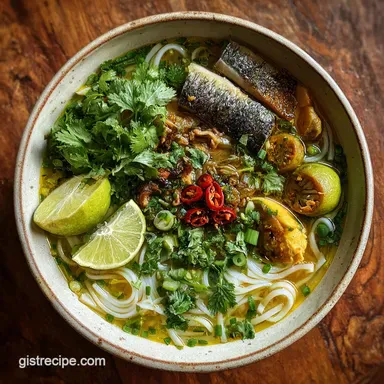
Authentic Burmese Mohinga with Catfish

- Time: 20 min active + 60 min cooking
- Flavor & Texture: Savory, citrusy, and rich
- Perfect for: A slow weekend brunch or comforting dinner
The Real Deal Burmese Mohinga
The aroma of toasted rice and crushed lemongrass filling the air marks the beginning of the process. More than just dinner, this soup is a full sensory event, balancing the saltiness of fish sauce and the brightness of lime with the grounding, earthy heat of ginger and turmeric.
The broth is thick and satisfying, clinging perfectly to the rice noodles. Using catfish creates a savory, robust foundation without any overpowering fishiness, filling your home with a cozy atmosphere.
Achieving the perfect equilibrium is the secret to a great burmese mohinga. Be mindful during the thickening phase; as the slurry is stirred in, the liquid transforms from a light stock into a rich, velvety soup.
Recipe Specs
This version is designed for those who want a reliable result without needing a professional kitchen. It serves six people and takes about an hour and twenty minutes from start to finish.
| Detail | Value |
|---|---|
| Prep Time | 20 minutes |
| Cook Time | 60 minutes |
| Total Time | 1 hour 20 minutes |
| Servings | 6 |
Ingredients and Easy Swaps
Catfish is the hero here. Its high fat content and firm texture create the necessary body for the broth. Other white fish can work, but they often lack the same depth.
Ingredient Deep Dive
| Ingredient | What It Does | Best Swap |
|---|---|---|
| Catfish | Provides structure and umami | Tilapia or Cod (Note: less rich) |
| Toasted Rice Flour | Adds nuttiness and thickness | Finely ground toasted white rice |
| Chickpea Flour | Gives the broth a glossy body | Gram flour (1:1 ratio) |
| Fish Sauce | Essential salty, fermented depth | Soy sauce + pinch of salt (approximation) |
The Full List
- 1½ lb catfish fillets, cut into chunks Why this? Essential for the traditional rich, thick consistency
- 6 cups water
- 1 tsp turmeric powder
- 2 stalks lemongrass, bruised
- 3 tbsp neutral oil
- 4 cloves garlic, minced
- 2 tbsp fresh ginger, grated
- 1 medium yellow onion, finely diced
- 2 stalks lemongrass, finely minced (white parts only)
- 4 tbsp fish sauce (divided)
- 1 tbsp chili powder
- 1/2 cup toasted rice flour
- 1/4 cup chickpea flour
- 1 tbsp lime juice
- 1 lb dried rice vermicelli noodles
- 6 hard-boiled eggs
- 3 scallions, thinly sliced
- 1/2 cup fried shallots
- 2 limes, cut into wedges
- 1 bunch fresh coriander, chopped
Essential Kitchen Tools
This recipe requires only a few basic items. Use a large pot for the broth and a skillet for sautéing the aromatics. To ensure the fish paste is completely smooth, a blender is a must.
- Large stockpot (at least 5 quarts)
- Medium skillet
- Blender or food processor
- Slotted spoon
- Whisk
Steps to Make It
Phase 1: Creating the Fish Base
In a large pot, combine the 1½ lb catfish chunks, 6 cups water, 1 tsp turmeric powder, and 2 stalks bruised lemongrass. Bring to a gentle simmer over medium heat for 15–20 minutes until the fish is opaque and reaches an internal temperature of 145°F (63°C).
Use a slotted spoon to remove the fish and set it aside to cool. Keep the poaching liquid in the pot. Once the fish is cool, flake it into a blender and blend until a smooth paste forms.

Phase 2: Sautéing the Aromatic Base
Heat 3 tbsp neutral oil in a skillet over medium heat. Add the diced yellow onion, minced garlic, grated ginger, and 2 stalks minced lemongrass. Sauté until the mixture is translucent and fragrant.
Stir in the 1 tbsp chili powder and 2 tbsp of the fish sauce. Cook for 2 minutes until the oil begins to separate from the paste. This separation is a key sign that the flavors have concentrated.

Phase 3: Simmering the Burmese Mohinga Soup
Stir the blended fish paste and the sautéed aromatic base into the poaching liquid in the pot.
In a small bowl, whisk the 1/2 cup toasted rice flour and 1/4 cup chickpea flour with a bit of warm water to create a smooth slurry. Slowly whisk the slurry into the simmering pot.
Reduce heat to low and simmer for 20–30 minutes, stirring occasionally, until the broth is velvety and slightly thickened. Stir in the remaining 2 tbsp fish sauce and 1 tbsp lime juice.

Phase 4: Final Assembly
Prepare the 1 lb dried rice vermicelli according to package instructions; drain and divide among six bowls. Ladle the hot fish broth over the noodles.
Top each bowl with a halved hard-boiled egg (cooked to an internal temperature of 160°F/71°C), a sprinkle of fried shallots, sliced scallions, and fresh coriander. Serve with lime wedges on the side.
Common Problems and Fixes
If your broth feels more like a clear soup than a hearty stew, you likely need more reduction. The starches in the rice and chickpea flour need enough heat and time to fully hydrate.
When the fish has a scent that is too strong, it usually means the aromatics weren't sautéed long enough. Sautéing the ginger and lemongrass until they are fragrant helps neutralize the heavier fish notes.
If the aromatic paste burns, it's usually because the heat was too high when the chili powder went in. Chili powder burns quickly, so keep the heat medium and move fast.
| Problem | Root Cause | Solution |
|---|---|---|
| Broth is too thin | Under-simmered or low starch | Simmer 10 more mins without a lid |
| Overly fishy taste | Insufficient aromatics | Add an extra squeeze of lime juice |
| Bitter flavor | Burnt chili powder | Strain the broth and add a pinch of sugar |
Dietary Changes
For those avoiding fish sauce, a combination of soy sauce and a small pinch of salt is a decent approximation. However, start with half the amount and taste as you go, since the salt levels vary between brands.
If you're looking for a lighter meal, you can serve this with a side of Vegetable Soup to add more greens to the table.
For a low-sodium version, use a reduced-sodium fish sauce and taste before adding more, relying on the lime juice to brighten the flavors.
Storage and Reheating
Store the sealed broth in the fridge for a maximum of 4 days. To keep them from becoming soggy, it is best to keep the noodles and fresh toppings in separate containers.
The broth also freezes beautifully for up to 3 months. Use freezer-safe containers, leaving a little headspace at the top for expansion.
To reheat, warm the broth in a pot over medium heat. Because it thickens as it cools, stir in 1/4 cup of water or fish stock to return it to its original consistency. Heat until the broth reaches 165°F/74°C in the center (checked with a thermometer) before pouring it over fresh noodles.
Best Side Pairings

This soup is a powerhouse on its own, but a few sides can round out the meal. Crispy gourd fritters or samosas provide a great textural contrast to the soft noodles.
If you want something sweet after the salty, spicy punch of the soup, try some gluten free Banana Bread for a comforting finish.
Fresh raw vegetables, like sliced cucumber or cabbage, can be served on the side to add a refreshing crunch to the experience.
Why the Method Works
This recipe relies on a few specific mechanical tricks to get that deep, restaurant-style flavor.
- Double-Extraction: Poaching the fish first captures the essence in the water, and blending the fish back into that water adds physical body. This creates a thick, opaque broth without needing excessive flour.
- Starch Hydration: Using a mix of rice and chickpea flour creates a more complex texture than cornstarch. The toasted rice flour adds a nutty aroma that complements the fish.
- Oil Separation: Sautéing the aromatics until the oil separates helps mellow the raw taste of the garlic and ginger and lightly toasts the chili powder.
High in Sodium
1033 mg of sodium per serving (45% of daily value)
The American Heart Association recommends a limit of 2,300mg of sodium per day for most adults.
Tips to Reduce Sodium
-
Swap Fish Sauce
Replace the standard fish sauce with a low-sodium version or substitute a portion of it with coconut aminos for a similar savory profile.
-
Boost Citrus
Increase the amount of lime juice to brighten the flavor, which allows you to reduce the amount of fish sauce without losing taste intensity.
-
Rinse Rice Noodles
Thoroughly rinse the rice vermicelli after cooking to remove any residual salt or preservatives used during processing.
-
Homemade Fried Shallots
Prepare your own fried shallots at home using oil and fresh shallots instead of store-bought versions, which often contain added salt.
-
Enhance Fresh Aromatics
Double the amount of fresh coriander, lemongrass, and ginger to add layers of complex flavor that reduce the need for salt.
Your Questions, Answered
What is mohinga in Burmese?
Mohinga is a traditional fish noodle soup from Myanmar. It is a beloved staple often served for breakfast.
Which fish works best for this soup?
Catfish fillets are the best option here. They blend into a smooth paste that gives the broth its signature body.
How do I thicken the broth if it comes out too thin?
Whisk toasted rice flour and chickpea flour with warm water into a slurry. Stir this slowly into the simmering pot until it reaches a velvety consistency.
Does mohinga require specific flours for thickness?
This version uses toasted rice flour and chickpea flour. These ingredients give the traditional thickness and flavor.
Where should I store the leftovers?
Store the broth in the refrigerator for a maximum of 4 days. Keep noodles and fresh garnishes in separate containers to avoid sogginess.
Can the broth be frozen?
Yes, the broth stays good in the freezer for up to 3 months. Use freezer-safe containers and leave space at the top for expansion.
Burmese Mohinga with Catfish