Roasted Small Potatoes: Crispy and Golden
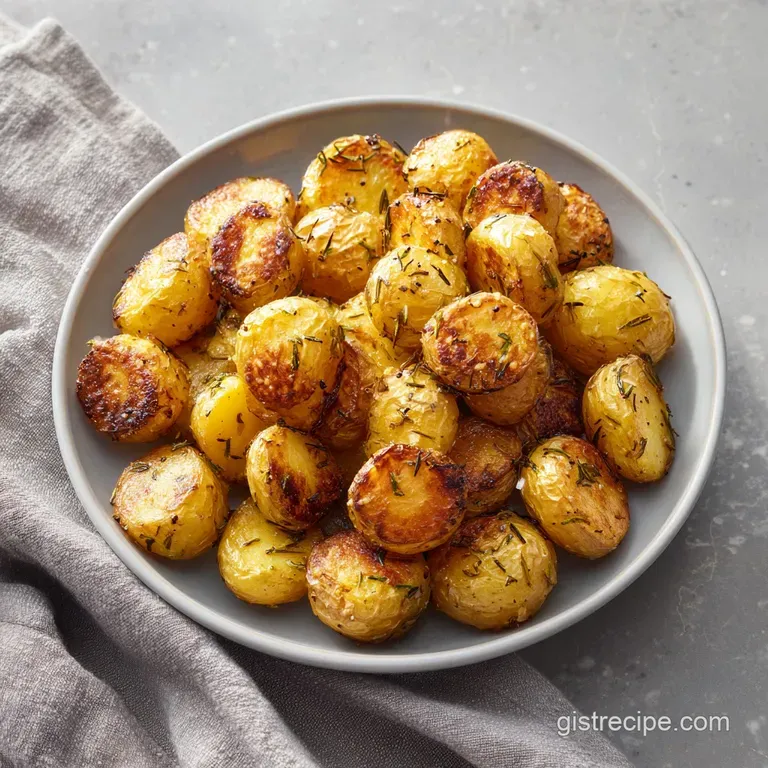
- Time: Active 10 minutes, Passive 25 minutes, Total 35 minutes
- Flavor/Texture Hook: Shatter crisp skin with a buttery, velvety interior
- Perfect for: Weeknight dinners, holiday sides, or beginner meal prep
- Achieving Gold with Roasted Small Potatoes
- Vital Metrics for Perfect Results
- Hand Picked Components for Depth
- Necessary Gear for High Heat
- Step-by-Step Culinary Execution
- Overcoming Every Roasted Potato Obstacle
- Flavor Variations and Bold Swaps
- Preserving the Texture Post Roast
- Myths Regarding Potato Roasting
- Curated Pairings for Bold Tables
- Recipe FAQs
- 📝 Recipe Card
Achieving Gold with Roasted Small Potatoes
Have you ever pulled a tray of potatoes out of the oven only to find them pale, sad, and sticking to the metal like they were glued there? It is a total heartbreak when you are expecting that deep mahogany crunch.
I remember one Tuesday night I was so rushed I just dumped everything onto a cold sheet, and the result was more like a steamed mash than a roast. That was the night I realized that "good enough" just doesn't cut it when you want a side dish that actually sings.
The secret to this specific recipe is all about the energy transfer. We are not just cooking these spuds; we are transforming them through specific heat management. When that cut surface hits a piping hot, oiled tray, the sizzle you hear is the sound of moisture leaving and flavor arriving.
It creates a structural crust that holds all that fluffy potato goodness inside while giving you a sensory experience that is honestly addictive.
This method for Roasted Small Potatoes is my absolute go to because it is reliable, bold, and visually stunning. We are using high heat and a few specific aromatic layers to ensure every bite is punchy.
Whether you are serving these with a Sunday roast or just eating them off the tray (no judgment here), the contrast between the salt flecked skin and the creamy middle is what makes them a permanent staple in my kitchen.
Vital Metrics for Perfect Results
The Preheated Surface: Placing the potatoes on a hot tray starts the searing process immediately, preventing the starch from sticking to the metal as it heats up. It acts like a cast iron skillet, creating a crust before the potato even has a chance to soften.
Moisture Management: Driving off surface water is the only way to avoid the dreaded "steamed" texture. By halving them and placing them cut side down, we trap heat against the tray while allowing steam to escape through the curved skins.
Oil Conductivity: Using a generous amount of extra virgin olive oil does more than add flavor; it acts as a thermal bridge. It fills the tiny gaps between the potato and the tray, ensuring the heat is distributed evenly across the entire flat surface for a uniform golden finish.
Aromatic Timing: We use dried herbs and garlic powder here because they can withstand the 425°F (218°C) environment without burning to a bitter crisp, unlike fresh minced garlic which often turns acrid at these temperatures.
| Thickness | Internal Temp | Rest Time | Visual Cue |
|---|---|---|---|
| 1/2 inch (Halved) | 210°F | 3 minutes | Deep mahogany edges |
| 1 inch (Large chunks) | 210°F | 5 minutes | Golden brown and puffed |
| Whole (Baby spuds) | 205°F | 5 minutes | Skin is wrinkled and taut |
Choosing the right size is the first step toward that bold finish we are after. Small potatoes are ideal because they have a high skin to flesh ratio, which means more surface area for that flavorful, salty crust to develop during the 25 minutes of roasting time.
Hand Picked Components for Depth
| Component | Science Role | Pro Secret |
|---|---|---|
| Small Potatoes | High starch density | Use Yukon Gold for the creamiest, most buttery interior texture. |
| Sea Salt | Osmotic drawer | Salt pulls moisture to the surface, which then evaporates to create a crunchier skin. |
| Garlic Powder | Stable aromatic | Unlike fresh garlic, the powder won't burn at 425°F (218°C), providing a toasted, savory base. |
| Dried Rosemary | Heat resistant oil | The oils in dried herbs are more concentrated and won't incinerate during the long roast. |
For this recipe, you will need 1.5 lb small potatoes. I personally love Red Bliss for the color, but Fingerlings or Yukon Golds are the kings of texture. You will also need 3 tbsp extra virgin olive oil to get that conductive heat moving.
For the seasoning, we are keeping it bold: 1 tsp fine sea salt, 0.5 tsp cracked black pepper, 1 tsp garlic powder, and 1 tsp dried rosemary or thyme. Finally, 2 tbsp grated Parmesan cheese added at the very end provides a sharp, salty finish that melts into the hot crevices of the skins.
- Small Potatoes (1.5 lb): Look for uniform sizes so they cook at the same rate.
- Extra Virgin Olive Oil (3 tbsp): high-quality oil adds a peppery backnote.
- Fine Sea Salt (1 tsp): Fine grains distribute more evenly than coarse flakes.
- Dried Herbs (1 tsp): Rosemary provides a woodsy aroma that pairs perfectly with starch.
- Parmesan Cheese (2 tbsp): Use the real stuff, grated finely, for a nutty crust.
Necessary Gear for High Heat
You really want a rimmed baking sheet for this. The rim is crucial because it allows you to toss the potatoes safely, but more importantly, it helps contain the oil so it doesn't drip onto the oven floor. A heavy duty aluminum or stainless steel tray is best because it holds heat better than thin, cheap versions.
A large mixing bowl is also non negotiable. You want enough room to really move the potatoes around. If the bowl is too small, the oil and spices won't coat the spuds evenly, and you will end up with some potatoes that are over seasoned and others that are bland.
A solid set of tongs or a metal spatula will help you remove them from the blazing hot tray without tearing the delicate skins.
The Science of the "Flat Side" Sear
When you place the potato cut side down, you are maximizing the surface area in direct contact with the heat source. This creates a focused zone where the sugars and starches can transform into a crispy, savory layer.
If you roast them round side down, they tend to roll and steam, missing out on that vital textural contrast.
over High heat Moisture Evaporation
At 425°F (218°C), the water inside the potato turns to steam rapidly. This steam needs a way out, and by leaving the tray uncovered, we allow that moisture to dissipate into the oven.
If you overcrowd the pan, the steam gets trapped between the potatoes, leading to a soft, mushy result instead of the vibrant crunch we want.
step-by-step Culinary Execution
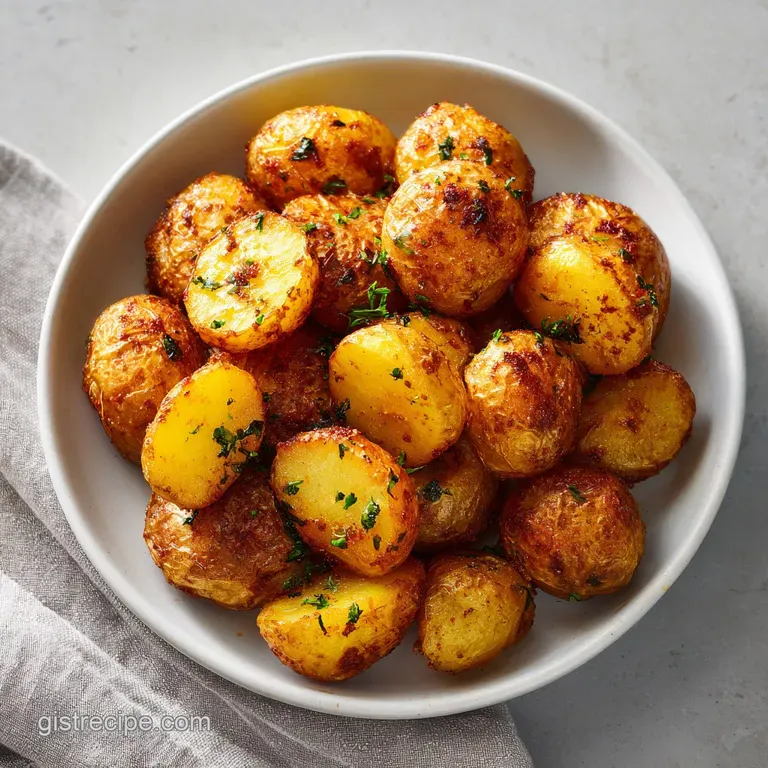
- Preheat your oven to 425°F (218°C) and place an empty rimmed baking sheet inside to heat up. Note: This ensures the sizzle starts the moment the potatoes hit the pan.
- Wash and thoroughly dry the potatoes, then halve them lengthwise. Note: Drying is critical; any surface water will cause steaming rather than roasting.
- In a large mixing bowl, toss the halved potatoes with 3 tbsp olive oil, 1 tsp sea salt, 0.5 tsp black pepper, 1 tsp garlic powder, and 1 tsp dried herbs until evenly coated.
- Carefully remove the hot baking sheet from the oven using heavy duty mitts.
- Arrange the potatoes cut side down in a single layer, ensuring they do not touch. Listen for that immediate sizzle.
- Roast for 25 minutes without flipping until the cut sides are deep mahogany and crispy.
- Check the doneness by poking one with a fork; it should slide in with zero resistance.
- Remove from the oven and immediately toss with 2 tbsp grated Parmesan cheese while they are still screaming hot.
- Serve immediately while the skins are at their absolute peak of crispness.
The smell of the toasted rosemary hitting the hot oil as you pull the tray out is absolutely transformative. You will see the Parmesan start to melt and lace around the edges of the potatoes, creating little crispy bits of cheese that are a total bonus.
Overcoming Every Roasted Potato Obstacle
The biggest issue people run into is sticking. If you find your potatoes are glued to the tray, it is usually because they haven't formed a crust yet, or the tray wasn't hot enough when they were added. Patience is key here; don't try to move them halfway through the cooking time.
Rescuing Soft or Pale Skins
If your potatoes are cooked through but the skins look pale, your oven temperature might be running low. You can fix this by turning the heat up to 450°F (230°C) for the last 5 minutes.
This final blast of heat will force the last bit of moisture out and darken the crust.
Handling Bitter Burnt Garlic
If you used fresh garlic instead of powder and it turned black and bitter, there is no easy fix other than scraping it off. Next time, wait until the last 5 minutes to add fresh aromatics, or stick to the powder for the full duration of the roast to keep the flavors bold and clean.
| Problem | Root Cause | Solution |
|---|---|---|
| Potatoes are mushy | Overcrowded pan | Use a second tray or roast in batches to allow steam to escape. |
| Sticking to the tray | Cold pan or not enough oil | Always preheat the tray and ensure every potato surface is glistening with oil. |
| Burnt on the outside, raw inside | Oven temperature too high | Lower heat to 400°F (200°C) and extend the time by 10 minutes. |
Roasted potatoes are a labor of love, and small mistakes can lead to big texture issues. It is much easier to prevent these problems than to fix them once the starch has set.
Common Mistakes Checklist
- ✓ Pat the potatoes completely dry with a kitchen towel before oiling.
- ✓ Never skip the preheating step for the baking sheet.
- ✓ Space the potatoes out so they have at least half an inch of "breathing room."
- ✓ Use a high smoke point oil like extra virgin olive oil or avocado oil.
- ✓ Don't flip the potatoes; the side touching the pan gets the best crust.
Flavor Variations and Bold Swaps
If you want to take this in a different direction, it is incredibly easy to swap the flavor profile. For a spicy kick, replace the rosemary with smoked paprika and a pinch of cayenne. If you have leftovers from this batch, they make a fantastic base for a Sausage Leek and Potato Hash the next morning.
| Original Ingredient | Substitute | Why It Works |
|---|---|---|
| Dried Rosemary | Dried Oregano | Gives it a more Mediterranean, earthy vibe. |
| Parmesan Cheese | Nutritional Yeast | Provides a similar nutty, salty punch for a vegan option. |
| Garlic Powder | Onion Powder | Offers a sweeter, more mellow aromatic profile. |
Scaling this recipe is straightforward. If you are doubling the batch to 3 lbs, use two separate baking sheets. If you crowd them onto one, they will steam. For a smaller 0.75 lb batch, use a smaller toaster oven tray but reduce the cooking time by about 5 minutes as the smaller thermal mass will heat up faster.
Preserving the Texture Post Roast
Leftover potatoes can be stored in an airtight container in the fridge for up to 4 days. However, the fridge is the enemy of the "shatter crisp" skin. The starch will undergo retrogradation, making them feel a bit firm or waxy. To bring them back to life, avoid the microwave at all costs.
Instead, toss them back into a 400°F (200°C) oven or an air fryer for 5-8 minutes until they sizzle again.
For zero waste, don't toss those little potato scraps or the small bits that fall off. Those tiny fragments become "potato croutons" that are incredibly crunchy and flavorful. You can also save the flavored oil left on the tray to sauté eggs the next morning.
If you find you have too many potatoes to finish, they freeze surprisingly well. Freeze them in a single layer on a tray first, then move to a bag. Roast from frozen at 425°F (218°C) for 15 minutes to reheat.
Myths Regarding Potato Roasting
One common misconception is that you must soak potatoes in water to remove starch for them to be crispy. While this works for deep fried French fries, for roasted potatoes, that extra moisture often does more harm than good. If you don't dry them perfectly after soaking, they will steam.
The high heat and oil in this recipe are more than enough to handle the surface starch.
Another myth is that peeling is necessary for the best flavor. In reality, the skin of small potatoes is where a huge amount of the vibrant flavor and nutrition lives. It also provides the structural integrity needed for that satisfying crunch. Peeling them would result in a much more ordinary dish.
Curated Pairings for Bold Tables
These potatoes are the ultimate wingman for a high end protein. Their salty, herbaceous crust cuts through the richness of a Beef Tenderloin Roast beautifully. If you are keeping things simpler, they are transformative when served alongside a simple roast chicken or even a piece of pan seared salmon.
I also love serving these as part of a vibrant vegetable platter. They pair naturally with roasted carrots or a bright, lemony asparagus. The key is to serve them with something that has a bit of acidity like a squeeze of lemon or a dollop of sour cream to balance out the savory intensity of the garlic and Parmesan.
Trust me, once you master this over high heat method, you will never go back to the "cold tray" method again. It is a total game changer for your weeknight rotation.
Recipe FAQs
How long do you roast baby potatoes for?
Roast for 25 30 minutes. You should keep them in the oven until the cut sides reach a deep mahogany color and crisp texture.
How long does it take to roast small cut-up potatoes?
Allow for 25 30 minutes of roasting time. Because these potatoes are halved, they roast quickly at 425°F (218°C) without the need to flip them during the cooking process.
Are mini potatoes good for roasting?
Yes, they are ideal for this method. Varieties like Red Bliss, Fingerling, or Yukon Gold offer a creamy interior that contrasts perfectly with the crispy, golden brown exterior created by the high heat oven technique.
What's the secret to crispy roasted potatoes?
Preheat your empty baking sheet inside the oven. This thermal shock ensures the cut sides begin searing immediately upon contact, and if you enjoyed mastering this high heat crust, you can apply similar searing principles to our roasted split chicken recipe.
Is it true I must boil potatoes before roasting to get them crispy?
No, this is a common misconception. Preheating the baking sheet and thoroughly drying the washed potatoes allows you to achieve a perfect crispness without the extra step of boiling.
How to ensure the potatoes don't stick to the pan?
Arrange the potatoes cut-side down in a single layer on a preheated baking sheet. Using enough olive oil to coat them thoroughly prevents sticking and promotes even browning.
How to get the seasoning to stick to the potatoes?
Toss the halved potatoes with olive oil and spices in a large mixing bowl first. Ensuring the oil and seasonings are evenly distributed before placing them on the hot pan guarantees every potato is flavorful.
Roasted Small Potatoes
Ingredients:
Instructions:
Nutrition Facts:
| Calories | 235 kcal |
|---|---|
| Protein | 4.3 g |
| Fat | 11.2 g |
| Carbs | 31.2 g |
| Fiber | 3.8 g |
| Sugar | 1.4 g |
| Sodium | 615 mg |
