Greek Lemon Chicken with Potatoes
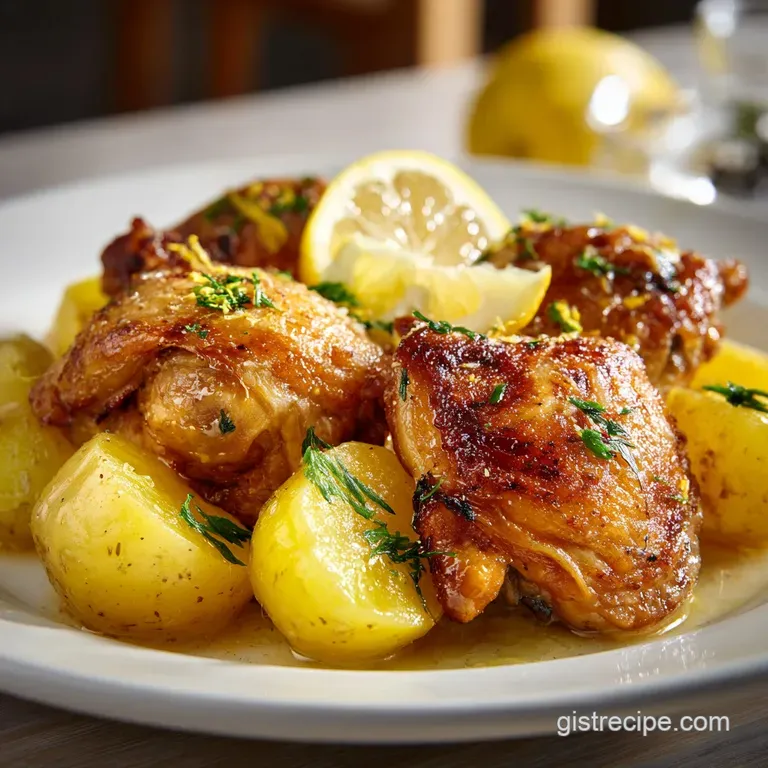
- Time: Active 15 minutes, Passive 45 minutes, Total 1 hours
- Flavor/Texture Hook: Tangy, garlicky, and crispy
- Perfect for: Stress free Sunday family dinners
Why This Specific Method Works
The Physics of the Crisp
The honey in the marinade provides a small amount of sugar that accelerates the Maillard reaction. This ensures the skin turns deep golden brown and shatters when bitten, even in a moist roasting environment.
- Fat Emulsification: Whisking the lemon juice and oil creates a temporary emulsion that coats every inch of the chicken.
- Starch Gelatinization: Yukon Gold potatoes release just enough starch to thicken the pan juices into a silky sauce.
- Acid Denaturation: Lemon juice breaks down tough protein fibers in the chicken thighs, ensuring they remain velvety after roasting.
- Osmotic Pressure: The sea salt draws the marinade deep into the meat rather than just sitting on the surface.
I've found that using bone in thighs is non negotiable for the best flavor. If you're looking for a slightly different vibe, perhaps for a weeknight, my gluten-free Chicken recipe uses a similar garlic heavy profile but cooks much faster on the stovetop. But for the full roasting experience, sticking with the bone in thighs here is the way to go because they can handle the high heat without drying out.
| Thickness | Internal Temp | Rest Time | Visual Cue |
|---|---|---|---|
| 2 cm (Thighs) | 75°C | 5 minutes | Juices run clear |
| 3 cm (Thighs) | 75°C | 8 minutes | Bone pulls away slightly |
| Large Wedge | Soft | 2 minutes | Fork slides through easily |
It's really important to keep an eye on those potatoes. Depending on how you cut them, they might need an extra five minutes or so. I always aim for 1 inch wedges because they match the cooking time of the chicken thighs perfectly. If you cut them too small, they'll turn to mush before the chicken is safe to eat.
Analyzing the Core Ingredients
Getting the right ingredients is half the battle won. I always reach for Yukon Gold potatoes because they have a naturally buttery texture that doesn't fall apart like floury potatoes might. They hold their shape while the outside gets that lovely roasted edge.
It’s a simple swap that makes a huge difference in the final mouthfeel of the dish.
| Ingredient | Science Role | Pro Secret |
|---|---|---|
| Olive Oil | Heat Transfer | Use extra virgin for the peppery finish |
| Lemon Juice | Protein Tenderizer | Freshly squeezed has active enzymes for softening |
| Dried Oregano | Lipid Soluble Flavor | Rub it between your palms to release oils |
| Honey | Surface Caramelization | Prevents the lemon from tasting overly metallic |
The garlic is another big player here. Don't be tempted to use the pre minced stuff from a jar. It lacks the pungent kick that fresh cloves provide. When you mince those 6 cloves fresh, the sulfur compounds are at their peak, which is exactly what you need to stand up to the acidity of the 80 ml of lemon juice.
Tools Required for This Roast
You don't need a kitchen full of gadgets, but a heavy bottomed roasting pan is your best friend here. I use a large stainless steel pan or a ceramic dish that's big enough to hold everything in a single layer.
If you crowd the pan, the chicken will steam instead of roasting, and you’ll lose that crispy skin we're aiming for. A good whisk is also essential for getting that marinade properly combined.
- Large Roasting Pan: Needs enough surface area to prevent overlapping.
- Digital Meat Thermometer: The only way to be 100% sure about doneness.
- Microplane or Zester: Helpful if you want to add extra lemon zest for punch.
- Chef's Knife: To get those 1 inch potato wedges uniform.
Chef's Tip: If you have a cast iron skillet large enough, use it. The heat retention helps get the bottom of the potatoes incredibly crispy, almost like they’ve been fried in the chicken drippings. It's a game changer for texture.
Executing the step-by-step Method
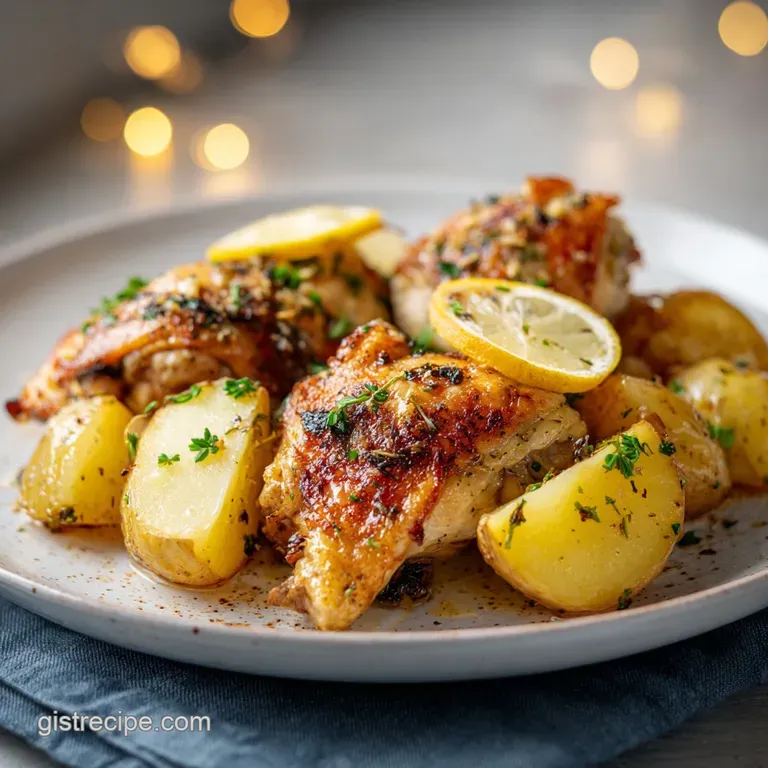
- Prep the Oven. Preheat your oven to 200°C. Note: This high heat is vital for rendering the chicken fat quickly.
- Mix the Marinade. In a medium bowl, whisk 120 ml olive oil, 80 ml lemon juice, minced garlic, 2 tbsp dried oregano, 1 tsp honey, 1 tsp salt, and 0.5 tsp pepper. Whisk until the mixture looks creamy and opaque.
- Prepare Potatoes. Place 1 kg of potato wedges in the roasting pan. Note: Keeping them in the pan first allows them to get a head start on the seasoning.
- Coat the Chicken. Pat the 1.5 kg chicken thighs dry with paper towels. Shatter crisp skin starts with zero surface moisture.
- Combine Everything. Pour two thirds of the marinade over the chicken and potatoes in the pan. Toss with your hands to ensure every nook is covered.
- Arrange the Pan. Place chicken thighs skin side up on top of the potatoes. Don't let the potatoes cover the chicken skin.
- Add Aromatics. Tuck the fresh rosemary sprigs and lemon slices between the chicken pieces. Note: This infuses the steam with herbal notes.
- Initial Roast. Slide into the oven and bake for 30 minutes. You should hear a steady sizzle from the pan.
- Baste and Finish. Pour the remaining marinade over the chicken and roast for another 15 minutes. Cook until the skin is deep gold and the internal temp hits 75°C.
- Rest the Meat. Remove from the oven and let it sit for 5 minutes before serving. Note: This allows the juices to redistribute so they don't run out when you cut in.
| Original Ingredient | Substitute | Why It Works |
|---|---|---|
| Yukon Gold Potatoes | Red Potatoes | Waxy texture holds shape well. Note: Skin is thinner, no need to peel. |
| Dried Oregano | Fresh Oregano | Use 3x the amount. Adds a more floral, less earthy note. |
| Chicken Thighs | Chicken Drumsticks | Similar fat content and cook time. Note: Skin won't be as expansive. |
| Sea Salt | Kosher Salt | Use same volume. Provides a clean saltiness without iodine bitterness. |
If you find yourself out of honey, a pinch of brown sugar works in a pinch. It has that same caramelization benefit, though the honey adds a floral note that really complements the lemon.
I've also tried this with sweet potatoes when I was trying to be healthy, but honestly, the Yukon Golds are the classic choice for a reason. They just soak up the fat better.
Fixing Common Roasting Mistakes
One mistake I once made was adding too much lemon juice. I thought "more is better," but the acid actually started to "cook" the outside of the chicken before it hit the oven, resulting in a weird, chalky texture. Stick to the 80 ml. It’s the sweet spot for flavor and chemistry.
If your chicken looks pale, your oven might be running cold. Use a thermometer to check!
Why Your Chicken Skin Is Soggy
This usually happens because of steam. If the potatoes are piled too high or the chicken pieces are touching each other, the moisture can't escape. It gets trapped under the skin, turning it rubbery instead of crispy. Make sure there is "breathing room" around each thigh so the dry heat of the oven can do its job.
Why Your Potatoes Are Hard
If the chicken is done but the potatoes are still crunchy, it’s usually a size issue. Wedges larger than 1 inch take significantly longer to cook. You can fix this by removing the chicken to a plate to rest and popping the potatoes back in for another 10 minutes at a higher temp.
| Problem | Root Cause | Solution |
|---|---|---|
| Bitter Sauce | Garlic burnt in high heat | Tuck garlic under potatoes or chicken to protect it. |
| Dry Meat | Overcooked past 75°C | Use a meat thermometer and pull at 73°C; carryover heat does the rest. |
| No Pan Sauce | Too much evaporation | Add 50 ml of chicken stock halfway through if the pan looks dry. |
- ✓ Pat chicken completely dry before seasoning (prevents steaming)
- ✓ Ensure the oven is fully preheated to 200°C before the pan goes in
- ✓ Arrange chicken skin side up and never overlap the pieces
- ✓ Use a large enough pan to allow airflow between ingredients
- ✓ Let the chicken rest for 5 minutes to retain those internal juices
Flavor Twists and Easy Variations
Sometimes I want to change things up depending on what's in the pantry. You can easily turn this into a Mediterranean feast by adding some pitted Kalamata olives and chunks of feta cheese in the last 10 minutes of roasting.
The feta gets slightly warm and soft, and the olives add a salty punch that works so well with the lemon.
If you're in a massive rush, you could try my Greek Sheet Pan recipe which uses smaller cuts of chicken to get dinner on the table even faster. But if you have the time, this roasted version with the larger thighs is definitely the "luxury" experience. You can also swap the rosemary for thyme if you prefer a more subtle, earthy herb profile.
- Spicy Kick: Add a teaspoon of red chili flakes to the marinade.
- Veggie Heavy: Throw in some bell pepper chunks or red onion wedges.
- Citrus Blend: Use half lemon and half orange juice for a sweeter, mellow tang.
When scaling this recipe down for two people, don't just halve everything blindly. Use a smaller roasting pan so the juices don't spread too thin and burn. If you're doubling it for a crowd, you'll definitely need two separate pans. Crowding 3 kg of chicken into one tray is a recipe for a soggy disaster.
I usually rotate the pans halfway through the cooking time to ensure even browning.
Storing and Reheating Your Leftovers
This Greek Lemon Chicken actually keeps surprisingly well. The flavors of the garlic and oregano seem to deepen overnight. I love shredding the leftover chicken into a salad the next day.
The potatoes do lose their crispiness in the fridge, but they still taste amazing because they've absorbed all that flavorful oil and lemon.
- Fridge: Store in an airtight container for up to 4 days.
- Freezer: You can freeze the cooked chicken for up to 3 months, but I don't recommend freezing the potatoes as the texture becomes grainy.
- Zero Waste: Don't toss the bones! Throw the leftover chicken carcasses into a pot with some veggie scraps to make an incredible lemon infused chicken stock.
- Reheating: The best way to revive the skin is in a toaster oven or air fryer at 180°C for about 5-8 minutes. Microwave works too, but you’ll lose the crunch.
Perfect Pairings for Your Meal
Since this dish is quite rich with the olive oil and chicken fat, I always serve it with something crisp and fresh. A simple Greek salad with cucumbers, tomatoes, and red onion is the classic choice. The acidity in the salad dressing mirrors the lemon in the chicken, creating a really cohesive meal.
If you want something heartier, a side of Chicken Curry Soup recipe as a starter can really warm everyone up on a cold night, though this chicken is usually plenty on its own. I also love serving this with a big dollop of cold tzatziki. The creamy yogurt and cool cucumber provide a perfect contrast to the hot, garlicky roasted chicken. Right then, I think you're ready to get roasting. Trust me on this one, your kitchen is about to smell incredible!
One last thing don't forget to pour those pan juices over the chicken right before you eat. That liquid gold is where all the concentrated flavor lives. Enjoy every crispy, tangy bite!

Recipe FAQs
What is in Greek lemon chicken?
Chicken thighs, olive oil, fresh lemon juice, garlic, oregano, and salt. These simple ingredients emulsify during roasting to create a vibrant marinade that flavors the chicken and the accompanying potatoes.
What makes Ina Garten's lemon chicken special?
It emphasizes bone-in, skin-on thighs for superior flavor and texture. Her method relies on high roasting heat to achieve shattering crispy skin while the lemon and oil mixture braises the meat to tenderness.
What's the secret to juicy Greek chicken?
Never overcook the meat past 75°C internal temperature and allow it to rest. Pulling the chicken slightly early and letting it rest for 5 minutes ensures the juices redistribute throughout the muscle fibers instead of running out onto the plate.
What do you eat with Greek lemon chicken?
Roasted potatoes are traditionally cooked right in the pan juices. For a fresh contrast, serve it alongside a simple Greek salad or some cool tzatziki sauce to balance the rich, tangy roast.
How do I ensure the chicken skin gets crispy and not soggy?
Pat the chicken skin absolutely dry with paper towels before seasoning. Any surface moisture will turn to steam in the oven, preventing the Maillard reaction, which is key for crispness; this same principle applies when getting crispy results with our Fried Cabbage with recipe.
Is it true that I must use bone-in thighs instead of breasts?
No, but bone-in thighs yield far superior results for this particular recipe. The higher fat content and bone structure help the meat stay moist while standing up to the high roasting temperature required to crisp the skin.
How can I adapt this recipe for a faster weeknight meal?
Use smaller cuts of meat, like chicken tenders or small breast pieces, and increase the heat slightly. Alternatively, you can utilize the same flavor profile in our Weeknight Chicken Pasta recipe if you are looking for a complete, faster dinner solution.
Greek Lemon Chicken Recipe
Ingredients:
Instructions:
Nutrition Facts:
| Calories | 852 kcal |
|---|---|
| Protein | 42.1 g |
| Fat | 58.2 g |
| Carbs | 36.4 g |
| Fiber | 4.8 g |
| Sugar | 3.2 g |
| Sodium | 785 mg |
