Easy Chocolate Chip Cookies No Chill
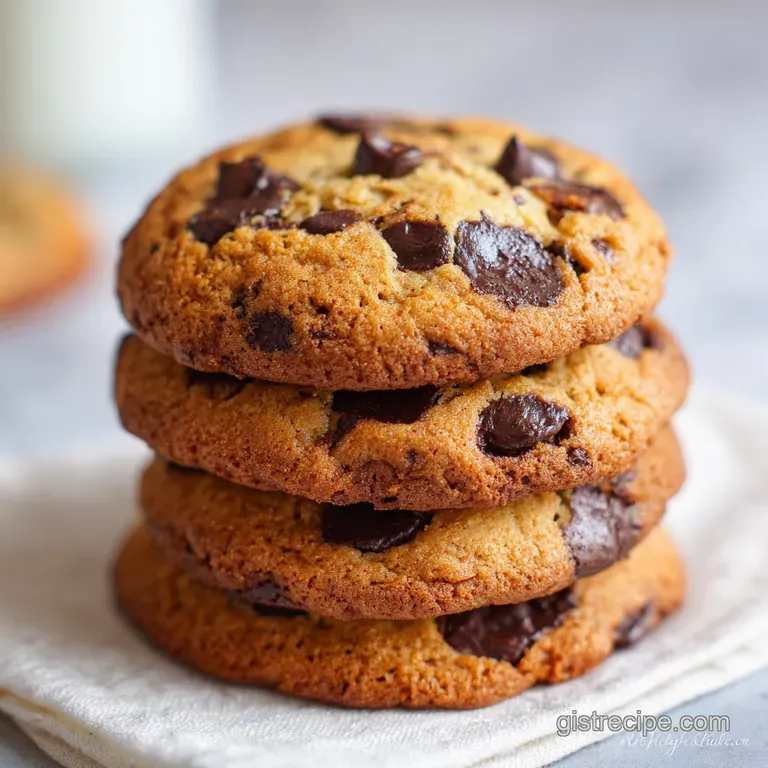
- Time: Active 10 minutes, Passive 10 minutes, Total 20 minutes
- Flavor/Texture Hook: Velvety centers with a sugary shatter on the edges
- Perfect for: Late night dessert cravings or last minute school bake sales
- Master These Easy Chocolate Chip Cookies No Chill
- The Secret Science of Instant Texture
- Component Deep Dive Analysis
- High Quality Pantry Staples Explained
- Essential Tools for Rapid Baking
- Step by Step Mixing and Baking
- Avoid Common Mistakes and Spread
- Simple Swaps for Dietary Needs
- Chilling is Always Mandatory
- Keeping Your Treats Fresh Longer
- Best Ways to Serve Treats
- Easy Chocolate Chip Cookies No Chill: Recipe FAQs
- 📝 Recipe Card
Master These Easy Chocolate Chip Cookies No Chill
Imagine it is 9 PM on a rainy Tuesday. You are curled up on the sofa, and suddenly, that specific, nagging craving for something warm and sugary hits. You don't want to wait until tomorrow, and you certainly don't want to wait two hours for a ball of dough to "ripen" in the fridge.
I have been there more times than I can count, staring at a recipe that demands a 24 hour chill time and thinking, "not tonight."
That is exactly how this recipe was born in my kitchen. After a few flat, greasy failures that looked more like pancakes than cookies, I realized the secret wasn't the cold temperature, but the chemistry of the ingredients.
By adjusting the cornstarch and using a higher ratio of brown sugar to white, I found a way to get that thick, chewy texture without the agonizing wait. The aroma of bubbling butter and vanilla bean paste filling the house is enough to cure any bad day.
We are going for a cookie that has a distinct, buttery sizzle when it hits your tongue and a center that stays soft for days. You don't need fancy equipment or a professional pastry degree. We'll use a simple bowl and a whisk to create something that honestly rivals those famous New York bakeries.
Let's get into how this magic actually happens in your oven.
The Secret Science of Instant Texture
The Physics of the Instant Set: Cornstarch acts as a structural stabilizer that prevents the cookies from thinning out during the initial heat blast. When combined with melted butter, it creates a velvety crumb that holds its shape without needing the fat to be solid before baking.
Chef's Tip: Grate a tiny bit of fresh nutmeg into the dry ingredients. You won't taste "spice," but it makes the chocolate taste exponentially richer and more complex.
| Method | Time | Texture | Best For |
|---|---|---|---|
| Traditional Oven | 10 minutes | Crispy edges, soft centers | Classic individual cookies |
| Stovetop Skillet | 15 minutes | Molten, gooey, pudding like | Sharing with a spoon and ice cream |
| Toaster Oven | 12 minutes | Extra crunchy bottom | Small batches of 2-3 cookies |
Right then, let's talk about the components that make this work. We aren't just tossing things in a bowl; we are building a foundation that survives the heat without spreading into a giant sugar lake.
If you've ever wondered why some cookies stay thick while others melt away, it usually comes down to the sugar and the binder.
Component Deep Dive Analysis
| Ingredient | Science Role | Pro Secret |
|---|---|---|
| Dark Brown Sugar | Adds acidity to react with soda | Pack it tight to ensure moisture retention |
| Cornstarch | Softens flour proteins | Don't skip this; it's the "anti spread" insurance |
| Egg Yolk | Increases fat content and emulsification | Use room temp yolks for a smoother dough |
When you use melted butter, you are choosing a path that usually leads to a flatter cookie. However, by adding that extra egg yolk, we are introducing more lecithin. This helps the fat and the liquid in the eggs stay together, resulting in a chew that is almost fudgy. It is a similar logic to what I use in my Fudgy Brownie Recipe to get that dense, rich bite.
high-quality Pantry Staples Explained
- 1 cup (225g) unsalted butter: Melted and cooled for 5 minutes. Why this? Provides the foundational flavor and creates a tender, melt in-the mouth texture.
- 1 cup (200g) dark brown sugar: Packed firmly. Why this? The molasses content ensures a deep caramel note and chewy center.
- 0.5 cup (100g) granulated white sugar: Standard white sugar. Why this? This creates the "shatter" on the edges of the cookie.
- 1 large egg: Room temperature. Why this? Acts as the primary binder for the dough structure.
- 1 large egg yolk: Room temperature. Why this? Adds extra richness without the thinning effect of more egg white.
- 1 tbsp vanilla bean paste or extract: high-quality is best. Why this? The high volume of vanilla balances the salt and chocolate.
- 2.25 cups (280g) all purpose flour: Spooned and leveled. Why this? The backbone of the cookie; too much makes them cakey.
- 1 tsp cornstarch: Standard cornstarch. Why this? Keeps the cookies soft and prevents excessive spreading.
- 1 tsp baking soda: Fresh soda is vital. Why this? Provides lift and aids in the browning process.
- 0.5 tsp sea salt: Fine grain. Why this? Cuts through the intense sweetness of the sugars.
- 1.5 cups (250g) semi sweet chocolate chips: Or chopped bar chocolate. Why this? Higher cocoa content prevents the cookie from being cloying.
- 1 pinch flaky sea salt: For finishing. Why this? Adds a crunch and a pop of flavor on the crust.
| Original Ingredient | Substitute | Why It Works |
|---|---|---|
| Dark Brown Sugar | Light Brown Sugar | Same moisture, but results in a milder, less toffee like flavor. |
| Semi Sweet Chips | Dark Chocolate Chunks | Chunks create "pools" of chocolate rather than distinct dots. |
| Vanilla Bean Paste | Vanilla Extract | 1:1 swap. Extract is more liquid but flavor is nearly identical. |
Essential Tools for Rapid Baking
You don't need a heavy stand mixer for this. In fact, I prefer doing this by hand because you can feel the moment the sugar and butter truly emulsify. You'll want a large glass bowl, a sturdy whisk, and a silicone spatula.
The spatula is key for folding in the flour without overworking the gluten, which would turn your cookies into bread rolls.
Chef's Tip: Use a heavy duty cookie scoop (about 2 tablespoons size). This ensures all 20 cookies are identical, meaning they will all finish baking at the exact same moment. No more burnt edges on the small ones and raw centers on the big ones.
Since we are skipping the chill, your baking sheets need to be at room temperature. Never put this dough on a warm tray from a previous batch. It will cause the bottom of the cookie to melt before the top sets. I always keep two trays in rotation so one can cool down while the other is in the oven.
step-by-step Mixing and Baking
- Preheat the oven. Set your rack to the middle position and heat to 350°F (175°C). Note: A hot oven is essential for an immediate rise.
- Melt the butter. Heat the 1 cup of unsalted butter until just liquid, then let it sit for 5 minutes. It should be warm, not scorching.
- Combine the sugars. Whisk the melted butter with 1 cup dark brown sugar and 0.5 cup white sugar until the mixture looks like wet sand.
- Emulsify the liquids. Add the egg, egg yolk, and vanilla bean paste. Whisk vigorously for 2 minutes until the color lightens significantly.
- Whisk the dry base. In a separate bowl, stir together the 2.25 cups flour, cornstarch, baking soda, and sea salt.
- Merge the mixtures. Pour the dry ingredients into the wet. Use a spatula to fold gently until just a few streaks of flour remain.
- Add the chocolate. Fold in the 1.5 cups of chocolate chips. Do not overmix at this stage.
- Portion the dough. Scoop 2 tablespoon sized balls onto a parchment lined sheet, spacing them 2 inches apart.
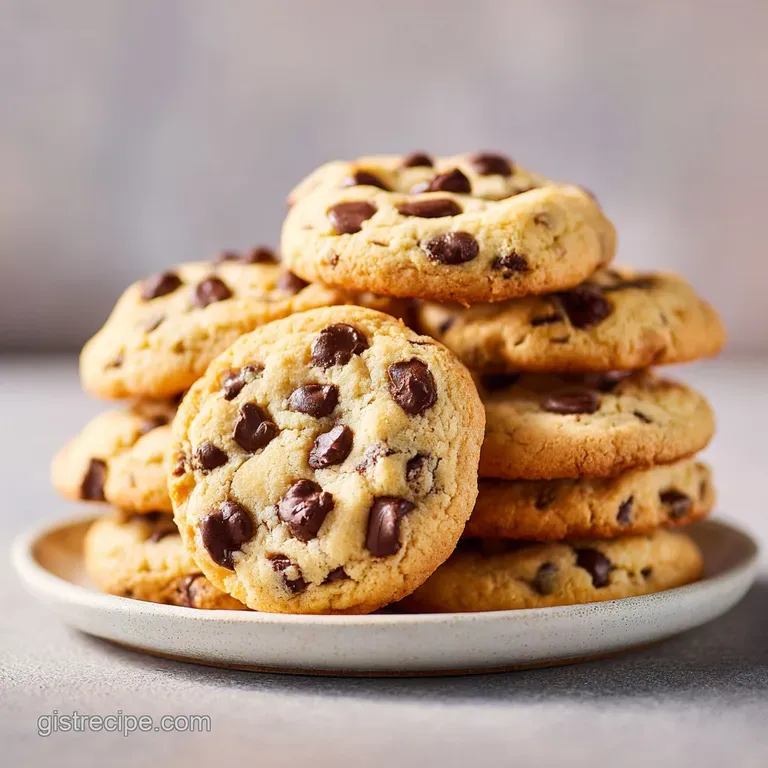
- Bake the cookies. Slide into the oven for 9-11 minutes until the edges are golden and the tops look slightly underdone.
- Finish and cool. Sprinkle with flaky sea salt immediately. Let them sit on the hot tray for 5 minutes to finish setting.
Avoid Common Mistakes and Spread
If your cookies look like flat puddles, the most likely culprit is the temperature of your butter. If it's too hot when it hits the sugar, it melts the sugar crystals rather than suspending them. This creates a runny batter that can't hold its shape. Another silent killer is the way you measure flour.
If you pack the flour into the cup, you’ll end up with "hockey pucks" that don't spread at all.
Why Your Cookies Puddled
This usually happens because the oven wasn't fully preheated or the butter was oily and hot. When the fat is too liquid, it escapes the flour structure before the edges can crisp up.
Why the Texture is Cakey
Over mixing the dough once the flour is added develops gluten. This turns a chewy cookie into something resembling a muffin. Always stop mixing the moment the white flour disappears.
| Problem | Root Cause | Solution |
|---|---|---|
| No Spread | Too much flour | Use the "spoon and level" method for measuring. |
| Greasy Bottom | Butter was too hot | Let melted butter cool until it’s just warm to the touch. |
| Burnt Bottoms | Dark baking sheet | Use parchment paper or a silicone mat to insulate. |
- ✓ Preheat your oven for at least 20 minutes before baking to ensure an even 350°F.
- ✓ Use room temperature eggs so they emulsify properly with the warm butter.
- ✓ Tap the baking tray against the oven rack halfway through baking to deflate air pockets.
- ✓ Use a round cutter or a glass to "scoot" the cookies into perfect circles right after they come out.
- ✓ Check your baking soda for freshness by dropping a pinch in vinegar; it should fizz violently.
Simple Swaps for Dietary Needs
If you need to scale this recipe down for a solo treat, you can halve the ingredients easily. For the "one and a half eggs" required, simply beat one whole egg in a small cup and use half of that liquid.
If you are scaling up for a party, remember that the baking time might increase by a minute or two if you are crowding the oven with multiple trays at once.
For a different vibe, you might try the technique I use in my French Toast Recipe where I prioritize high-quality vanilla and a bit of cinnamon. Adding half a teaspoon of cinnamon to these cookies gives them a "snickerdoodle adjacent" flavor that is incredible with dark chocolate.
If you want a thicker cookie, do this:
- Add 2 extra tablespoons of flour to the dough.
- Shape the dough balls into tall cylinders rather than round spheres.
- Ensure the dough balls are cold (even 5 minutes in the freezer helps if your kitchen is hot).
Chilling is Always Mandatory
This is a total myth. While chilling does deepen the flavor of the flour, you can achieve a fantastic result without it by using the right ratios. The cornstarch in this recipe provides the "body" that a 24 hour chill usually provides through hydration.
You aren't losing quality; you are just using a different chemical path to get there.
Keeping Your Treats Fresh Longer
Storage: Keep these in an airtight container at room temperature for up to 4 days. To keep them extra soft, toss a slice of plain white bread into the container. The cookies will absorb the moisture from the bread, staying "day one" fresh.
Freezing: You can freeze the baked cookies for up to 3 months. However, the real pro move is freezing the raw dough balls. Since this is a no chill recipe, you can scoop them, freeze them on a tray, and then toss them into a bag.
When you want one, just bake it directly from frozen, adding 2 minutes to the cook time.
Zero Waste: If you find yourself with leftover crumbs or broken cookies, don't throw them away. Crush them up and use them as a base for a cheesecake crust or stir them into a batch of brownie batter for extra texture.
Best Ways to Serve Treats
These are best served about 10 minutes after they come out of the oven. At this point, the edges have had time to "set" and become crispy, but the center is still warm and molten. If you want to go the extra mile, serve them alongside a cold glass of whole milk or a scoop of vanilla bean ice cream.
If you are feeling fancy, you can make a "cookie sandwich" by spreading a bit of sea salt caramel or peanut butter between two cookies. Because they aren't overly sweet thanks to the high salt and dark chocolate content, they handle extra toppings very well. They also make a great accompaniment to a morning coffee, much like a Classic Banana Bread recipe would. Trust me, there is nothing better than a warm cookie to start the day.
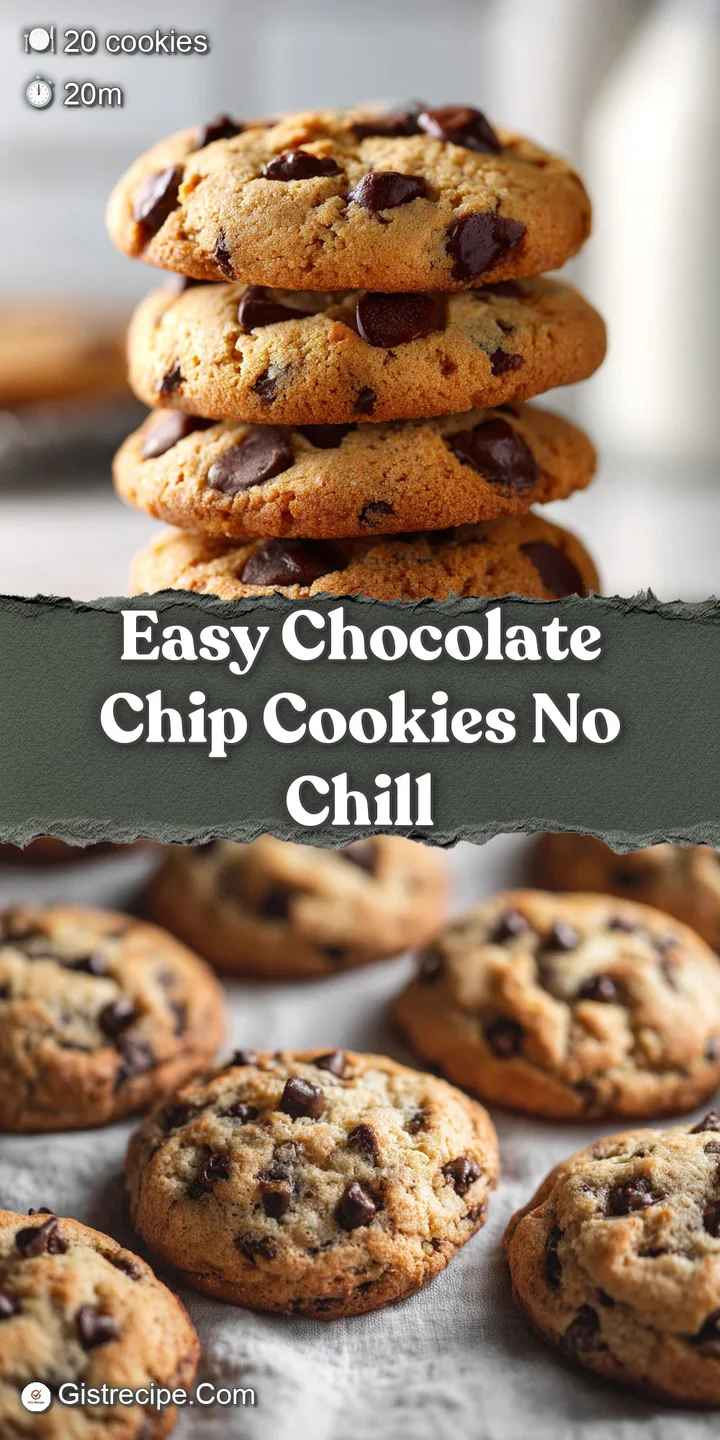
Easy Chocolate Chip Cookies No Chill: Recipe FAQs
Can I skip chilling the dough for chocolate chip cookies?
Yes, this recipe is designed to be made without chilling. We use melted butter and a specific flour ratio to ensure the cookies hold their shape and texture immediately after baking.
Why do my "no-chill" cookies spread too much?
This usually means your butter was too hot when added, or your oven wasn't fully preheated. Melted butter that's too hot can cause the sugar to liquefy too much, leading to excessive spreading. An underheated oven also prevents the cookies from setting quickly.
What is the role of cornstarch in no-chill cookies?
Cornstarch acts as a stabilizer to prevent excessive spreading. It absorbs moisture and provides structure, helping the cookies maintain a thicker, chewier texture without the need for refrigeration.
How long should I bake no-chill chocolate chip cookies?
Bake for 9-11 minutes at 350°F (175°C). Look for golden brown edges and slightly underdone centers; the residual heat will continue to cook them as they cool on the baking sheet.
Can I use different types of chocolate chips?
Yes, feel free to use dark, milk, or even white chocolate chips. Chopped chocolate bars also work wonderfully and can create larger pools of melty chocolate.
How do I store no-chill chocolate chip cookies to keep them soft?
Store them in an airtight container at room temperature with a slice of plain bread. The bread will release moisture, helping to keep the cookies soft for up to 4 days.
Is it true that chilling dough is essential for good cookies?
No, this is a common misconception. While chilling can enhance flavor by allowing ingredients to meld, this recipe uses ingredients like cornstarch and specific ratios to achieve excellent texture and structure without any chill time.
Easy Chocolate Chip Cookies No Chill
Ingredients:
Instructions:
Nutrition Facts:
| Calories | 258 calories |
|---|---|
| Protein | 2.5 g |
| Fat | 13.1 g |
| Carbs | 33.8 g |
| Fiber | 0.8 g |
| Sugar | 21.7 g |
| Sodium | 124 mg |
