Best Cottage Cheese Bagels: Soft and Chewy

- Time: Active 10 minutes, Passive 25 minutes, Total 35 minutes
- Flavor/Texture Hook: A golden, crackling exterior with a chewy, soft, and velvety center.
- Perfect for: Busy weekday mornings, post workout fuel, or a quick brunch for friends.
- Unlock the Protein Power of the Best Cottage Cheese Bagels Recipe
- Why the Smooth Base Creates a Better Crumb
- Analyzing the Elements of the Dough
- Building Your High Protein Breakfast Timeline
- Gathering Your Fresh Pantry Essentials
- Tools to Make the Job Easier
- Master the Dough Making Process
- Solving Common Baking Hurdles
- Adjusting for Different Batch Sizes
- Myths About High Protein Baking
- Flavor Ideas and Smart Storage
- What to Serve with These Bagels
- Very High in Sodium
- Recipe FAQs
- 📝 Recipe Card
Unlock the Protein Power of the Best Cottage Cheese Bagels Recipe
I remember the first time I pulled these out of the oven. The kitchen smelled like a dream - that specific, toasty scent of garlic and onion from the everything seasoning hitting the heat. I was skeptical, honestly. How could two ingredients do what yeast and hours of rising usually do?
But when I sliced into one, still warm, and saw that steam rise from a perfectly chewy center, I was sold. No more waiting hours for dough to proof while my stomach growls.
The real magic happened when I bit into the crust. It has this incredible shatter to it, followed by a middle that isn't heavy or leaden like some whole wheat versions. It is light, airy, and carries a slight tang from the cheese that reminds me of a mild sourdough.
If you have been looking for a way to get more protein without eating another boring scrambled egg, you have found it. We are going to skip the fussy techniques and get straight to the good stuff.
This is the kind of recipe you make once and then realize you never need to buy the frozen, cardboard tasting bagels again. It is fast, it is simple, and it works every single time as long as you follow a few small tricks I learned the hard way.
Let’s get into why this works and how you can nail it on your first try.
Why the Smooth Base Creates a Better Crumb
The Steam Engine: When the high moisture content of the cottage cheese hits the hot oven, it creates rapid steam that expands the air pockets in the dough.
Acid Leavening Boost: The natural acidity in the cheese reacts with the baking powder in the self rising flour to create a localized lift.
Protein Structure: High protein levels in the cheese provide a sturdy "web" that holds the bagel's shape without needing long gluten development.
| Thickness | Internal Temp | Rest Time | Visual Cue |
|---|---|---|---|
| 1 inch | 190°F (88°C) | 10 mins | Deep golden brown crust |
| 1.5 inches | 195°F (91°C) | 15 mins | Sounds hollow when tapped |
| 0.5 inches | 185°F (85°C) | 5 mins | Firm to the touch |
Giving the bagels a few minutes to rest on a wire rack is a step you cannot skip. This allows the internal steam to finish setting the starches, ensuring you don't end up with a gummy middle when you slice it open.
Analyzing the Elements of the Dough
| Ingredient | Science Role | Pro Secret |
|---|---|---|
| Full Fat Cottage Cheese | Provides moisture and structural protein | Puree until velvety to avoid grainy spots |
| Self Rising Flour | Provides structure and immediate leavening | Sift it first to ensure no clumps remain |
| Egg White | Adds elasticity and additional lift | Use room temperature for better mixing |
| Everything Seasoning | Adds crunch and savory aromatics | Press firmly into the egg wash to stick |
Using full fat dairy is one of those small choices that yields a massive payoff in the final texture. The fat helps coat the flour particles, which keeps the crumb tender rather than tough and rubbery.
Building Your High Protein Breakfast Timeline
Making the best cottage cheese bagels recipe is all about a smooth flow in the kitchen. If you prep your tools before you start blending, the whole process feels like a breeze. I like to have my baking sheet lined and my oven preheated before the flour even leaves the pantry.
This ensures the leavening agents in the flour start working the second they hit the wet ingredients, giving you the best possible rise.
If you are a fan of quick breads, you might also enjoy making a Best Ever Greek Pita for your next dinner. Both recipes rely on simple ratios to get that perfect bready texture without the long wait times associated with traditional yeast.
The Fast vs Classic Comparison
| Feature | This Recipe | Classic Yeast Bagel |
|---|---|---|
| Total Time | 35 minutes | 3 hours to Overnight |
| Protein | 12.3g per serving | ~7g per serving |
| Difficulty | Beginner / Easy | Intermediate / Fussy |
Your Three Step Success Plan
- The Prep (0-10 mins): Puree the cheese until it looks like heavy cream and whisk your dry ingredients.
- The Build (10-15 mins): Fold the dough gently, shape your rings, and apply the egg wash liberally.
- The Bake (15-35 mins): Watch for that golden transformation and the characteristic "hollow" sound.
Gathering Your Fresh Pantry Essentials
- 1 cup (225g) Full Fat Cottage Cheese: This is the heart of the recipe. Why this? Provides the moisture, fat, and protein needed for a soft, chewy texture.
- Substitute: Greek yogurt (whole milk) - similar acidity, but may result in a slightly tangier flavor.
- 1 cup (125g) Self Rising Flour: This contains the salt and leavening already mixed in. Why this? Ensures an even rise without measuring multiple chemical leaveners.
- Substitute: 1 cup all purpose flour + 1.5 tsp baking powder + 0.5 tsp salt.
- 1 tbsp (15ml) Egg White: This is an optional addition for the dough. Why this? Adds a bit more "stretch" to the dough, making it easier to shape.
- Substitute: 1 tbsp water or milk - provides moisture without the extra protein.
- 1 large Egg: This is used for the wash on top. Why this? Creates a sticky surface for the seeds and gives a shiny, brown finish.
- Substitute: Melted butter - provides a matte finish and rich flavor.
- 2 tbsp Everything Bagel Seasoning: The classic savory topping. Why this? Delivers instant flavor with garlic, onion, and sesame seeds.
- Substitute: Sesame seeds or poppy seeds for a more traditional look.
Chef's Tip: If your cottage cheese seems particularly watery, strain it through a fine mesh sieve for 5 minutes before blending. This prevents the dough from becoming a sticky mess that requires too much extra flour.
Tools to Make the Job Easier
You don't need a professional bakery setup to make these. A simple high speed blender or an immersion blender is the most important tool here. Trying to stir the curds into the flour by hand will result in a "spotted" bagel that has wet pockets of cheese. We want a homogenous dough that acts like a single unit.
A silicone spatula is also a life saver. The dough is naturally tackier than a standard bread dough, and silicone allows you to scrape every bit out of the bowl without it sticking to your fingers. I also highly recommend using parchment paper.
These bagels have a high protein content, and protein loves to stick to bare metal pans when it gets hot.
Master the Dough Making Process
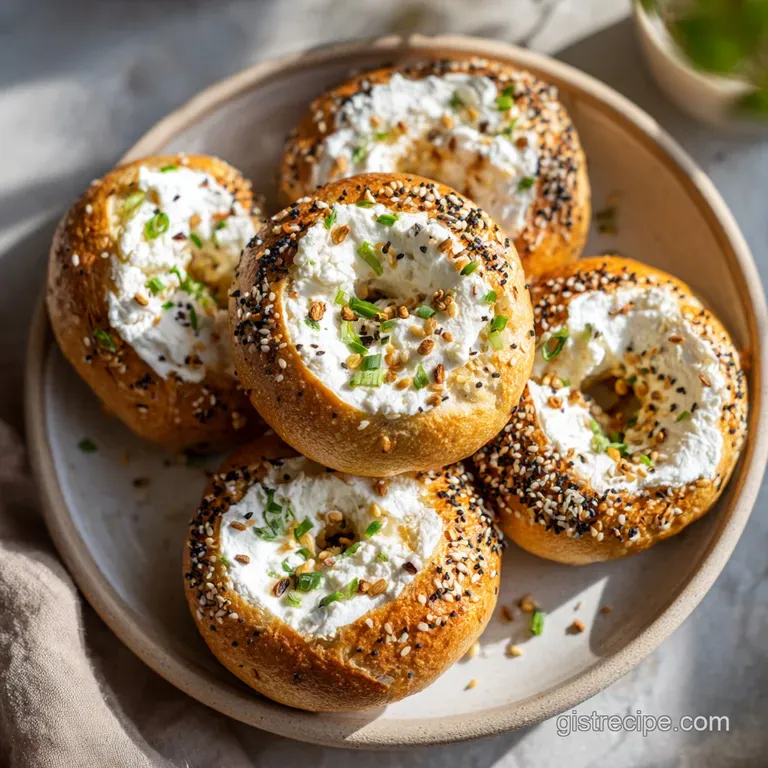
- Preheat your oven to 375°F (190°C). Line a large baking sheet with parchment paper so nothing sticks.
- Place the 1 cup of full fat cottage cheese in a blender. Puree until it is completely smooth and looks like thick yogurt. Note: This ensures the protein is evenly distributed through the flour.
- In a large bowl, whisk the 1 cup of self rising flour to break up any lumps.
- Pour the pureed cheese and the 1 tbsp of egg white into the center of the flour.
- Fold the mixture with a spatula until a shaggy, messy dough begins to form.
- Turn the dough onto a lightly floured surface. Knead gently for 1-2 minutes until the dough feels soft and cohesive.
- Divide the dough into 4 equal pieces. Roll each piece into a rope about 6 inches long and pinch the ends together.
- Place the rings on your baking sheet. Brush them liberally with the beaten egg wash until every inch is coated.
- Sprinkle the Everything Bagel Seasoning over the top, pressing down slightly so the seeds stay put.
- Bake for 25 minutes until the bagels are a rich golden brown and feel light when picked up.
Allow them to cool on a wire rack for at least 10 minutes. If you cut into them too early, the steam escapes too fast and the inside can collapse into a gummy texture. Patience here is the difference between a great bagel and a sad, soggy one.
Solving Common Baking Hurdles
Handling Sticky Dough
One of the biggest frustrations is when the dough sticks to everything. This usually happens if the cottage cheese has a higher water content than usual. If you find the dough is clinging to your hands, don't keep adding cups of flour. Instead, lightly oil your hands with a bit of cooking spray or olive oil.
This lets you shape the dough without altering the flour to cheese ratio, which keeps the bagels light.
Achieving a Proper Rise
If your bagels look like flat pancakes, your flour might be old. Self rising flour has a shelf life because the baking powder inside loses its punch over time. Always check the date on your bag.
If you are using the DIY substitute (all purpose + baking powder), make sure your baking powder is fresh by dropping a pinch into hot water. If it doesn't bubble vigorously, it is time for a new tin.
| Problem | Root Cause | Solution |
|---|---|---|
| Bagels are gummy inside | Oven temp was too low | Bake at 375°F (190°C) and check with a thermometer |
| Toppings are falling off | Not enough egg wash | Brush generously and press seeds in with a spoon |
| Dough is too tough | Over kneading | Stop as soon as the dough is smooth and holds together |
For a different kind of savory bake that also uses simple pantry items, you might want to try The Garlic Bread Recipe as a side for dinner. It uses a similar focus on over high heat baking to get that perfect crunch.
Common Mistakes Checklist
- ✓ Never skip the blending step; whole curds will cause the bagel to bake unevenly.
- ✓ Ensure the oven is fully preheated before the tray goes in to catch the initial lift.
- ✓ Avoid over working the dough; kneading for more than 2 minutes can make them rubbery.
- ✓ Do not substitute low-fat cottage cheese unless you are prepared for a much drier result.
- ✓ Use parchment paper or a silicone mat; these will stick to a greased pan.
Adjusting for Different Batch Sizes
If you are cooking for a crowd, you can easily double this recipe. However, when doubling, I recommend only increasing the salt and seasoning by 1.5 times to prevent them from becoming overly salty. Work in batches when kneading so you don't over tax the dough.
For a smaller portion, you can halve the recipe easily. Since it calls for 1 tbsp of egg white in the dough, just whisk an egg white in a small bowl and measure out 1.5 teaspoons for a half batch.
Use a smaller baking pan or even an air fryer (at 350°F for about 12-15 minutes) for a quick single serve breakfast.
Myths About High Protein Baking
One common misconception is that "healthy" bagels must be dense. People think that without yeast, you can't get an airy crumb. That is simply not true. The combination of steam from the cheese and the chemical leaveners in the flour creates plenty of lift.
You just have to make sure you aren't squashing the air out of the dough during the shaping phase.
Another myth is that you can't freeze these. Many people believe that because of the cheese content, they will get soggy when thawed. In reality, these freeze better than traditional bagels because the extra moisture helps them stay soft after a quick trip through the toaster.
Flavor Ideas and Smart Storage
Sweet and Savory Variations
- Cinnamon Raisin: Add 1 tsp of cinnamon and 2 tbsp of raisins to the dough. Skip the everything seasoning and top with a little coarse sugar.
- Jalapeno Cheddar: Fold in 2 tbsp of minced jalapenos and top with a sprinkle of sharp cheddar cheese before baking.
- Sesame Bliss: Use only toasted sesame seeds and a pinch of sea salt for a cleaner, nutty flavor profile.
Keeping Them Fresh
Store any leftovers in an airtight container in the fridge for up to 5 days. Because of the high protein and moisture content, they will spoil faster than store-bought bread if left on the counter. To reheat, I always recommend a toaster or a toaster oven.
It brings back that initial "shatter" of the crust while warming the center.
For long term storage, slice them before freezing. Place them in a freezer bag with pieces of parchment paper between the halves. They will stay fresh for up to 3 months. You can pop them directly into the toaster from the freezer just add a minute to the toasting time.
Zero Waste Tip: If you have leftover egg wash, don't throw it out! Whisk it into your morning scramble or use it as a binder for breadcrumbs if you are making chicken for dinner later.
If you have a bit of cottage cheese left in the tub, it makes an excellent creamy base for a pasta sauce or a high protein dip for veggies.
What to Serve with These Bagels
The best cottage cheese bagels recipe is a blank canvas for toppings. I love the classic smear of cream cheese, but these are sturdy enough to handle a full breakfast sandwich. Try layering a fried egg, some crispy bacon, and a slice of avocado for a meal that will keep you full until dinner.
If you are feeling fancy, go for the lox treatment. Add some smoked salmon, capers, thinly sliced red onion, and a squeeze of lemon. The tang of the bagel dough plays perfectly with the saltiness of the fish.
These also make a great side for a warm bowl of soup, acting as a high protein "crouton" when sliced into chunks and toasted.
If you are looking for a gluten-free option for your bread machine, you might find my gluten-free Bread Machine Recipe helpful for those days when you need a full loaf. It shares that same focus on getting a great crumb without the traditional hassle.
Very High in Sodium
948 mg 948 mg (41% 41%)
The American Heart Association recommends limiting sodium intake to no more than 2,300 mg per day, with an ideal limit of 1,500 mg per day for most adults.
Tips to Reduce Sodium
-
Swap Everything Bagel Seasoning-25%
Everything Bagel Seasoning is notoriously high in sodium due to the salt content. Replace it with a salt free blend of sesame seeds, poppy seeds, dried garlic, and dried onion. You can even add a pinch of black pepper for extra flavor.
-
Choose Low-Sodium Cottage Cheese-15%
Traditional cottage cheese can be a significant sodium contributor. Opt for a 'low-sodium' or 'no salt added' variety of full fat cottage cheese to make a substantial difference without sacrificing texture.
-
Experiment with Fresh Herbs and Spices
While not a direct replacement for the seasoning blend, incorporating fresh herbs like chives, parsley, or dill, and spices like garlic powder and onion powder (salt free versions) can add complexity and depth of flavor.
Recipe FAQs
Is it true I can use low-fat cottage cheese to save calories?
No, this is a common misconception. Using low-fat cottage cheese significantly increases the moisture loss during baking, leading to a dry and crumbly bagel rather than a chewy one.
How to ensure my bagels are not rubbery?
Limit your kneading time to 1-2 minutes maximum. Overworking the dough develops too much gluten, which changes the desired soft texture into something tough and rubbery.
Why must I puree the cottage cheese first?
Blending ensures the curds are completely smooth and velvety. If you skip this, whole curds create pockets of moisture that prevent the dough from baking evenly throughout the bagel.
How to prevent the bagels from sticking to the pan?
Line your baking sheet with parchment paper or a silicone mat. These high protein doughs have a strong tendency to bond to direct metal surfaces, so avoid greased pans entirely.
How to tell when the bagels are finished baking?
Check for a golden brown color and a hollow sound when tapped. The total bake time is 25 minutes at 375°F (190°C), and you should always allow them to cool on a wire rack for 10 minutes to finish setting. If you enjoy mastering these sensory doneness cues, try applying the same observation technique to our oven-roasted mini potatoes for perfect results.
Do I need to let the dough rise before shaping?
No, this recipe uses self rising flour and does not require a proofing period. You can move straight from mixing and kneading to shaping and baking, making this a much faster process than yeast based breads.
How to create the perfect bagel shape?
Divide your dough into four equal portions before shaping. You can either roll each piece into a rope and pinch the ends together to form a ring, or simply roll a ball and use your thumb to poke a hole through the center.
Best Cottage Cheese Bagels

Ingredients:
Instructions:
Nutrition Facts:
| Calories | 209 calories |
|---|---|
| Protein | 12.3g |
| Fat | 5.9g |
| Carbs | 27.4g |
| Fiber | 1.7g |
| Sugar | 1.9g |
| Sodium | 948mg |
